 |
The 1940s The War and Post-War Years The Beginnings of Film Noir Part 2 Film History of the 1940s Part 1, Part 2, Part 3, Part 4, Part 5, Part 6 Film History by Decade Index | Pre-1920s | 1920s | 1930s | 1940s | 1950s | 1960s 1970s | 1980s | 1990s | 2000s | 2010s |
|

|
Anti-Fascist Films: Chaplin's next film was another departure from his Little Tramp character - Monsieur Verdoux (1947) (in which Chaplin directed, produced, wrote, scored, and starred). A satire about a woman-murdering Parisian bank cashier, it received a Best Original Screenplay nomination. It bombed at the box-office upon release due to anti-Communist hysteria directed at Chaplin and the film's banning - Chaplin pulled it out of circulation for many years.
German-born Ernst Lubitsch directed the anti-Nazi farce of a theatre couple outwitting the Nazis in To Be Or Not To Be (1942). It starred Jack Benny as Polish actor Joseph Tura, and was noted for the line: "So they call me 'Concentration Camp' Ehrhardt." Shortly before the film's release, one of its stars, Hollywood's beloved Carole Lombard (blonde wife of Clark Gable), died at the age of 33 in a tragic airplane crash near Las Vegas on January 16, 1942. Biggest Box-Office Stars and Films: Twelve-year-old child actress Elizabeth Taylor (born in the UK in 1932 to American parents) became a star after making Lassie Come Home (1943) and National Velvet (1944), her fifth film. The latter film featured a long-shot horse named Pie and Mickey Rooney as a homeless, stubborn ex-jockey. In her first major film role, Jennifer Jones became a star and won an Oscar for her portrayal of a pious St. Bernadette Soubirous who experienced a vision of the Virgin Mary at Lourdes in The Song of Bernadette (1943). Tyrone Power gave an outstanding performance as heroic Don Diego Vega, son of a 19th century aristocrat and better known as Zorro, combating villainous Captain Esteban Pasquale (Basil Rathbone) in The Mark of Zorro (1940). And in the same year, Errol Flynn starred as swashbuckling privateer Captain Geoffrey Thorpe, better known as The Sea Hawk (1940) in director Michael Curtiz' rousing film. Errol Flynn also starred as pugnacious Irish boxer James J. Corbett, based on his autobiography The Roar of the Crowd in director Raoul Walsh's biopic Gentleman Jim (1942). In another version of Alexander Dumas' novel, Gene Kelly made a foursome as D'Artagnan, joining Athos (Van Heflin), Aramis (Robert Coote), and Porthos (Gig Young) in the Technicolored costume adventure The Three Musketeers (1948). The most-remembered and career-best film ever made by actor/future President Ronald Reagan was Kings Row (1942). After losing his legs from amputation after a train yard accident, his character posed the famous, horrifying question: "Where's the rest of me?" Humphrey Bogart didn't become a major Hollywood star until 1941, until after he had played the role of a gangster in The Petrified Forest (1936) (in a role he had played on Broadway), and then when he appeared in his first starring role in High Sierra (1941), and also in director John Huston's The Maltese Falcon (1941). Angela Lansbury made her film debut in Gaslight (1944) (aka The Murder in Thornton Square), with Ingrid Bergman slowly being driven insane by her husband Charles Boyer. Basil Rathbone regularly starred in the 1940s as the popular, modernized fictional detective originally created by Sir Arthur Conan Doyle, as in Universal's Sherlock Holmes and the Voice of Terror (1942), Sherlock Holmes and the Secret Weapon (1942), Sherlock Holmes Faces Death (1943), and The Scarlet Claw (1944) - with his loyal sidekick Dr. Watson (Nigel Bruce). The Tarzan franchise of films, begun in the early 30s, continued into the 40s. Johnny Weissmuller appeared only twice more with Maureen O'Sullivan in MGM's Tarzan's Secret Treasure (1941) and Tarzan's New York Adventure (1942). Weissmuller's further exploits in only six more RKO films included: Tarzan Triumphs! (1943), Tarzan's Desert Mystery (1943), Tarzan and the Amazons (1945), Tarzan and the Leopard Woman (1946), Tarzan and the Huntress (1947), and Tarzan and the Mermaids (1948). Greer Garson and Walter Pidgeon starred as Marie and Pierre respectively in Madame Curie (1943), about the discovery of radium. Master showman Cecil B. DeMille directed hunk Victor Mature in the Biblical epic Samson and Delilah (1949), also starring Hedy Lamarr. Britain's biggest sex-symbol in the late 1940s was Diana Dors, whose first notable screen performance (as Charlotte) was in David Lean's Oliver Twist (1948) with Alec Guinness as Fagin. And Best Actress-winning Olivia De Havilland starred as the title character in William Wyler's The Heiress (1949), adapted from Henry James' novel Washington Square, with Montgomery Clift as a jilted, inheritance-seeking suitor. In 1947, Elia Kazan and others formed the Actors Studio in New York City - a rehearsal group to produce the first generation of "method" actors under the direction of Lee Strasberg. Marlon Brando, Paul Newman, and James Dean were soon to emerge from this approach to acting. In the same year, Universal Pictures Studios merged with the independent production company International Pictures, forming the new Universal-International Studio. The new studio pledged higher-quality productions by eliminating serials and B-movies, and it introduced greater use of Technicolor and double features. A Brief History of the B-Movie: The term B-Movie refers to an off-beat, low-budget, second-tier film, usually from an independent producer. The low-prestige films were usually shot quickly with little-known, second rate actors or directors. Traditional B-films are characterized by short run times, reduced budgets, recycled actors and footage, and cheap production values. They were created as a contrast to A-pictures, characterized by first-class, big-budget films with high-level production values and star-power. Standard B-Movies were predominent from the 1920s to the late 1940s, at a time when the studios owned their own theaters. (In the late 40s, the studios began to lose control of their theaters.) The independent or Poverty Row studios (such as Monogram and Republic) made B-movies almost exclusively. The less expensive B-movies were often the the second film (or the 'lower half') of a double-feature, and paired with an A-feature. The vintage B-movie began to decrease in the 50s, or morphed into inferior B/W TV series. When drive-in theaters and cheap cinemas arose in the 1950s, a whole new group of grindhouse B-pictures emerged, with sensational and catchy titles, campy acting, cheesy special effects, and gratuitous violence and sexuality (especially after the Hays Code production restrictions began to be lifted in the late 60s). Some B-movie production devolved into exploitation films with increased nudity and violence. B-movies are not to be confused with cult films, although some B-films attained cult status (such as Edgar G. Ulmer's film noir Detour (1945)). Examples of the Enduring Effects of B-Movies:
Mostly B/W Films in the 40s:
At the end of the decade, acetate-based film was replacing unstable cellulose nitrate stock (which had already caused the deterioration of many older films). Orson Welles: Boy Wonder and The Greatest Film Ever: Citizen Kane Welles also acted as the enigmatic Harry Lime character, and provided the famous "cuckoo clock" speech, in director Carol Reed's British noir classic The Third Man (1949) (produced by Alexander Korda and David O. Selznick). It was set in war-ravaged Vienna and featured unsettling zither music. Reed's The Fallen Idol (1948) was another of his adaptations of Graham Greene stories. After the financial failure of Welles' film noir The Lady from Shanghai (1948), he moved to another studio (Republic Pictures) to star in, produce, and direct Shakespeare's classic tragedy Macbeth (1948). After the release of the low-budget, expressionistic film that wasn't entirely successful, Welles left for Europe and exiled himself away from Hollywood for ten years.

Part 1, Part 2, Part 3, Part 4, Part 5, Part 6 
 
|

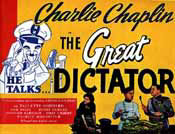 Charlie
Chaplin directed and starred in his first talking picture,
Charlie
Chaplin directed and starred in his first talking picture, 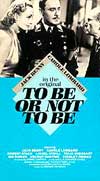 German
star Marlene Dietrich, after becoming a US citizen in 1938, made a
number of morale-boosting films, and other German and/or Austrian
expatriates (Conrad Veidt, Sig Ruman, and Walter Slezak) risked personal
popularity by playing roles as detestable Nazis in such well-known
films as
German
star Marlene Dietrich, after becoming a US citizen in 1938, made a
number of morale-boosting films, and other German and/or Austrian
expatriates (Conrad Veidt, Sig Ruman, and Walter Slezak) risked personal
popularity by playing roles as detestable Nazis in such well-known
films as  The most popular box-office stars of the entire decade were: James Cagney,
Clark Gable, Tyrone Power, Judy Garland, Bette Davis, Mickey Rooney, Spencer
Tracy, Bing Crosby, Bob Hope, Wallace Beery, Gene Autry, Gary Cooper,
Greer Garson, Humphrey Bogart, Cary Grant, and Ingrid Bergman. In 1946,
five of the year's top ten box-office films starred Bing Crosby and Ingrid
Bergman - two wholesome and likeable stars.
The most popular box-office stars of the entire decade were: James Cagney,
Clark Gable, Tyrone Power, Judy Garland, Bette Davis, Mickey Rooney, Spencer
Tracy, Bing Crosby, Bob Hope, Wallace Beery, Gene Autry, Gary Cooper,
Greer Garson, Humphrey Bogart, Cary Grant, and Ingrid Bergman. In 1946,
five of the year's top ten box-office films starred Bing Crosby and Ingrid
Bergman - two wholesome and likeable stars.  Technicolor
became more and more popular during the decade following the success of
the richly-colorful
Technicolor
became more and more popular during the decade following the success of
the richly-colorful  After
causing quite a sensation with his Mercury Theatre on the Air performance
of H. G. Wells' The War of the Worlds in 1938, twenty-three year
old boy-wonder Orson Welles was given an RKO Studios contract in 1939.
That led to the making of probably the greatest American film of all time
- his innovative masterpiece entitled
After
causing quite a sensation with his Mercury Theatre on the Air performance
of H. G. Wells' The War of the Worlds in 1938, twenty-three year
old boy-wonder Orson Welles was given an RKO Studios contract in 1939.
That led to the making of probably the greatest American film of all time
- his innovative masterpiece entitled  Welles
followed Kane as writer, producer and director of
Welles
followed Kane as writer, producer and director of