 |
The 1980s Teen-Oriented Angst Films and the Dawn of the Sequel, with More Blockbusters Part 2 Film History of the 1980s Part 1, Part 2, Part 3, Part 4, Part 5, Part 6 Film History by Decade Index | Pre-1920s | 1920s | 1930s | 1940s | 1950s | 1960s 1970s | 1980s | 1990s | 2000s | 2010s |
|

|
'Colorization' of the Classics:
In another 'homage' to the classics, Fritz Lang's silent Metropolis (1927) was reincarnated and prepared by Giorgio Morodor for theatrical re-release in 1984. This version was tinted and featured heavy-metal, synthesizer music (from artists such as Freddie Mercury, Pat Benatar, Adam Ant, and Bonnie Tyler). The Trend Toward Teenage Comedies: The Teen Sex Comedy The trend for youth films began with a number of late 70s and early 80s films with young actors and actresses. Some attributed the trend toward teenaged cinematic fare to the tremendous success of Star Wars (1977) with youth audiences. The films were entertainment geared for teenagers and younger pre-teen audiences (both were becoming sizeable segments of movie theatre attendance). At the end of the previous decade, Steve Tesich's Oscar-winning screenplay helped to highlight Peter Yates' oft-overlooked, youthful bicycle film Breaking Away (1979), about four boys (Dennis Christopher, Dennis Quaid, Daniel Stern, and Jackie Earle Haley) and their frustrations/hopes in a recession-affected Midwest college town - it was a portent of the times. Writer/director Barry Levinson's debut film Diner (1982) was a bitter-sweet, rites-of-passage tale of six male buddies in their twenties growing up in late 50s Baltimore and hanging out in the local diner Fells Point - with remarkably realistic dialogue scenes. [Levinson would proceed in making other Baltimore-themed films in the same decade, including Tin Men (1987) and Avalon (1990) - and later Liberty Heights (1999).] One of the earliest youth-oriented films was actually responsible for also launching the teen-sex film -- it was Porky's (1982) (followed by its sequels: Porky's II: The Next Day (1983) and Porky's Revenge (1985)). The R-rated film was typical of sex-drenched, lame films (with lots of gratuitous female nudity) telling about a group of horny males who sought sexual experiences and the loss of virginity through various sexual encounters and schemes (often humiliating) and by voyeurism. Further exploitative comedies were released, such as Screwballs (1983), Revenge of the Nerds (1984), and Hot Dog: The Movie (1984).
Female director Amy Heckerling's energetic, candid and unassumingly real Fast Times at Ridgemont High (1982), her directorial debut feature film, was the quintessential teen film of the 1980s. It included a number of stereotyped but realistic roles derived from screenwriter Cameron Crowe's (a former Rolling Stone writer) undercover study-exposé of L.A. high school life during a year at a San Diego HS:
[The film was also notable for being the American Graffiti (1973) and American Pie (1999) of its decade, because it introduced so many new and future stars, including Jennifer Jason Leigh, Phoebe Cates, Judge Reinhold, Sean Penn, Forest Whitaker, Eric Stoltz, Nicolas Cage, and Anthony Edwards).] Strong sexual content included nude scenes for both Leigh and Cates. Heckerling's only other notable film in her career was another teenage film - Clueless (1995) - a satirical, funny tale loosely based on Jane Austen's Emma, about an adorable but rich, bratty, self-obsessed and shallow Beverly Hills teenager named Cher Horowitz (Alicia Silverstone), memorable for her color-coordinated designer wardrobe, and rich California slang. Also, Francis Ford Coppola's two films of disaffected, angst-ridden youth in the early 80s were both adapted from S.E. Hinton novels and starred Matt Dillon:
New teen stars of this youth-obsessed cultural decade began to emerge, including Molly Ringwald, Matt Dillon, Ally Sheedy, Anthony Michael Hall, Patrick Swayze, Tom Cruise, Eric Stoltz, Judd Nelson, Kiefer Sutherland, Phoebe Cates, Charlie Sheen, Mary Stuart Masterson, Matthew Broderick, Jennifer Grey, Lou Diamond Phillips, Sean Penn, Emilio Estevez, James Spader, Jennifer Jason Leigh, Judge Reinhold, and Rebecca DeMornay. The Rise of the Brat Pack, and 'Coke-Addicted Yuppie' Films:
On and off screen, the stars wore designer clothes, drove the coolest sports cars, and projected a 'fast lane' cynical attitude about life. Edward Zwick's About Last Night... (1986), an adaptation of David Mamet's one-act play Sexual Perversity in Chicago, starred Rob Lowe and Demi Moore as a singles scene couple who had to confront their real feelings after a one-night stand. John Hughes' 'Teen' Films: In the 1980s, the most consistent output, and the most watchable and solid films of the sub-genre of youth-oriented teen comedies starring teenage characters (who were experiencing adolescent angst) were from writer/director and producer John Hughes. Hughes had first made himself known in the early 80s by co-writing two memorable comedies:
He was responsible for a number of comedic, "teen"-oriented coming-of-age or 'rites of passage' films directed toward a youth audience, frequently emphasizing the tensions of the adolescent and post-adolescent years, the problems of growing up, the high school years, aspects of peer pressure, teen parties, money, rebellion, friendship, romantic relationships among teens, and family strains. Hughes later admitted: "One of the great wonders of that age is that your emotions are so open and raw. That's why I stuck around that genre for so long." His most well-used actors/actresses included: Molly Ringwald, Anthony Michael-Hall, John Candy, Macaulay Culkin, and Chevy Chase. [A so-called "Molly Trilogy" of films included three Ringwald favorites: Sixteen Candles (1984), The Breakfast Club (1985) and Pretty in Pink (1986).] Hughes directed the following popular films, after signing a three-year, $30 million deal:
Hughes also produced and wrote the script for two other teen-oriented romances:
Following his success with teen-angst romances, Hughes' next films were the adult comedy Planes, Trains & Automobiles (1987) about an agonizing cross-country trip on Thanksgiving experienced by an uptight father/marketing executive (Steve Martin) and a lunkish shower-ring salesman (John Candy), and the less-satisfying adult-oriented dramedy She's Having a Baby (1988) with Kevin Bacon and Elizabeth McGovern as yuppie newlyweds on the verge of parenthood. The film had an influence on the forthcoming entire sub-genre of baby films. Hughes' Uncle Buck (1989) was another coming-of-age comedy about a crass, slobbish bachelor-uncle (John Candy) forced to serve as a long-term babysitter for his brother's children (a rebellious teenaged daughter named Tia and two younger kids, Miles, and Maizy). [Hughes would strike gold in the 90s with the commercial giant Home Alone (1990) a slapstick kid-friendly comedy and its two sequels - Home Alone 2: Lost in New York (1992) and Home Alone 3 (1997), and with kid-oriented Dennis the Menace (1993) and the funny Baby's Day Out (1994).] Other Teen-Oriented Films: Paul Brickman's satirically funny Risky Business (1983) (with its oft-quoted line: "What the f--k?") commented on the decade's materialistic greed by portraying a conservative teen named Joel Goodson (Tom Cruise in an early starring role) - noted for dancing in his underwear to "Old Time Rock & Roll" - who held an outrageous party in his house, and set up a profitable hooker-business (with call-girl Rebecca DeMornay) as a school project during his parents' absence. And director Susan Seidelman's successfully-marketed feminist screwball comedy Desperately Seeking Susan (1985) starred Rosanna Arquette and pop singer Madonna (in her film debut). It was set in the hip, 80's New Wave culture of New York's Lower East Village SoHo, and helped popularize the chart-topping song "Into the Groove." One of the best teen movies ever made was Rob Reiner's second feature film -- the romantic comedy The Sure Thing (1985), with 17 year-old John Cusack (as Walter "Gib" Gibson) searching for romance with beautiful, white-bikinied and California-tanned Nicollette Sheridan ("The Sure Thing") while finding real love with prim student Alison Bradbury (Daphne Zuniga) on the roof-top by film's end.
Other films examined disenfranchised, alienated and coming-of-age youth: Tim Hunter's disturbing River's Edge (1986) with many future stars (Keanu Reeves, Crispin Glover, etc.) - revolved around the aftermath of an atrocious teen murder of a suburban high-schooler's girlfriend - all inspired/based on a 1981 murder case. Also, Rob Reiner's sentimental Stand By Me (1986) was about the rites-of-passage of four small-town Maine boys (including River Phoenix, who died of a drug overdose in 1993 at the age of 23) in the 1950s while looking for the corpse of a dead kid. The horror/comedy The Lost Boys (1987) was a teen vampire film with a tagline appreciated by teens: "Sleep all day. Party all night. Never grow old. Never die. It's fun to be a vampire." An offbeat, black-comedy satire on competitive teen social popularity in a modern high school was found in the darkly funny Heathers (1989) starring Winona Ryder (as Veronica) and Christian Slater (as JD). The film covered such topics as teen suicide, murder, and school bombings. At least two films were related to books (dubbed 'yuppie fiction' or 'MTV novels') published by young authors about the 1980s cocaine-drug culture. Marek Kanievska's Less Than Zero (1987), set in Beverly Hills with college-aged teens (Andrew McCarthy, Robert Downey, Jr., and Jamie Gertz), illustrated both the bright side of the materialistic business world and the downside of failure and drug use. Director James Bridges' Bright Lights, Big City (1988), based on Jay McInerney's screenplay adaptation of his own 1984 tragi-comedy novel (his first) of the same name, starred Michael J. Fox as an aspiring writer and Manhattan yuppie whose life was brought down by drugs, alcohol, and nightlife. It co-starred Kiefer Sutherland (his hard-partying friend), Phoebe Cates (his model wife) and Swoosie Kurtz. The novel was named after the early 60s song Bright Lights, Big City, originally sung by blues singer Jimmy Reed. James Bond Films: Sequels featuring the 007 secret agent continued to thrive in the 80s:
Endless Sequels: The Beginning of a Trend Throughout cinematic history, there has been a tradition of re-doing films in series or installments with familiar, recurring sets of performers and plot routines), such as the repeated appearance of Charlie Chaplin's "Little Tramp" character in numerous films, serials such as The Perils of Pauline (1914) with a returning heroine, the Universal horror film recycles (i.e., Frankenstein, Dracula, The Mummy, etc.), The Thin Man (1934) mystery-detective series, the many James Bond and Tarzan films, and Mickey Rooney's Andy Hardy movies, to name just a few.
John Carpenter's highly-successful, low-budget slasher Halloween (1978) sparked a revival of horror films in the 80s and forever since. Other film-makers attempted to cash in on its success at the box-office with similar story-lines. A large percentage of the films in the 80s (and later) were nightmarish slasher films (e.g., the Evil Dead series, the very successful Friday the 13th franchise and series, and A Nightmare on Elm Street films (the first one by director Wes Craven) with a new villain - the terrifying burn victim Freddy Krueger (Robert Englund) with knives on his fingers who appeared in bad dreams as a child molester). [There was also a 44-episode TV anthology in the late 80s and early 90s of Freddy Krueger films made-for-TV films, including Freddy's Nightmares: Dreams That Kill (1990) and Freddy's Nightmares: Freddy's Tricks and Treats (1990)]

Part 1, Part 2, Part 3, Part 4, Part 5, Part 6 
 
|

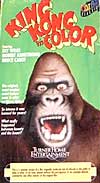 After Ted Turner
purchased the vast library-inventory of classic MGM and UA films in 1986
and proposed colorization of the B/W films, there was a bitterly-fought
debate over the topic in mid-decade. Topper (1937) was the very first B/W feature film to be released to the home video market in 1985 in a 'colorized' version, using computer technology - a controversial modernizing technique at the time. Colorized
("computer-colored" or "color-imaged") films began
to be broadcast on television for the first time in 1985. When the classic
After Ted Turner
purchased the vast library-inventory of classic MGM and UA films in 1986
and proposed colorization of the B/W films, there was a bitterly-fought
debate over the topic in mid-decade. Topper (1937) was the very first B/W feature film to be released to the home video market in 1985 in a 'colorized' version, using computer technology - a controversial modernizing technique at the time. Colorized
("computer-colored" or "color-imaged") films began
to be broadcast on television for the first time in 1985. When the classic 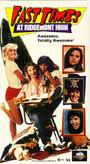 Youth-Oriented (Yuppie) Films:
  Joel
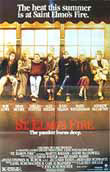
Schumacher's St. Elmo's Fire (1985) - a soap-operish, teen version
of The Big Chill (1983) for the younger Yuppie generation with
ensemble acting, was responsible for giving the self-indulgent, self-absorbed,
and socially-apathetic stars who portrayed seven Georgetown graduates
(up and coming yuppies) who hung out at a bar their detested nickname
"The Brat Pack." Brat Packers in this film included:
Joel
Schumacher's St. Elmo's Fire (1985) - a soap-operish, teen version
of The Big Chill (1983) for the younger Yuppie generation with
ensemble acting, was responsible for giving the self-indulgent, self-absorbed,
and socially-apathetic stars who portrayed seven Georgetown graduates
(up and coming yuppies) who hung out at a bar their detested nickname
"The Brat Pack." Brat Packers in this film included: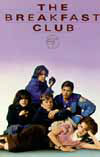 Hughes' first directed
film was the attractive and realistic Sixteen Candles (1984) -
a Reagan-era Cinderella story with Molly Ringwald (in a star-making
role) as sensitive, lovelorn teen Samantha "Sam" Baker (with a
clueless family) awkwardly turning sixteen and having a horrible
birthday, upstaged by her older sister's wedding week. Geeky freshman
(Anthony Michael Hall) - to satisfy a bet - incredulously asked
Sam: "Can I borrow your underpants for 10 minutes?"
Hughes' first directed
film was the attractive and realistic Sixteen Candles (1984) -
a Reagan-era Cinderella story with Molly Ringwald (in a star-making
role) as sensitive, lovelorn teen Samantha "Sam" Baker (with a
clueless family) awkwardly turning sixteen and having a horrible
birthday, upstaged by her older sister's wedding week. Geeky freshman
(Anthony Michael Hall) - to satisfy a bet - incredulously asked
Sam: "Can I borrow your underpants for 10 minutes?" 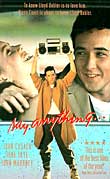 One of the best teen romance/comedies of the decade was Cameron Crowe's
directorial debut film Say Anything... (1989) with John Cusack
(as underachieving, trench-coated Lloyd Dobler) and Ione Skye (as beautiful
valedictorian Diane Court) in outstanding roles as high-school graduates
and unlikely lovers - the film was most noted for a boom-box blaring Peter
Gabriel that he held above his head to serenade his girlfriend. Paul Schrader's naturalistic, melodramatic Light of Day (1987) starred Michael J. Fox and real-life rock star Joan Jett (in her debut
film) as brother and sister (in a dysfunctional family headed by Gena
Rowlands), who played rock musicians in a local Cleveland band named the
Barbusters.
One of the best teen romance/comedies of the decade was Cameron Crowe's
directorial debut film Say Anything... (1989) with John Cusack
(as underachieving, trench-coated Lloyd Dobler) and Ione Skye (as beautiful
valedictorian Diane Court) in outstanding roles as high-school graduates
and unlikely lovers - the film was most noted for a boom-box blaring Peter
Gabriel that he held above his head to serenade his girlfriend. Paul Schrader's naturalistic, melodramatic Light of Day (1987) starred Michael J. Fox and real-life rock star Joan Jett (in her debut
film) as brother and sister (in a dysfunctional family headed by Gena
Rowlands), who played rock musicians in a local Cleveland band named the
Barbusters.  Before
1980, there were very few sequels - maybe two or three each year. Beginning
in the early 80s (and from then on), however, a mind-staggering, steady
stream of mindless, crude sequels were produced each year, usually inferior
to their originals - with some notable exceptions. Remakes and sequels,
with the 'same story, different title' principle, were designed to defray
the monetary risks of Hollywood film-making. Most often, these sequels
were hastily-made, inferior knockoffs made by lesser film-makers and without
key cast members (wisely reluctant to reappear) from the original. Predictably,
the repetitive carbon copies usually resulted in dwindling box-office
returns.
Before
1980, there were very few sequels - maybe two or three each year. Beginning
in the early 80s (and from then on), however, a mind-staggering, steady
stream of mindless, crude sequels were produced each year, usually inferior
to their originals - with some notable exceptions. Remakes and sequels,
with the 'same story, different title' principle, were designed to defray
the monetary risks of Hollywood film-making. Most often, these sequels
were hastily-made, inferior knockoffs made by lesser film-makers and without
key cast members (wisely reluctant to reappear) from the original. Predictably,
the repetitive carbon copies usually resulted in dwindling box-office
returns.