|
Great (and Less than Great) Comedies of the 80s:
Director
Ron Howard's Night Shift (1982) was set in a morgue, with a cast
including a young Shannen Doherty and Kevin Costner, Michael Keaton (in
his first film and known for saying: "Is this a great country or
what?"), Henry Winkler as the night-shift clerk, and Shelley Long
as a hooker. Steve Martin starred as crazed neurosurgeon Dr. Hfuhruhurr who was in love with a disembodied brain in a jar (voice of Sissy Spacek) while trying to romance gold-digging Kathleen Turner. It was Martin's third film with director Carl Reiner, after The Jerk (1979) and the film-noir parody Dead Men Don't Wear Plaid (1982).
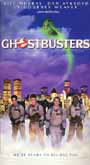 Ghostbusters (1984), the costly
horror comedy with a Saturday Night Live cast - a mix of National Lampoon's Animal House (1978) and Close Encounters of the Third Kind (1977) - told about a parapsychologist team of crazy professors that investigated
and fought against paranormal (special-effects) phenomena (with its catch-phrase:
"Who ya gonna call?"). It starred Dan Aykroyd, Harold Ramis
and Bill Murray (taking the place of John Belushi after his tragic death
due to a drug overdose at age 33 in March, 1982). It was one of the biggest
hits of the decade, noted for its conclusive battle against a giant marshmallow man. Its success led to a horrible sequel in 1989, a hit
single record, a cartoon series, and various other merchandise emblazoned
with the familiar "NO GHOSTS" symbol. Ghostbusters (1984), the costly
horror comedy with a Saturday Night Live cast - a mix of National Lampoon's Animal House (1978) and Close Encounters of the Third Kind (1977) - told about a parapsychologist team of crazy professors that investigated
and fought against paranormal (special-effects) phenomena (with its catch-phrase:
"Who ya gonna call?"). It starred Dan Aykroyd, Harold Ramis
and Bill Murray (taking the place of John Belushi after his tragic death
due to a drug overdose at age 33 in March, 1982). It was one of the biggest
hits of the decade, noted for its conclusive battle against a giant marshmallow man. Its success led to a horrible sequel in 1989, a hit
single record, a cartoon series, and various other merchandise emblazoned
with the familiar "NO GHOSTS" symbol.
 Other
crass comedies with zany, slapstick, TV-like skits parodied earlier films.
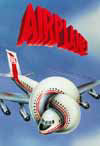
The joke and pun-filled Airplane! (1980), from the trio of Zucker
brothers and Jim Abrahams, was inspired by the serious melodrama Airport
(1970) and aggressively spoofed (like Mel Brooks had done earlier)
the entire disaster film genre of the 70s with fast-paced jokes ("Don't
call me Shirley"), sight gags, and sexual double entendres. Other
crass comedies with zany, slapstick, TV-like skits parodied earlier films.
The joke and pun-filled Airplane! (1980), from the trio of Zucker
brothers and Jim Abrahams, was inspired by the serious melodrama Airport
(1970) and aggressively spoofed (like Mel Brooks had done earlier)
the entire disaster film genre of the 70s with fast-paced jokes ("Don't
call me Shirley"), sight gags, and sexual double entendres.
Abrahams and the Zuckers, the creators of Airplane! did not contribute
to the sequel Airplane 2: The Sequel (1982), but they spoofed Elvis,
60's beach films and more in Top Secret! (1984). They resurrected
their short-lived TV series Police Squad and brought Leslie Nielsen
to the screen - perfect in the role as the deadpan, bumbling LA detective
Lt. Frank Drebin in The Naked Gun: From the Files of Police Squad!
(1988). [The trio were also responsible for Hot Shots! (1991),
a parody of Only Angels Have Wings (1939)
and Top Gun (1986) with emerging star Tom Cruise.]
In the cloak-and-dagger comedy Hopscotch (1980), Walter Matthau
played a disgruntled CIA agent taken off the field and given a desk job,
who took revenge by hooking up with lover/ex-agent Glenda Jackson in Europe,
writing his tell-all memoirs and circulating them to all the rival agencies.
TV comedian Jackie Gleason reprised his role as frustrated southern Sheriff
Buford T. Justice in the hit sequel Smokey and the Bandit II (1980).
The Cannonball Run (1981) was about a group of eccentrics who raced
cross-country across America, including Jackie Chan (in one of his first
US film roles) as a kung-fu Subaru driver. Tim Burton's surrealistic Beetlejuice
(1988), a take-off of the "Topper" series of 30s and 40s films, featured
Michael Keaton as the evil, grotesque phantom Betelgeuse, and Geena Davis
and Alec Baldwin as ghosts who wished to exorcise their home of humans
haunting it.
There were many soul-transference films in the late 80s - the best was
the endearing comedy-fantasy Big (1988) with Tom Hanks' deft, believable
performance as 13-year old David Moscow in the body of a 35-year old "big
person" after using a magical carnival wishing machine. Coppola's poignant
time-travel film Peggy Sue Got Married (1986) starred Kathleen
Turner as a 43 year old in the body of a high school senior.
The
average US film of the 1980s seemed to be aimed at unthinking, moronic
teenagers, as evidenced by crude slapstick teen comedies:
 the sexploitation film Porky's (1982) with
Angel Beach high-school locker-room humor, and its sequels: Porky's
II: The Next Day (1983) and Porky's Revenge (1985) the sexploitation film Porky's (1982) with
Angel Beach high-school locker-room humor, and its sequels: Porky's
II: The Next Day (1983) and Porky's Revenge (1985)- Police Academy (1984) (and its many sequels)
- the various National Lampoon films (1983,
1985, and 1989), beginning with Vacation (1983) - with the always-clumsy and dim-brained Clark Griswold (Chevy Chase) taking his family cross-country in a gigantic pea-green "Family Truckster" station wagon with a hiccupping engine to Wally World theme park - with all of their arduous misadventures
- the dope humor of Cheech and Chong (Up in Smoke
(1978), Cheech and Chong's Next Movie (1980), Cheech and
Chong's Nice Dreams (1981) and Born in East L.A. (1987))
- the "stupid humor" of Bill & Ted's Excellent
Adventure (1989) featured two shabby and unbrainy lead characters/dudes - Alex Winter and Keanu Reeves (in a breakthrough
role) who traveled through time to pass their history
class test. Their stupidity was demonstrated when they were offered the Iron Maiden by their medieval Evil Duke captor - they reacted with "Excellent!" without realizing that it was a torture execution machine and not a rock band ("Bogus!")
- it was followed by Bill & Ted's Bogus Journey (1991) - a parody
of the Terminator films (with two evil robot-twins) and Back
to the Future films, and a parody-sendup of both Bergman's The
Seventh Seal (1957) with its Reaper Dude, and Powell/Pressburger's Stairway to Heaven/A Matter of Life and Death (1946); it's simple
philosophy was: "Be Excellent to Each Other"
Acerbic, vulgar, stand-up "I get no respect" comedian Rodney
Dangerfield appeared in a string of comedies including Caddyshack (1980),
Easy Money (1983), and Back to School (1986). The controversial
Disney release, Roger Donaldson's Cocktail (1988) presented Tom
Cruise in an early role as Brian Flanagan, an ex-GI and flamboyant juggling bartender with
a carefree attitude about sex and alcohol.
Encouragingly, other comedies showed more intelligence:
- Nine to 5 (1980) - a successful screwball comedy
with Jane Fonda, Lily Tomlin and Dolly Parton (in her acting debut)
as three secretaries who took revenge on their boss
 Sydney
Pollack's cross-dressing romantic comedy Tootsie
(1982) starred
Dustin Hoffman in a tour-de-force performance as unemployed actor
Michael Dorsey, alias daytime soap star "Dorothy Michaels," who
was forced to cross-dress in drag to find work - it was an engaging,
original, hilarious drag comedy with other stars Jessica Lange, Geena
Davis, Charles Durning, Rodney Coleman, and Bill Murray Sydney
Pollack's cross-dressing romantic comedy Tootsie
(1982) starred
Dustin Hoffman in a tour-de-force performance as unemployed actor
Michael Dorsey, alias daytime soap star "Dorothy Michaels," who
was forced to cross-dress in drag to find work - it was an engaging,
original, hilarious drag comedy with other stars Jessica Lange, Geena
Davis, Charles Durning, Rodney Coleman, and Bill Murray - another role-reversal comedy, Mr. Mom (1983) starred
Michael Keaton as the out-of-work house-husband
- This is Spinal Tap (1984) - director Rob
Reiner's debut feature film -- a brilliantly-clever fictional documentary
(or mockumentary) about an on-the-road heavy-metal British rock
group on a comeback tour (with their new album Smell The Glove)
-- their amplifier could be turned up to 11, and as a group they
became lost on their way to the stage for a performance
- Ron Howard's outrageous hit comedy about a mermaid
(Darryl Hannah) who fell for Tom Hanks (who had graduated from TV's Bosom Buddies), Splash (1984) - this
was Touchstone's first production
- Pee-wee Herman's (Paul Reubens) big-screen film
debut in Tim Burton's first film as director - the weirdly-funny
and original Pee-wee's Big Adventure (1985) - with the guileless
hero's determined search for his stolen bicycle (with rocket launchers
and an ejector seat) in the basement of the Alamo! His next film
was the off-beat sequel Big Top Pee-Wee (1988) with the
zany comic character falling in love with a beautiful Italian circus
acrobat (Valeria Golina)
- director Richard Benjamin's comedy The Money
Pit (1986), with Tom Hanks and Shelley Long as two homeowners
who suffered financial distress after purchasing a suburban fixer-upper
in New York
- Paul Mazursky's Down and Out in Beverly Hills
(1986), a remake of Renoir's Bondu Saved by Drowning (1932),
was Disney/Touchstone's first R-rated feature; it brought a return
to stardom for Bette Midler, and also starred Richard Dreyfuss
and Nick Nolte
- two appealing and emerging stars, Bette Midler and
Danny De Vito, appeared in the comedy, crime-caper classic Ruthless
People (1986)
- the wonderful fantasy The Princess Bride (1987)
- in Richard Donner's updating of the classic tale Scrooged
(1988), a TV executive (Bill Murray) learned about the true
meaning of Christmas when visited by the Ghost of Christmas Past
(David Johansen) and Present (Carol Kane)
- Working Girl (1988)
- the contemporary romantic comedy When
Harry Met Sally... (1989) from director Rob Reiner (son of director
Carl Reiner) was famous for its tagline question: "Can two friends sleep
together and still love each other in the morning?" and for Meg Ryan's
simulated on-screen orgasm in a crowded New York deli (and the punch-line:
"I'll have what she's having")
Parenthood Comedies:
 The
gender-role comedy Mr. Mom (1983) starred Michael Keaton and Teri
Garr as a couple who reversed their domestic roles - he wore a gas mask
to change diapers and she got a job and saved the Tuna account. More challenges
of parenthood were presented in two hilarious, but light-weight comedies:
director Amy Heckerling's Look Who's Talking (1989) with unmarried
single mother Kirstie Alley choosing taxi-driver John Travolta as the
perfect father/baby-sitter for her baby (Bruce Willis provided the humorous
"off-screen" voice and impressions of the child Mikey all the way from
conception to age one); and director Ron Howard's heart-warming, thoughtful
Parenthood (1989) with Steve Martin and Mary Steenburgen as model,
middle-class parents in the middle of a four-generational family. Leonard
Nimoy of Star Trek fame directed the romantic comedy Three Men
and a Baby (1987), with 'foster parents' trio Tom Selleck, Steve Guttenberg,
and Ted Danson (an architect, a cartoonist, and an actor) as middle-aged,
eligible bachelor-roommates with a infant girl on their hands - it was
a re-make of the French hit Three Men and a Cradle (1985). Its
poorly received sequel was Three Men and a Little Lady (1990),
directed by Emile Ardolino. The
gender-role comedy Mr. Mom (1983) starred Michael Keaton and Teri
Garr as a couple who reversed their domestic roles - he wore a gas mask
to change diapers and she got a job and saved the Tuna account. More challenges
of parenthood were presented in two hilarious, but light-weight comedies:
director Amy Heckerling's Look Who's Talking (1989) with unmarried
single mother Kirstie Alley choosing taxi-driver John Travolta as the
perfect father/baby-sitter for her baby (Bruce Willis provided the humorous
"off-screen" voice and impressions of the child Mikey all the way from
conception to age one); and director Ron Howard's heart-warming, thoughtful
Parenthood (1989) with Steve Martin and Mary Steenburgen as model,
middle-class parents in the middle of a four-generational family. Leonard
Nimoy of Star Trek fame directed the romantic comedy Three Men
and a Baby (1987), with 'foster parents' trio Tom Selleck, Steve Guttenberg,
and Ted Danson (an architect, a cartoonist, and an actor) as middle-aged,
eligible bachelor-roommates with a infant girl on their hands - it was
a re-make of the French hit Three Men and a Cradle (1985). Its
poorly received sequel was Three Men and a Little Lady (1990),
directed by Emile Ardolino.
Animations and Kids' Comedies:
 The
ground-breaking, escapist TRON (1982) from writer/director Steven
Lisberger used cutting-edge computer graphics combined with live action
(featuring human stars Jeff Bridges and David Warner) in a tale set within
a gladiatorial computer game. Technical breakthroughs were also accomplished
in Robert Zemeckis' innovative Who Framed Roger
Rabbit (1988) - the most expensive film of the 80s decade at $70
million. It seamlessly blended animated cartoon characters (superstar
Roger and his wife Jessica voiced by Kathleen Turner) and live action
in a hard-boiled, 1940s-style Hollywood murder mystery featuring Bob Hoskins
as noir detective Eddie Valiant. [The film was a collaboration between
Steven Spielberg and the Walt Disney Studio. Earlier, Disney had married
animation and live-action in the 60s hit Mary Poppins (1964).] The
ground-breaking, escapist TRON (1982) from writer/director Steven
Lisberger used cutting-edge computer graphics combined with live action
(featuring human stars Jeff Bridges and David Warner) in a tale set within
a gladiatorial computer game. Technical breakthroughs were also accomplished
in Robert Zemeckis' innovative Who Framed Roger
Rabbit (1988) - the most expensive film of the 80s decade at $70
million. It seamlessly blended animated cartoon characters (superstar
Roger and his wife Jessica voiced by Kathleen Turner) and live action
in a hard-boiled, 1940s-style Hollywood murder mystery featuring Bob Hoskins
as noir detective Eddie Valiant. [The film was a collaboration between
Steven Spielberg and the Walt Disney Studio. Earlier, Disney had married
animation and live-action in the 60s hit Mary Poppins (1964).]
Japanese writer/director Katsuhiro Otomo's animated Akira
(1988) elevated/revolutionized the art form with his comic book-derived,
violent story set in a 21st century post-WWIII Japan. And
computer animation would become a dominant force in future years after
Pixar's digitally-animated Tin Toy was awarded the Best Animated
Short Film Oscar in 1988 - it was the first computer animated film
to win an Oscar.
 Disney
Studios returned to its old-fashioned film values with Honey, I Shrunk
the Kids (1989), an inventive, special-effects comedy about a father/scientist
(Rick Moranis) who accidentally reduced four children to ant-size proportions
with his molecular reducer. Harry and the Hendersons (1987), about
the first abominable snowman (or Bigfoot) brought to suburbia by a vacationing
family in the Pacific Northwest, was turned into a TV sitcom in the early
90s. Disney
Studios returned to its old-fashioned film values with Honey, I Shrunk
the Kids (1989), an inventive, special-effects comedy about a father/scientist
(Rick Moranis) who accidentally reduced four children to ant-size proportions
with his molecular reducer. Harry and the Hendersons (1987), about
the first abominable snowman (or Bigfoot) brought to suburbia by a vacationing
family in the Pacific Northwest, was turned into a TV sitcom in the early
90s.
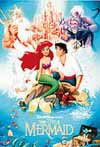
Disney also scored with one of its old-fashioned musical
animations that appealed to both children and adults. Its 28th feature-length
cartoon The Little Mermaid (1989) heralded a new generation of
successful animations, with its classic tale by Hans Christian Andersen
featuring characters Ursula, Ariel, and Sebastian.
Box-Office Stars of the Decade:
 The
greatest box-office star early in the decade was Sylvester Stallone, who
commanded $12 million a film in mid-decade. Stallone was replaced by superstar
Eddie Murphy (on the strength of Beverly Hills Cop (1984) and its
sequels). [The other major African-American star of the 1980s was Whoopi
Goldberg, who appeared in Spielberg's The Color People (1985),
Jumpin' Jack Flash (1987), Clara's Heart (1988), and Ghost
(1990) (for which she won a Best Supporting Actress Oscar), among
others. African-American comedian Richard Pryor was another popular star
in the late 70s and early 80s, until an unfortunate, near-fatal accident
while free-basing cocaine.] The
greatest box-office star early in the decade was Sylvester Stallone, who
commanded $12 million a film in mid-decade. Stallone was replaced by superstar
Eddie Murphy (on the strength of Beverly Hills Cop (1984) and its
sequels). [The other major African-American star of the 1980s was Whoopi
Goldberg, who appeared in Spielberg's The Color People (1985),
Jumpin' Jack Flash (1987), Clara's Heart (1988), and Ghost
(1990) (for which she won a Best Supporting Actress Oscar), among
others. African-American comedian Richard Pryor was another popular star
in the late 70s and early 80s, until an unfortunate, near-fatal accident
while free-basing cocaine.]
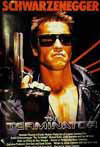
And then Murphy in turn was replaced by Austrian-born
Arnold Schwarzenegger, who catapulted to action-film fame in director
James Cameron's sci-fi romantic thriller The Terminator
(1984) - in which Arnold as a futuristic, invincible cyborg returned
to Los Angeles to murder a strong heroine (Linda Hamilton) whose offspring
would ultimately lead a rebel revolt. [Schwarzenegger's first popular
feature film was the sword-and-sorcery epic Conan the Barbarian (1982),
and subsequent machismo films after The Terminator further exaggerated
his bulk and bravura: Mark Lester's Commando (1985) and Walter
Hill's Red Heat (1988).]
Bruce Willis, star of TV's hit show Moonlighting,
finally succeeded as a believable, lone, smart action-hero in director
John McTiernan's super-charged action blockbuster Die Hard (1988),
playing off-duty lone cop John McClane caught in a dangerous situation
with terrorists (led by Alan Rickman) in an L.A. Century City high-rise.
Clint Eastwood continued to be popular as both actor
and director, playing the familiar Dirty Harry
(1971) in 70s-80s sequels:
- Magnum Force (1973)
- The Enforcer (1976)
- Sudden Impact (1983)
- The Dead Pool (1988)
Eastwood also played other western heroes in High Plains
Drifter (1973), The Outlaw Josey Wales (1976), Bronco Billy (1980),
and Pale Rider (1985). And in 1986, the popular star/director was
elected mayor of Carmel-by-the-Sea in Northern California.
Furthermore, Burt Reynolds, Robert Redford, Jane Fonda,
Dustin Hoffman, John Travolta, Sally Field, Sissy Spacek, Barbra Streisand,
Harrison Ford, Alan Alda, Bo Derek, Richard Gere, Paul Newman, Tom Cruise,
Michael J. Fox, Chuck Norris, Paul Hogan, Bette Midler, Kathleen Turner,
Glenn Close, Tom Hanks, and Tom Selleck were also successful stars in
the 80s. There were also a number of comedians who appeared in lists of
top stars, including: Steve Martin, Dudley Moore, Goldie Hawn, Bill Murray,
Chevy Chase, Dan Aykroyd, Rodney Dangerfield, Danny DeVito, and Robin
Williams. Cher, Prince, and Dolly Parton were cross-over singing stars.
Other 80s Notables:
Reprising the success of the earlier buddy-cop films 48
Hrs. (1982) and Beverly Hills Cop (1984) with bankable star
Eddie Murphy, Australian actor Mel Gibson was propelled into stardom in
Richard Donner's fast-paced, box-office champ Lethal Weapon (1987).
The over-the-top action film highlighted the chemistry of the mis-matched,
buddy-team of suicidal cop Riggs (Mel Gibson from the Mad Max films)
and conventional, laid-back, by-the-book methodical partner Murtaugh (Danny
Glover) - and led to many sequels in future years. An American Werewolf
in London (1981) told of a backpacker (David Naughton) who was attacked
one night on the English moors, resulting in his transformation into a
hairy werewolf during full moons.
And perennial favorite Meryl Streep won her
second Oscar with Alan Pakula's Sophie's Choice (1982), adapted
from William Stryon's novel. Streep played a Holocaust-surviving Polish
mother named Sophie Zawistowski, who faced a horrendous choice in a Nazi concentration camp (Auschwitz), in a story told
in flashback. Robert Duvall won his only Best Actor Oscar for his portrayal of heavy-drinking, down-and-out country singer Mac Sledge who found redemption later in his life in director Bruce Beresford's Tender Mercies (1983), with an Oscar-winning Horton Foote screenplay.
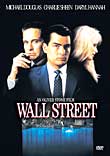 Writer-director
Oliver Stone's Wall Street (1987) starred Best Actor-winning Michael
Douglas as a ruthless, amoral, money-worshipping, greedy company trader
in a mega-villain role as Gordon Gekko. The film paralleled the decade's
excessiveness, its 'get-rich' narcissism ("Greed is good") and
the real-life insider scandals of the Reagan-era 80s. [Ironically, the
film was released in early December - just after the major Stock Market
Crash of October 19, 1987.] Writer-director
Oliver Stone's Wall Street (1987) starred Best Actor-winning Michael
Douglas as a ruthless, amoral, money-worshipping, greedy company trader
in a mega-villain role as Gordon Gekko. The film paralleled the decade's
excessiveness, its 'get-rich' narcissism ("Greed is good") and
the real-life insider scandals of the Reagan-era 80s. [Ironically, the
film was released in early December - just after the major Stock Market
Crash of October 19, 1987.]
Jack Nicholson portrayed a slowly-deranged axe-killer
and caretaker of a remote hotel in Stanley Kubrick's haunted hotel horror
film The Shining (1980). [It would be another
seven years until Kubrick's next film, Full Metal Jacket (1987).]
Another Stephen King adaptation was the low-budget occult horror film
Children of the Corn (1984) in which a small midwestern town (without
adults) was the scary setting for children who worshipped something out
in the fields. And finally, Cujo (1983) - another horror film based
upon a Stephen King novel, was about a St. Bernard dog that caught rabies
after being bitten by a bat, and kept Donna Trenton (Dee Wallace Stone)
and her son Tad (Danny Pintauro) helplessly trapped in their car for hours.
 Film History of the 1980s
Part 1, Part 2, Part 3, Part 4, Part 5, Part 6

 
|