Bill Melendez and the Peanuts Animations:
Bill
(J. C.) Melendez, who first worked at Walt Disney Studios during the classic
animated 40s era, then moved to Leon Schlesinger Cartoons (AKA Warner Brothers
Cartoons) in 1942 at the time of the Disney strike, where he made a number
of notable Looney Tunes cartoons.
 But
his biggest success was his collaboration with comic-strip cartoonist
Charles M. Schultz, and the making of the first animated
Peanuts special on CBS-TV, the irreplaceable Christmas special A
Charlie Brown Christmas (1965). It was a surprise hit, and became
an annual Christmas time favorite, and led to further TV specials and
feature films. The next four prime-time TV specials were equally
popular - Charlie Brown's All Stars! (1966), the Halloween
special It's
the Great Pumpkin, Charlie Brown (1966), You're in Love, Charlie
Brown (1967), and He's Your Dog, Charlie Brown (1968). But
his biggest success was his collaboration with comic-strip cartoonist
Charles M. Schultz, and the making of the first animated
Peanuts special on CBS-TV, the irreplaceable Christmas special A
Charlie Brown Christmas (1965). It was a surprise hit, and became
an annual Christmas time favorite, and led to further TV specials and
feature films. The next four prime-time TV specials were equally
popular - Charlie Brown's All Stars! (1966), the Halloween
special It's
the Great Pumpkin, Charlie Brown (1966), You're in Love, Charlie
Brown (1967), and He's Your Dog, Charlie Brown (1968).
[Note: Jazz musician Vince Guaraldi scored the 1965
special and continued to score all the Charlie Brown television
specials till his death in 1976. His distinctive scores were used
on all subsequent specials, movies and TV series.]
Ultimately, Melendez would be involved
as director of over 30 Charlie Brown prime-time TV specials after
1965. He also 'acted' by providing
the voices of Snoopy and Woodstock. Melendez' feature-length film
collaborations with Schultz included:
|
Four Feature-Length Peanuts (Charlie Brown) Theatrically-Released
Films
|
| Titles |
Notables |
A Boy Named Charlie Brown (1969)
|
- this was the first full-length animated
film starring the Peanuts gang
- it contained Vince Guaraldi's classic Oscar-nominated
score (that featured lyrics by Rod McKuen)
|
Snoopy, Come Home (1972)
|
- often considered the best feature-length Peanuts film
- it featured the first on-screen
appearance of Woodstock (named after the famous rock-music
festival in 1969)
- normally mute, Snoopy communicated his thoughts
for the first time with 'thought balloons'
- this was the only Peanuts animated
project without a Vince Guaraldi musical score
|
Race For Your Life, Charlie Brown (1977)
|
- this was the first Peanuts feature-length film produced after
the death of composer Vince Guaraldi
|
Bon Voyage, Charlie Brown (and Don't Come Back!) (1980)
|
- the fourth full-length feature film to be based on the Peanuts comic strip
- its sequel was a 23-minute TV special tribute
to US veteran soldiers of WWII titled What Have We Learned,
Charlie Brown? (1983), a Peabody Award winner
|
Melendez was also the producer
of a 1983 Saturday morning cartoon show called The
Charlie Brown and Snoopy Show.
A stage version of the Peanuts comic strip, You're
a Good Man, Charlie Brown, first appeared in 1967 in an off-Broadway
Greenwich Village theatre, and remained for four years. The show
was later revived on Broadway in 1999 for a short run, and won
two Tony Awards.
[Note: Melendez also directed the Emmy Award-winner
for Outstanding Animated Program for PBS-TV's special The Lion,
Witch, and the Wardrobe (1979) which was co-produced by the
Children's Television Workshop (famed for two TV series, Sesame
Street and The Electric Company). It was based upon
the first story
of C.S. Lewis' classic children's tales series, Chronicles of
Narnia,
and it was the first full-length animated feature film created
directly for television's small screen. It was broadcast over two
nights in April 1979 on US television.]
Another Peanuts variation was the computer-animated
full-length feature film The Peanuts Movie (2015).
Adults-Rated Animations in the 70s and After: Ralph
Bakshi
 Normally,
animations are regarded as an innocent, innocuous form of entertainment, even
though iconoclastic writer/director Ralph Bakshi's, adults-only rated-X feature
(in its original release) Fritz the Cat (1972), based upon cartoonist
Robert Crumb's underground comics character, was the first X-rated
animated feature in Hollywood history. It was also the first independent animated film to gross more than $100 million at the box office.
The film featured a hippie-like, sex and
drug-loving cat. Normally,
animations are regarded as an innocent, innocuous form of entertainment, even
though iconoclastic writer/director Ralph Bakshi's, adults-only rated-X feature
(in its original release) Fritz the Cat (1972), based upon cartoonist
Robert Crumb's underground comics character, was the first X-rated
animated feature in Hollywood history. It was also the first independent animated film to gross more than $100 million at the box office.
The film featured a hippie-like, sex and
drug-loving cat.
Writer/director Bakshi's next X-rated animated feature (later
re-cut and re-released with an R-rating) was the violent, gritty and misogynistic Heavy Traffic (1973), a semi-autobiographical tale about a misfit comic-book
cartoonist that was loosely adapted from Hubert Selby's novel Last Exit
to Brooklyn. It blended together animated and live-action sequences in
its urban scenes, and also layered old film clips into cartoon backgrounds.
The animation auteur also released the controversial Coonskin (1975) (aka Street Fight) that was accused of being racist and offensive. It contained
urban-oriented, politically-oriented blaxploitation content about a rabbit
that ruled the streets of Harlem.
The surrealistic animator Bakshi also directed the
animated cult film Wizards (1977) - a tale of good vs. evil.
It was a test run for his next animation - The Lord of the Rings
(1978) - the first cinematic production of the story that combined The
Fellowship of the Ring and The
Two Towers into the final animated film. His plan to
film the final chapter of the trilogy, The Return of the King,
never materialized. Bakshi's film had an adapted screenplay co-written
by Peter Beagle (based, although incompletely, upon books in J.R.R.
Tolkien's trilogy), and was noted for its extensive use of the animation
technique of rotoscoping,
in which human actors were filmed and 'traced' as cartoon characters.
[Note: Tolkien's
earlier introductory work The Hobbit (1937) was filmed as an
hour-long (78-minute) animated TV movie (broadcast in late November
1977) by the team of Arthur Rankin Jr.-Jules Bass in 1977 as The
Hobbit (1977). Voices for the characters were: Orson Bean (the
hobbit Bilbo Baggins), John Huston (the wizard Gandalf), Otto Preminger
(Elvenking), Richard Boone (Smaug), Hans Conreid (Thorin), and Brother
Theodore (Gollum). Rankin-Bass also concluded the story in the animated
TV film The Return of the King (1979).]
Bakshi also released the not-for-children sword-and-scorcery
animated Fire and Ice (1983), with work by fantasy design artist Frank
Frazetta. (Bakshi also directed various dark and psychedelic-flavored episodes
of the Spider-Man cartoon series on ABC-TV beginning in its second
season in the late 1960s.) One of his later works was
the Paramount studio-financed, poorly-received Cool World (1992), containing
a plot with similarities to the parallel animated Toon World in Who
Framed Roger Rabbit (1988). It also raised the intriguing question
of whether a live-action person could have sex with a cartoon character, and
featured Brad Pitt as the voice of a Las Vegas cop, and Kim Basinger as cartoon
sex symbol creation Holli Would, who wished to become a 'noid' in the human
world.
Rankin-Bass:
The
team of Arthur Rankin-Jules Bass was most known for its holiday specials aired
on television, such as the object-animated Rudolph the Red-Nosed Reindeer
(1964) - with the voice of Burl Ives, Frosty the Snowman (1969) - with the voice of Jimmy Durante, and Santa Claus is Coming to Town (1970) - with voices of Fred Astaire, Mickey Rooney, and Keenan Wynn.
 They
also created the parody-spoof of monster films, their only feature-length
animated film titled Mad Monster Party? (1967), with characters
based upon many of the Universal 'monsters,' including Frankenstein
(voiced by Boris Karloff), Count Dracula, The Wolf Man, King Kong,
The Mummy, Dr. Jekyll and Mr. Hyde, The Invisible Man, and The Creature
from the Black Lagoon. The film used the stop-motion "animagic" process
to animate the three-dimensional puppets. Two future Mad Magazine contributors,
Harvey Kurtzman and Jack Davis, were responsible for co-writing the
screenplay and design work. Reportedly, Tim Burton found this film
to be extremely influential upon his own later work. They
also created the parody-spoof of monster films, their only feature-length
animated film titled Mad Monster Party? (1967), with characters
based upon many of the Universal 'monsters,' including Frankenstein
(voiced by Boris Karloff), Count Dracula, The Wolf Man, King Kong,
The Mummy, Dr. Jekyll and Mr. Hyde, The Invisible Man, and The Creature
from the Black Lagoon. The film used the stop-motion "animagic" process
to animate the three-dimensional puppets. Two future Mad Magazine contributors,
Harvey Kurtzman and Jack Davis, were responsible for co-writing the
screenplay and design work. Reportedly, Tim Burton found this film
to be extremely influential upon his own later work.
Also, the team of Rankin-Bass produced the anime-like
mythological tale The Last Unicorn (1982). It was a sophisticated
story from a screenplay by children's book novelist Peter Beagle.
It told about a lonely, last-remaining unicorn (voice of Mia Farrow)
who set out on a quest to confront a beast of fire named Red Bull
that had eliminated all the other unicorns.
Other Exceptional Animations with Mature Subject Matter
in the Late 70s-Early 80s:
Nepenthe Productions and writer/director Martin Rosen (and
animator Tony Guy) made two dark films with mature (serious-minded) subject
matter - both based on Richard Adams' best-selling novels about animals and
ecological concerns:
| Titles |
Notables |
Watership Down (1978)
|
- a bleak, allegorical animated fantasy film, the
most successful British animated feature of its time. It told
about the desperate quest of a warren of rabbits to find a new
home, led by heroic Hazel (voice of John Hurt), a small, nervous
rabbit named Fiver (voice of Richard Briers), and courageous
Bigwig (voice of Michael Graham Cox). In the anthropomorphized
tale, they must escape the destruction of their land during the
construction of a housing development, and join a rival warren
named Efrafa led by a vicious militaristic dictator, General
Woundwort (voice of Harry Andrews). The film also included the
last involvement in a motion picture for legendary actor Zero
Mostel who played the voice of the cantankerous seagull Kehaar.
- the Adams' stories of the rabbits of Watership
Down were retold in a short-lived animated TV series,
produced by Rosen - 3 series of episodes aired beginning
in 1999; with title music by Andrew Lloyd Webber
|
The Plague Dogs (1982)
|
- an even darker, far more
nihilistic, pro-animal rights film about two abused laboratory
experiment dogs, a cynical, bitter black Labrador named Rowf
(voice by Christopher Benjamin) and a brown and white dog named
Snitter (voice of John Hurt). Both escape from captivity in
a secret British government research lab (Animal Research, Surgical
and Experimental)
and become fugitives. While on the run, it is falsely reported
and suspected that they carry the deadly bubonic plague and they
are relentlessly pursued.
|
 The French/Czech-made, science-fiction oriented Fantastic
Planet (1973, Fr.) (aka La Planète Sauvage) possessed similarities
to Fritz Lang's Metropolis (1927) with its two-tiered society on a
faraway planet of Ygam, consisting of enslaved humanoids called Oms and a
ruling class of bizarre, blue-skinned alien giants named Traags. It was based
upon the popular French newspaper serial (Stefan Wul's Oms en Serie ("Oms by the Dozen")), and was lauded with the Cannes Film
Festival's special jury prize, the Grand Prix, when it was first released.
Its animation technique was to move paper cutouts across backgrounds. The French/Czech-made, science-fiction oriented Fantastic
Planet (1973, Fr.) (aka La Planète Sauvage) possessed similarities
to Fritz Lang's Metropolis (1927) with its two-tiered society on a
faraway planet of Ygam, consisting of enslaved humanoids called Oms and a
ruling class of bizarre, blue-skinned alien giants named Traags. It was based
upon the popular French newspaper serial (Stefan Wul's Oms en Serie ("Oms by the Dozen")), and was lauded with the Cannes Film
Festival's special jury prize, the Grand Prix, when it was first released.
Its animation technique was to move paper cutouts across backgrounds.
The inventive animated fantasy Twice Upon a Time
(1983),
executive produced by George Lucas, told a story about two heroes and
their friends who tried to prevent a maniacal madman from giving
children nightmares. It used the same cut-out paper animation
that South Park: Bigger, Longer
& Uncut (1999), the most profane animated film (with 399
swear-words), would also later employ.
The Stop-Motion Animation Work of Phil Tippett:
One of stop-motion animation pioneer Ray Harryhausen's
animators was Phil Tippett, who followed in his mentor's footsteps
with Oscar-nominated and winning work in Visual Effects, often for
LucasFilms and Industrial Light & Magic (ILM). He worked on the
following fantasy films:
- Star
Wars: Episode IV - A New Hope (1977) -
the holographic chess-game sequence, and the seedy extraterrestrials
in a Mos Eisley dive bar cantina on Tatooine
- Star Wars: Episode V - The
Empire Strikes Back (1980) -
the early Hoth snow battle sequence with its famed AT-AT Imperial
Walkers and hybrid alien Tauntaun
- the fantasy adventure Dragonslayer (1981) -
an Oscar-nominated film for Best Visual Effects, with its
innovative, more fluid stop-motion filming technique of go-motion,
used for the realistic movements of the dragon
- Star Wars: Episode
VI - Return of the Jedi (1983) - recipient of a Special
Achievement Oscar Award for Visual Effects
- director Steven Spielberg's Indiana Jones and the Temple of Doom (1984) -
the mine car chase sequence
- The Golden Child (1986)
- Howard the Duck (1986)
- RoboCop (1987) - the two-footed experimental
enforcer robot ED209
- Willow (1988) - an Oscar-nominated film
for Best Visual Effects
- Jurassic Park
(1993) - an Oscar-winning film
for Best Visual Effects, for its realistic CGI depictions of
dinosaurs
- DragonHeart (1996) - an Oscar-nominated film for
Best Visual Effects
- Starship Troopers (1997) -
an Oscar-nominated film for Best Visual Effects, for its hordes of
giant, hostile alien arachnids
Rock-Oriented Animation Favorites:
Other pioneering animations in the early 80s relied heavily
on rock music, adult themes of sex and violence, and capitalized on the post- Star Wars (1977) sci-fi fantasy boom. They
have since become cult favorites for midnight movie fans:
| Titles |
Notables |
Heavy Metal (1981, US/Can.)
|
- director Gerald Potterton's uneven, multi-part
anthology film was based on the 70s fantasy, cyberpunk comic
book/magazine of the same name
- it was heavy on adult-oriented content
- it was
produced by Ivan Reitman (who would soon become famous for
directing Ghostbusters
(1984)), and two of the stories ("Soft Landing" and
"B-17") were contributed by Dan O'Bannon - the screenwriter
for Alien
(1979)
- a midnight screening favorite, it featured
hallucinatory images and a heavy rock soundtrack by performers
Black Sabbath, Blue Oyster Cult, Nazareth, Cheap Trick, Devo,
and Grand Funk Railroad
- [Note: a computer-generated and cel
animated sequel that went direct-to-cable TV, Heavy Metal
2000 (2000),
featured a tough, buxom heroine named FAKK 2 (who was based upon
the B-movie queen Julie Strain), frequent glimpses of cartoon
nudity, and a heavy metal soundtrack by Pantera, Monster Magnet,
MDFMK, Insane Clown Posse, Billy Idol, Bauhaus and others]
|
Pink Floyd the Wall (1982, UK)
|
- director Alan Parker's combination live-action/animated
musical drama was based on the Pink Floyd the Wall rock
album released in 1979
- the screenplay was written by Roger Waters,
one of the Pink Floyd band-members
- cartoonist Gerald Scarfe's animation in the
anti-authoritarian, anti-war film presented deeply adult
content (on the subjects of sex, drugs, rock and roll, and
violence) and psychosexual Freudian imagery
|
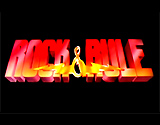
Rock & Rule (1983, Can.)
|
- director Clive Smith's post-apocalyptic animated
musical fantasy told about an aging R&R singer named Mok
(voice of Don Francks) who was searching for eternal life in
order to immortalize himself, and was attempting to summon
a demon
- other voices included
singer Lou Reed, Iggy Pop, Robin Zander of Cheap Trick, Earth
Wind & Fire, and Deborah Harry of Blondie
- [Note: Smith's animation studio Nelvana
had earlier produced a 27-minute short The Devil and Daniel
Mouse (1978). Rock & Rule was the studio's first feature-length
film]
|
Early Claymation and Gumby:
Claymation is a type of animation that uses hand-crafted,
sculpted plasticine or clay. This form of stop-motion
animation was first associated with director Art Clokey's clay-hero character
named Gumby for children's TV - a slant-headed bendable figure. (Clokey filmed
the animated motion study Gumbasia at USC in the early 1950s. Gumby
shorts were inaugurated in the mid-1950s - and the character first debuted
on The Howdy Doody Show in 1956.)
Early on, the technique of claymation was mostly associated
with the directorial work of Will Vinton, most recognized for his work on the TV commercial about California Raisins in the late 80s. He was the co-director of the first Claymation film, Closed Mondays (1974), which won the Best Animated Short Film Oscar award. His work was evidenced in the first
full-length feature film showcasing claymation titled The Adventures of
Mark Twain (1985) (aka Comet Quest), a biography of the US humorist derived
from Twain's own Huckleberry Finn sequel Tom Sawyer Abroad.
James Whitmore provided the voice of the title character on a transcontinental,
riverboat balloon journey to find Haley's Comet. Twain's classic tales were
featured in various segments, such as "The Celebrated Jumping Frog of
Calaveras County" and "The Mysterious Stranger". The Vinton studio also provided claymation effects for the live-action fantasy Return to Oz (1985). |
 Animated Films