 |
Part 4 |
 Horror Films
David Cronenberg's Unique Brand of 'Body' Horror:
Subversive Canadian filmmaker David Cronenberg, known for disturbing sexual and 'body' horror with perennial themes of mutation and infection, made his directorial debut with his first major film Shivers (1975, Can.) (aka They Came From Within/The Parasite Murders) about a group of Montreal high-rise apartment occupants at Starliner Island on a permissive sex and violence spree after being infected by parasites (slimy, phallic turd-like creatures) - a metaphor for the spread of the AIDS virus. One of the occupants (scream queen Barbara Steele) passed on the parasite with a lesbian kiss. His next notable film, his fourth film, was Rabid (1977) (aka Rage) starring ex-porn film star Marilyn Chambers (the ex "Ivory Snow girl") - in the lead role as Rose, a mutant predator with vampirish blood cravings following plastic surgery for injuries suffered in a motorcycle accident. Skin grafts produced an orifice in her armpit with a phallic needle-like stinger that needed to consume blood, causing her victims to become rabid and infected with plague. [Chambers was one of the first adult stars to cross over into a mainstream film.] Cronenberg's graphic The Brood (1979) depicted the birth of murderous demon-children from an insane mother. Scanners (1981) involved psychic, telepathic warriors with mental powers strong enough to explode heads.
Other exceptional films from Cronenberg in the 80s and 90s included the following:
- The Dead Zone (1983) - an adaptation of Stephen King's novel
- Videodrome (1983) - an ambiguous film about thought-control and corrupting broadcasts from a pirated satellite TV signal
- The Fly (1986) starring Jeff Goldblum and Geena Davis - an effective re-make of the 1958 original
- the frightening psychological thriller Dead Ringers (1988), Cronenberg's most successful film, featuring two Jeremy Irons and gynecological instruments
- Naked Lunch (1991), an attempt to film William Burrough's surrealistic drug trip
- the slickly original Crash (1995), a controversial film about depraved car-crash victims
- eXistenZ (1999), an alternate reality flick
Recently, he directed A History of Violence (2005) about the after-effects of violence upon the family of a small-town restaurant owner named Tom Stall (Viggo Mortensen) - it featured William Hurt's frightening, unsettling Oscar-nominated 10-minute role as volatile mobster Richie Cusack.
Wes Craven:
Wes Craven also began his career in violent horror films in the 70s, with the low-budget rape-revenge shocker The Last House on the Left (1972) (a re-tooling of Ingmar Bergman's The Virgin Spring (1960)) and The Hills Have Eyes (1977) - about a degenerate, cave-dwelling, family of mutant cannibals in the desert stalking and torturing an entire stranded extended family. His two most famous films were teens-in-terror slasher flicks that spurred a flurry of imitations and sequels:
- the first film in the series, A Nightmare on Elm Street (1984), introduced the scary character of Freddy Krueger (Robert Englund), a re-incarnated, sadistic child molester and serial killer with razor-fingered gloves and a burn-scarred face; years earlier, the local child killer had faced parental vigilantes in the town after escaping justice on a legal technicality, and been burned to death in a basement furnace. The premise was that the children of his persecutors -- grown-up teens (Heather Langenkamp, Amanda Wyss, and Johnny Depp in his feature film debut, among others) who fell asleep would experience the nightmare of Freddy's returning presence, who had emerged from Hell to haunt them
- the surprising horror hit-spoof Scream (1996) that helped to reinvigorate films in the genre in the late 90s, with a whopping domestic box-office gross of $103 million. It rejuvenated the slasher film in subsequent years by self-reflectively honoring various stalking/slasher films in the character of a slasher dressed as the Grim Reaper. The film opened with the death of Casey Becker (Drew Barrymore) when she failed to correctly answer a trivia question about Friday the 13th (1980). A second terrorized teen named Sidney Prescott (Neve Campbell), a year after her mother's murder, was also threatened - and eventually the teen assassin(s), Sidney's psychotic boyfriend Billy Loomis (Skeet Ulrich) and his flunky best friend Stuart "Stu" Macher (Matthew Lillard), both using a voice-changing device, were unmasked in the climactic finale.
Scream's success brought about sequels in 1997, 2000 and then in 2011 - also with Neve Campbell and the few remaining characters from previous versions (Courteney Cox Arquette and David Arquette). The total domestic gross of the Scream series (1996-2011) of four films totaled $331.7 million (there were declining revenues for each successive release).
- Scream 2 (1997) - grossing $101 million (domestic)
In the film, Sidney went away to Windsor College in Cincinnati with long-time friend Randy (Jamie Kennedy), but watched as many of her undergrad friends died, because of the revenge plot of Mrs. Loomis, Billy's mother (Laurie Metcalf), who was aided by student Mickey (Timothy Olyphant). Mrs. Loomis' motive for attempting to kill Sidney and her friends was revenge for Sidney killing her son in the first film. Sidney survived by the film's end, while both Mrs. Loomis and Mickey were shot and killed.- Scream 3 (2000) - grossing $89 million (domestic)
The traumatized Sidney was working in California as a hotline crisis intervention counselor. She learned that she had a long-lost half-brother named Roman Bridger (Scott Foley), her mother Maureen's (Lynn McRee) son from a previous affair, whom Maureen had met but abandoned. Roman was the director of the third film in a horror trilogy, Stab 3: Return to Woodsboro, being filmed in Los Angeles, and characters were being murdered. Roman admitted that he was ultimately responsible for all the murders in the previous films, because he had told Billy about his father's affair with Sidney's mother. He was vengefully planning to blame the murders on Sidney because he felt she had deprived him of his life, but his own life ended when Dewey Riley (David Arquette) shot him in the head.- Scream 4 (2011) - grossing $38 million (domestic)
The success of Scream was set up by his direction of the sequel Wes Craven's New Nightmare (1994), the 7th film in the series, with original star Heather Langenkamp, Craven himself, and Robert Englund all playing themselves. Nightmare on Elm Street's (from 1984-2010) series of 9 films grossed $370.5 million.
The films in the Nightmare on Elm Street series (through 2010) included nine films (one was a hybrid):
- A Nightmare on Elm Street (1984)
- A Nightmare on Elm Street 2: Freddy's Revenge (1985)
- A Nightmare on Elm Street 3: Dream Warriors (1987)
- A Nightmare on Elm Street 4: The Dream Master (1988)
- A Nightmare on Elm Street 5: The Dream Child (1989)
- Freddy's Dead: The Final Nightmare (1991)
- (Wes Craven's) New Nightmare (1994)
- Freddy vs. Jason (2003) - the hybrid
- A Nightmare on Elm Street (2010)
In Red Eye (2005), his 20th feature film, Craven added to his horror repertoire this psychological thriller set on board an overnight jetliner flight to Miami, with Rachel McAdams as the terrified passenger Lisa Reisert taken 'hostage' by stranger/passenger Jackson Rippner (Cillian Murphy).
Blaxploitation Horror Films:
The first of the so-called exploitative 'blaxploitation' films (with predominantly African-American casts, music and themes) was Melvin Van Peebles' controversial independent film Sweet Sweetback's Baadasssss Song (1971). It jump-started a whole series of similar films about black private detectives and gritty urban life. As the movement progressed, it merged with the horror film genre (and others too, such as the sci-fi genre), and produced re-hashed hybrid films with blaxploitation content, often spoofing the titles of famous horror films from the past:
- William Crain's Blacula (1972) - with William Marshall as the accursed African prince title character terrorizing LA as a vampire; and its sequel Scream, Blacula, Scream! (1973)
- The Thing with Two Heads (1972), a campy horror/comedy cult classic about a racist white mad scientist (Ray Milland) whose head has to be grafted onto the body of a huge black man (Rosie Grier)
- the sci-fi crime fantasy Top of the Heap (1972) - about a crazy young DC black cop fantasizing about being the first black man on the moon
- William Levey's notoriously trashy Frankenstein imitator Blackenstein (1973)
- Bill Gunn's Vampires of Harlem (1973), aka Ganja & Hess
- Voodoo Black Exorcist (1973, Sp.) aka Vudu sangriento
- William Girdler's Abby (1974) (a blaxploitation version of The Exorcist (1973))
- the kung-fu action film Black Belt Jones (1974)
- Black Werewolf/The Beast Must Die (1974)
- the zombie flick The House on Skull Mountain (1974)
- Ralph Bakshi's controversial animated film Coonskin (1975)
- Dr. Black, Mr. Hyde (1976)
- Abar, the First Black Superman (1977)
- The Six Thousand Dollar Nigger (1980)
Later blaxploitation films in the 90s with mostly horror themes included: Def by Temptation (1990), the adaptation of Clive Barker's The Forbidden about a hook-handed murderer summoned by speaking "Candyman" five times to a mirror - Candyman (1992) with Virginia Madsen, and its sequel Candyman: Farewell to the Flesh (1995), the western Posse (1993), Tales from the Hood (1995) (an anthology of 4 stories), Vampire in Brooklyn (1995) (a spoof starring Eddie Murphy), and Bones (2001) with rapper Snoop Dogg in the title role.
Additional Horror in the 80s and 90s:
Many of the more successful horror films spawned inferior, low-budget, sickening slasher, 'schlock' or 'splatter' films in the 80s (and 90s). Most of these sequels or imitators were exploitative and featured shock, gory violence, graphic horror, 'teens in peril,' computer-generated special effects and makeup, and usually a homicidal male psycho who committed a progressive string of gruesome murders on female victims (where brutal killing/slashing/hacking metaphorically substituted for a rape). Many of these films told tales of a vengeful murderer motivated by some past misdeed or sexual perversity.
Friday the 13th (1980), one of the first of the horror genre's most recognizable horror series - with an astonishing number of sequels. It ripped off more original films of the 70s (such as director Mario Bava's definitive R-rated slasher/gore film A Bay of Blood (1971, It.)) with tales of terrorized teen camp counselors. It also inspired a TV series and several spoofs. Jason Voorhees, like the psychopathic Freddy Krueger after him in the Nightmare on Elm Street series, became a landmark name, although the machete-wielding maniac in the original film wasn't Jason, but his vengeful mother Pamela (Betsy Palmer). She was seeking revenge for the drowning of her son at summer camp at Crystal Lake when sexually-promiscuous camp counselors neglected their duties.
Although Pamela was beheaded in the film's climax, her son miraculously survived and lurked in the camp's woods - seeking further retaliation on sexually-active coeds in the franchise's installments. By 2009, there were a total of 12 films from 1980 to 2009 (one was a hybrid in 2003), grossing $381 million (domestic). He went from wearing a one-eyed pillowcase to a white, grimy plastic hockey mask when he became more indestructible. Various locales for the films ranged from the woodsy lake-side Camp Crystal Lake, to Manhattan, to outer space in Jason X (2001):
- Friday the 13th (1980)
- Friday the 13th, Part 2 (1981)
- Friday the 13th, Part 3 (1982)
- Friday the 13th - The Final Chapter (1984)
- Friday the 13th Part V: A New Beginning (1985)
- Friday the 13th Part VI: Jason Lives (1986)
- Friday the 13th Part VII: The New Blood (1988)
- Friday the 13th Part VIII: Jason Takes Manhattan (1989)
- Jason Goes to Hell: The Final Friday (1993)
- Jason X (2001)
- Freddy vs. Jason (2003)
- Friday the 13th (2009)
Child's Play (1988) was the first of a series of films about a bright, redheaded two foot-tall "Buddy" doll that was possessed by the soul and voice of evil and angry serial killer Charles Lee Ray (Brad Dourif) - it terrorized a young boy and his family. It was followed by two generic horror sequels in 1990 and 1991, and then Bride of Chucky (1998) that introduced a female serial killer doll Tiffany (voice of Jennifer Tilly) to infuse an element of black comedy. The fifth film in the series, Seed of Chucky (2004), directed by series screenwriter Don Mancini, was even more of a self-referencing horror/black comedy parody similar to Scream (1996), featuring numerous in-jokes (the gender-confused child of Chucky and Tiffany was named Glen/Glenda, a reference to the Ed Wood film; and Jennifer Tilly played herself, making references to her lesbian role in Bound (1996) (with co-star Gina Gershon, etc.)
Fantasy Author H.P. Lovecraft and His Horror Tales:
Stuart Gordon's gory, cult-classic comedy about re-animated dead people, Re-Animator (1984) - was based on an H.P. Lovecraft serial tale, Herbert West - Reanimator. The twisted film was shot in only a little over two weeks, and told the outrageous tale of a demented medical student named Dr. Herbert West (Jeffrey Combs) who was experimenting on regenerating dead bodies. After experiments on a dead cat with a reanimating, luminous green serum, the research went awry as West's megalomaniac teacher Dr. Carl Hill (David Gale) was reduced to a severed head on a platter and he attempted to perform oral sex on a screaming and naked Megan Halsey (Barbara Crampton) amidst a scene of lobotomized zombies stumbling around in a morgue - the film's most controversial scene. The original film was followed by additional sequels, also starring Jeffrey Combs:
- The Bride of Animator (1990), d. Brian Yuzna
- Beyond Re-Animator (2003), d. Brian Yuzna
Another Lovecraft short story, From Beyond, was the basis of another Gordon/Yuzna collaboration, appropriately titled From Beyond (1986) - with the tagline "Humans Are Such Easy Prey", again featuring veterans Jeffrey Combs and Barbara Crampton. Many films have either been based upon or inspired by H.P. Lovecraft tales, such as the following:
- The Haunted Palace (1963) - from The Case of Charles Dexter Ward, from director Roger Corman - one of his "Poe" films; remade in 1991
- Die, Monster, Die! (1965, UK), aka Monster of Terror - from The Colour Out of Space; remade in 1987
- The Shuttered Room (1967, UK) - aka Blood Island - from The Shuttered Room
- The Crimson Cult (1968, UK), aka Curse of the Crimson Altar and The Crimson Altar - based on The Dreams in the Witch-House; featuring a late appearance by Boris Karloff
- The Dunwich Horror (1970) - from Lovecraft's own The Dunwich Horror; a Roger Corman-produced film
- The Curse (1987) - adapted from The Colour Out of Space
- The Unnamable (1988) - from The Unnamable
- The Resurrected (1991) - from The Case of Charles Dexter Ward
- The Unnamable II: The Statement of Randolph Carter (1992) - from The Statement of Randolph Carter
- Necronomicon (1993) - a triple anthology, based upon The Rats in the Walls, Cool Air, and The Whisperer in the Darkness; the Necronomicon was also featured in Sam Raimi's trilogy of Evil Dead films: The Evil Dead (1981), Evil Dead II: Dead by Dawn (1987), and Army of Darkness (1993)
- In the Mouth of Madness (1994) - from director John Carpenter; with Lovecraftian themes
- Lurking Fear (1994) - loosely based on The Lurking Fear
- Dagon (2001, Sp.) - based upon both Dagon and The Shadow Over Innsmouth
Sequel Horrors:
In many cases, sequels of popular titles were designed to cash in on an initial film's success: for example, all of these first films cranked out sequels too numerous to mention: The Exorcist (1973), It's Alive (1974), The Omen (1976), Halloween (1978), The Howling (1981), Poltergeist (1982), A Nightmare on Elm Street (1984), Hellraiser (1987), Child's Play (1988) - with Chucky, Darkman (1990), Scream (1996), I Know What You Did Last Summer (1997), and Jeepers Creepers (2001).
Here are other examples of the decreased (or sometimes imitative, uninventive) quality of horror films beginning in the 80s: Mother's Day (1980), Motel Hell (1980), Prom Night (1980), He Knows You're Alone (1981), My Bloody Valentine (1981), the comedy parody Student Bodies (1981), and the Roger Corman-produced films Sorority House Massacre (1986) - followed by two sequels: Sorority House Massacre II (1990), and Sorority House Massacre III: Hard to Die (1990).
Sam Raimi:
Writer/director Sam Raimi created some of the most exuberant, inventive, manic, comic-book, tongue-in-cheek parodies with horror themes ever produced starring Bruce Campbell as Ash - the one-armed protagonist with a chain saw. The low-budget, cult horror series was composed of the following trilogy of films, followed later by sequels:
- The Evil Dead (1981) - a gorefest about a remote backwoods cabin (in Tennessee, or Michigan?) possessed by evil spirits (after the discovery of the book of the dead, the Necronomicon), and haunting five Michigan State University students by turning them into zombies
- Evil Dead 2: Dead by Dawn (1987) - a bigger-budget version of the original film
- Army of Darkness (1992), set in the medieval 13th century with a time-travel plot
- Evil Dead (2013), producer Sam Raimi's re-make (a soft reboot), directed by Fede Álvarez; about five friends (without Ash) in a remote cabin, who summon up demons after finding the evil Book of the Dead
- Evil Dead Rise (2023), by writer/director Lee Cronin; a stand-alone film about two estranged sisters, Beth (Lily Sullivan) and Ellie (Alyssa Sutherland), fighting off deadites
Raimi's more mainstream film Darkman (1990) brought together elements of gothic horror and characters (the Invisible Man, the Wolf Man, and the Phantom of the Opera) and featured Liam Neeson as the tortured, vengeful, and disfigured scientist Peyton "Darkman" Westlake. He also directed the major blockbuster Spider-Man (2002) with the comic-book super-hero Spider-Man/Peter Parker (Tobey Maguire) battling his evil nemesis, the Green Goblin/Norman Osborn (Willem Dafoe). Director Raimi's sequels were equally successful both critically and at the box-office: Spider-Man 2 (2004) with a villainous Dr. Octopus (Alfred Molina), and Spider-Man 3 (2007).
Tim Burton:
Tim Burton contributed his unique and original vision to the horror genre with a number of imaginative films including the horror/comedy Beetlejuice (1988), two Batman films (the blockbuster original Batman (1989) and a sequel Batman Returns (1992)), the fantasy/horror film Edward Scissorhands (1990) about a boy/creature with blades for fingers, and the musical and macabre The Nightmare Before Christmas (1993) - with superb stop-motion animation in a tale about the saving of Christmas by Jack Skellington. Burton's biographical horror film Ed Wood (1994) included scenes with an aging Bela Lugosi (played by Oscar-winning Martin Landau), and his light-hearted, campy, escapist satire about Martian invaders titled Mars Attacks! (1996) spoofed disaster, science fiction, and monster films all at once. The famed director also retold and updated the famous Washington Irving legendary fable of The Headless Horseman in his Sleepy Hollow (1999) with Johnny Depp as Ichabod Crane.
Remakes of Classic Vampire, Wolfman, and Frankenstein Films in the 80s and Beyond:
Classic Wolfman, Dracula/Vampire, and Frankenstein films were also resurrected and refashioned in the 80s and 90s with bigger budgets and stars. A few of the more accomplished but cliched horror films involving werewolves included John Landis' An American Werewolf in London (1981) (re-made as An American Werewolf in Paris (1997) in the setting of Paris), Joe Dante's horror/comedy The Howling (1981), Mike Nichols' Wolf (1994) with Jack Nicholson as the afflicted individual, and the R-rated The Wolf Man (2010) with Benicio del Toro as Lawrence Talbot/The Wolf Man and Anthony Hopkins as Sir John Talbot - these films featured stunning metamorphosis sequences of man-into-wolf, elements that are now standard procedure for such films. Other recent werewolf films included: Michael Wadleigh's classic werewolf film Wolfen (1981), Neil Jordan's fairy tale-monster film The Company of Wolves (1984), Silver Bullet (1985) - an adaptation of Stephen King's Cycle of the Werewolf, the spoof Teen Wolf (1985) with Back to the Future's Michael J. Fox - and its sequel Teen Wolf Too (1987).
In the early 80s, Tony Scott filmed the glossy lesbian/vampire tale The Hunger (1983) that starred Catherine Deneuve and Susan Sarandon. The campy teen/horror spoof Buffy the Vampire Slayer (1992) cast Kristy Swanson as the improbable cheerleader and Valley Girl mall queen chosen to challenge LA vampires. The popular TV series of the same name, with high-school vampire slayer Buffy Summers (Sarah Michelle Gellar) perpetuated the vampire myth - it was set in her hometown of Sunnydale, conveniently located above the Hellmouth.
Writer/director Stephen Sommers resurrected The Mummy as a horror creature in his two action-oriented cliff-hanger Mummy films, starring Brendan Fraser as the character of legionnaire Rick O'Connell - a take-off on Indiana Jones, with a pretty but inept Egyptologist archaeologist Evelyn Carnahan (Rachel Weisz), and the 3,000-year-old mummified corpse of vengeful high priest Imhotep (Arnold Vosloo):
- The Mummy (1999)
- The Mummy Returns (2001)
- The Mummy: Tomb of the Dragon Emperor (2008), the series' third film, directed by Rob Cohen (but produced by franchise founder Stephen Sommers), focused on the resurrected terra cotta "mummy" of evil and ruthless Dragon Emperor Han (Jet Li), as the series moved to the Far East and China. The film co-starred Michelle Yeoh (as ancient witch Zi Juan), and Maria Bello replaced Weisz in the role of Evelyn
- Chuck Russell's prequel The Scorpion King (2002) featured a spin-off character from The Mummy Returns (2001) - the Scorpion King/Mathayus (professional wrestler Dwayne 'The Rock' Johnson), and Kelly Hu co-starred as sorceress Cassandra
Revisionist Vampire Films:
As with all successful franchises, the key to Dracula-vampire longevity was imagination and creativity. Although the basic elements of Stoker’s novel remained in most vampire films, the revisionist variations were striking and dramatic. Most recently, the themes of AIDS blood infection, drug addiction, and teenage angst have overtaken the previous elements or conventions of exploitation, xenophobia, bloody desecration of virgins, and good vs. evil. A wide variety of horror vampire tales were put on celluloid in the 80s and afterwards, with usually more overt sexual overtones and bloody violence - they included the following:
David Cronenberg's Rabid (1977), about a mutant vampirish, blood-seeking predator (ex porn star Marilyn Chambers) with an orifice in her armpit containing a phallic needle-like stinger causing her victims to become rabid and infected with plague
- Tobe Hooper's sci-fi/horror hybrid Lifeforce (1985) (with the working title Space Intruders or Vampires from Outer Space - similar to the name of the original 1976 novel The Space Vampires upon which the film was based) with Mathilda May as an energy-sucking, humanoid “space-girl” vampire who was brought back from Halley's Comet and soon began to terrorize London - and she was stark naked for most of her scenes in the film
- the horror-fantasy comedy Mr. Vampire (1985, HK) (aka Geung Si Sin Sang), with four sequels from 1986 to 1990, featuring hopping vampires
- Joel Schumacher's teenaged punks vampire film The Lost Boys (1987), with Kiefer Sutherland as vampire gang leader David hissing to newly-dead Michael (Jason Patric): "Now you know what we are, now you know what you are. You'll never grow old, Michael, and you'll never die, but you must feed"; also the film's closing line about the coastal town of Santa Carla infested with vampires: "One thing about living in Santa Carla I never could stomach... all the damn vampires"
- director Kathryn Bigelow's directorial debut film Near Dark (1987) - about violent night-prowling Western outlaw vampires
- Vampire's Kiss (1988), with Nicolas Cage as a mad, cockroach-eating NYC business executive (literary agent) after being bitten by a beautiful vampire named Rachel (Jennifer Beals)
- a cursed virginal rock-star vampire in Rockula (1990)
- director Francis Ford Coppola's visually compelling and baroque film Bram Stoker's Dracula (1992), an original reworking of Stoker's 1897 novel, with Gary Oldman as the blood-sucking, melancholic, theatrical, sexy and ruthless Count Dracula, Anthony Hopkins as his crazed arch-nemesis Van Helsing, and Keanu Reeves as Jonathan Harker
- the gangster/mobster vampire film Innocent Blood (1992)
- the over-the-top, star-studded vampire epic Interview with the Vampire: The Vampire Chronicles (1994) from director Neil Jordan that was partly based on Anne Rice's popular gothic vampire novels, and featured Tom Cruise as the roguish vampire Lestat
- a trio of films about hip, post-modern, heroin-addicted vampires: Nadja (1994), Abel Ferrara's The Addiction (1995), and Habit (1996)
- darkly erotic romantic vampires in the R-rated Embrace of the Vampire (1995) featuring controversially-revealing topless scenes from former child and TV star Alyssa Milano
- the violent horror film with Mexican strip-joint criminal vampires in From Dusk Till Dawn (1996) scripted by Quentin Tarantino
- John Carpenter's horror/western Vampire$ (1998) with James Woods as a vampire killer
- Wes Craven Presents: Dracula 2000 (2000), a loose adaptation of the original Bram Stoker novel
- Blade (1998) and the sequel Blade II (2002), with Wesley Snipes as the Marvel Comics half-vampire vampire slayer
- The Queen of the Damned (2002) - singer Aaliyah's last film, with goth-rock superstar vamps, based on author Anne Rice's popular book series The Vampire Chronicles
- Underworld (2003), with Kate Beckinsale as an anti-lycanthrope vampire warrioress
- Stephen Sommers (of The Mummy fame) wrote and directed the big-budget Van Helsing (2004), featuring Hugh Jackman as the legendary monster hunter who battled not one but three classic creatures: The Wolf Man, Count Dracula and Frankenstein's Monster - the film contained compelling CG special effects, including three half-naked vampires
- I Am Legend (2007), starring Will Smith in a dystopic future haunted by virus-spread zombified mutant vampires
- 30 Days of Night (2007), with Alaskan sub-zero vampires
- female director Catherine Hardwicke's vampire romance Twilight (2008) and its two werewolves/vampire romance sequels The Twilight Saga: New Moon (2009) and The Twilight Saga: Eclipse (2010) - all based upon Stephenie Meyer's teenage vampire books
After his success with Bram Stoker's Dracula (1992), one of the highest-grossing vampire films of all time, Francis Ford Coppola turned to the other classic monster character and served as co-producer with director/actor Kenneth Branagh's British film for the horror classic Mary Shelley's Frankenstein (1994), starring Robert De Niro as the Creature and Helena Bonham-Carter as the doctor's distressed fiancee Elizabeth.
Other Notable Horror Films in the 80s and 90s:
Inventive fantasies with Gothic plots included:
- the revisionistic feminist remake The Bride (1985) with Jennifer Beals (her next film after her debut in Flashdance (1983)) as the 'perfect' and attractive Eva - the 'bride of Frankenstein' (her creator Baron Frankenstein was played by rock-star singer Sting)
- Michael Mann's visually and technically impressive WW II horror flick with evil Nazis titled The Keep (1983)
- producer Steven Spielberg's comedy/horror film Gremlins (1984) about cute little "mogwai" hand puppets that turn nasty; a sequel, Joe Dante's Gremlins 2: The New Batch (1990) provided both black comedy and a parody/satire with lots of in-jokes and cameos, a Donald Trump-like character, and a Busby Berkeley musical homage ("New York, New York") performed by the gremlins
- the summer blockbuster comedy spoof Ghostbusters (1984) about paranormal investigators in the Big Apple
- director George Miller's excessively decadent The Witches of Eastwick (1987) about the sexual liberation of three small-town New England women (Cher, Susan Sarandon, and Michelle Pfeiffer) through Jack Nicholson's Mephisto (Daryl Van Horne)
- director Arthur Penn's gothic horror thriller/film noir Dead of Winter (1987) with Mary Steenburgen in a multiple role as a victimized woman in a remote cabin during a blizzard
- Adrian Lyne's Fatal Attraction (1987) with the merging of horror and suspense/thriller genres with a manipulative film about a spurned, deadly woman
- Nicolas Roeg's The Witches (1990) with Anjelica Huston as the chief witch
British writer/director Clive Barker made his directorial debut with the graphically grisly Hellraiser (1987) featuring nasty Cenobites, followed by innumerable sequels. Another British director, Bernard Rose, made the nightmarish fantasy Paperhouse (1989) and directed Clive Barker's terrifying, violent tale Candyman (1992) about a reincarnated, hook-handed, formerly-tortured and murdered slave nicknamed "Candyman" who enticed female urban legends researcher Helen Lyle (Virginia Madsen) to "Be my victim." In 1990, Kathy Bates won the Best Actress Oscar for her portrayal of a sick celebrity fan in Misery (1990), based on another Stephen King novel.
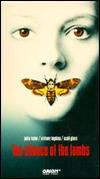
Beginning in 1986 were a number of films comprising a series of 'Hannibal Lecter' films, featuring the evil psychiatrist:
- Michael Mann's slick Manhunter (1986)
- director Jonathan Demme's shocking horror/thriller The Silence of the Lambs (1991), starring Anthony Hopkins as the murderous 'Hannibal the Cannibal' and Jodie Foster as a vulnerable FBI agent. It walked away with five major Academy Awards - a clean sweep. Respectability was awarded to the horror film genre in this rare instance
- Ridley Scott's Hannibal (2001)
- Brett Ratner's prequel Red Dragon (2002) - a remake of Manhunter; chronologically, the film was the first story in the Hannibal saga - a prequel to The Silence of the Lambs (1991)
- Hannibal Rising (2007) - an 'origin story,' considered a prequel to all of the other films in the series, occurring chronologically before Manhunter (1986) and its remake Red Dragon (2002)
Cape Fear (1991), a Martin Scorsese remake of the early 60's classic with Robert Mitchum as a psychopathic stalker, starred Oscar-nominated Robert DeNiro as a creepy, Freddy Krueger-like paroled convict. The disturbing Jacob's Ladder (1990) featured a Vietnam vet (Tim Robbins) troubled with nightmares due to possible military experiments with LSD and other family traumas. In 1992, the controversial suspense/erotic thriller Basic Instinct (1992) produced pure horror in its story of a beautiful, bi-sexual murder suspect. David Fincher's thriller-horror film Se7en (1995) followed two NY homicide cops (Morgan Freeman and Brad Pitt) as they tracked down a serial killer (Kevin Spacey) known for displaying the 'seven deadly sins' at his murder scenes.
A few other horror films in the mid-1990s surprised the industry with their phenomenal success and return to slasher themes. Each of them provided an attractive and hip young cast: The Craft (1996) about schoolgirls dabbling in witchcraft and black magic, Wes Craven's horror/thriller Scream (1996) (see above), and I Know What You Did Last Summer (1997), about teens covering up a fatal hit-and-run accident - with expected horrific results.
The end of the century's low-budget mockumentary-horror film The Blair Witch Project (1999) was created as an expressionistic, hand-held video by amateur filmmakers and captured the public's attention with its suggestive and understated horror. It was arguably the most successful independent production in film (and horror) history, although afterwards, many felt conned by its trick-gimmicks. Similarly, M. Night Shyamalan's ghost story The Sixth Sense (1999) created suspense without the typical formulaic and explicit elements of most slasher films. Director Mark Pellington's X-Files like The Mothman Prophecies (2002), starring Richard Gere and Laura Linney, was a psychological thriller/horror film based on a legendary 'true' creature with mothlike features and red eyes in Point Pleasant, WV.
Lucrative Horror Film Retreads in the New Century:
One of the trends in the popular genre of horror films was to remake Japanese horror films, culminating in retreads of successful foreign classics. The most effective, intelligent and stylish horror film of the new decade was Gore Verbinski's The Ring (2002) - a modern-day, gothic horror classic, a remake of the Japanese horror flick Ringu (1998). Other horror films were retreads of successful foreign classics (i.e., The Grudge (2004) (with two sequels in 2006 and 2009) and Dark Water (2005)).
Film making studios realized that lucrative profits could be scored by cheaply remaking, adapting, or 're-treading' classic TV shows or most prominently horror films. Horror became one of the most profitable genre franchises in the new century - these films were low cost to produce; didn't require much originality, big-name (and salary) actors or extensive marketing (because of brand-name recognition); and they were capable of attracting large audiences, often ready-made legions of faithful horror-film devotees. One thing most of the films had in common - they were not favorites of the film critics. Many were watered-down, familiar films without any further originality. Examples included:
- the theatrical re-release of The Exorcist: The Version You Haven't Seen Before (2000) with additional footage
- Thir13en Ghosts (2001), a 'gimmick' horror film similar to schlockmeister William Castle's earlier film 13 Ghosts (1960)
the remade The Texas Chainsaw Massacre (2003) (based on the 1974 film of the same name) and its prequel The Texas Chainsaw Massacre: The Beginning (2006)
- the Nightmare on Elm Street/Friday the 13th hybrid Freddy vs. Jason (2003)
- Rob Zombie's feature film directorial debut - House of 1000 Corpses (2003), a reworking of The Texas Chainsaw Massacre
- Renny Harlin's prequel Exorcist: The Beginning (2004)
- Zack Snyder's remake-adaptation of the Romero film Dawn of the Dead (2004)
- George Romero's own continuation of a string of zombie films, his 4th-6th entries: Land of the Dead (2005), Diary of the Dead (2007) and Survival of the Dead (2010)
- the crossover film Alien vs. Predator (2004)
- the remake of the 1979 classic, The Amityville Horror (2005)
- a loose 'teen-oriented' remake of the original 1980 John Carpenter original, The Fog (2005)
- the loose remake of the 1953 classic, House of Wax (2005)
- the remakes of Wes Craven's two films: The Hills Have Eyes (1977) and its sequel: The Hills Have Eyes: Part 2 (1985) -- The Hills Have Eyes (2006), and its subsequent sequel The Hills Have Eyes II (2007)
- a remake of the classic 1976 horror film, The Omen (2006), (released, of course, on 6/6/06), and starring Julia Stiles and Liev Schreiber
- Neil LaBute's re-do of the great 1973 film, The Wicker Man (2006) with Nicolas Cage in the lead role
Rob Zombie's reimagined Halloween (2007) and its sequel Halloween II (2009)
- a remake of the 1986 Rutger Hauer violent scarefest The Hitcher (2007)
- director/screenwriter Paul W.S. Anderson's remake of the 1975 Roger Corman-produced exploitation film Death Race 2000, as Death Race (2008) with Joan Allen
- a remake of the original Jamie Lee Curtis 1980 classic, Prom Night (2008), now with Brittany Snow
- the reboot of Friday the 13th (2009)
- the remake of Wes Craven's 1972 The Last House on the Left (2009), with original writer and director Wes Craven serving as its producer
- director Patrick Lussier's 100% live-action remake My Bloody Valentine 3-D (2009) - the first R-rated film to be projected in Real D technology
- a redo of the original 1981 Sidney Furie film with Barbara Hershey, The Entity (2010)
- the reboot of A Nightmare on Elm Street (2010)
- a remake of the Universal classic horror film, The Wolf Man (1941), as The Wolfman (2010)
And horror franchises of this kind could be extended almost indefinitely, for example:
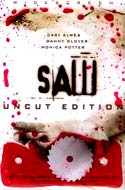
Ten Saw films (from 2004-2023)
Saw (2004)
Saw II (2005)
Saw III (2006)
Saw IV (2007)
Saw V (2008)
Saw VI (2009)
Saw 3D: The Final Chapter (2010)
Jigsaw (2017)
Spiral (2021)
Saw X (2023)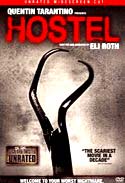
Three Hostel films (from 2005-2011)
Hostel (2005)
Hostel, Part II (2007)
Hostel, Part III (2011)
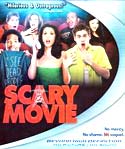
Five Scary Movie parodies (from 2000-2013)
Scary Movie (2000)
Scary Movie 2 (2001)
Scary Movie 3 (2003)
Scary Movie 4 (2006)
Scary Movie 5 (2013)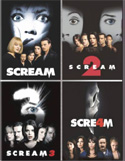
Six Scream films (from 1996-2023)
Scream (1996)
Scream 2 (1997)
Scream 3 (2000)
Scream 4 (2011)
Scream (2022)
Scream VI (2023)Horror Franchises - Box-Office Competition: (figures are approximate)
It was back and forth as to the highest-grossing (and most successful?) horror series in film history:
- the 13 Halloween films (from 1978-2022) came in with a total domestic gross of about $624 million
- the gory series of 10 Saw films (from 2004-2023) had a total domestic gross of $530 million
- the 5 Scary Movie parodies (horror comedies, not true horror) by 2013 domestically grossed $461 million
- the Scream series (1996-2023) of six films totaled domestic gross of $413 million
- the Friday the 13th series of 12 films (from 1980-2009) with a total domestic gross of $381 million
- the 9 Nightmare on Elm Street films (from 1984-2010), edged closer with a total domestic gross of $370.5 million
- the 5 Exorcist related series of films (from 1973-2023) with a total domestic gross of $356 million
- the 9 Texas Chain Saw Massacre films (from 1974-2022) with a domestic gross of $200 million
Sadistic Horror of the New Millennium:
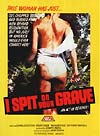
Another trend in horror films was to make variations of the sadistic, low-budget "trash" horror Z-films of the 1970's, many of which featured rape-revenge themes, as in Wes Craven's crude The Last House on the Left (1972), and Meir Zarchi's brutal Day of the Woman (1978) (aka I Spit on Your Grave). Others included:
- Marc B. Ray's R-rated slasher Scream Bloody Murder (1972), advertised as the first "gore-nography" film
- Bo A. Vibenius' graphic Thriller: A Cruel Picture (1974, Sweden)
- Nico Mastorakis' shocking and upsetting Island of Death (1975)
- Jim Sotos' Forced Entry (1975)
- Lamont Johnson's Lipstick (1976)
- Frederick R. Friedel's exploitative Axe (1977) (aka Lisa, Lisa and The California Axe Massacre)
- Pasquale Festa Campanile's bloody Hitch-Hike (1977, It.)
- Ruggero Deodato's semi-documentary bloodbath Cannibal Holocaust (1980, It.)
- Abel Ferrara's violent horror-crime revenge fantasy Ms. 45 (1981) (aka Angel of Vengeance)
However, in the new century, film audiences' threshold for sadistic and excessive gore, body mutilation, torture, and sickening violence had already been numbed by years of 'slasher' films, and this new crop of low-budget "trash" horror scarefest films was often tolerated and embraced by horror fans. The so-called "pseudo-snuff films" (dubbed "horror-porn," "torture-chic," "gore-nography," and "claustrophobic cruelty") were accused of being like a "sicko video game" - containing visceral violence and unheard-of human suffering - that severely tested the limits of R ratings:
- co-writer/director Eli Roth's debut feature film Cabin Fever (2002), made in homage to Sam Raimi's The Evil Dead (1981), about teens victimized in a remote North Carolina cabin in the woods by a horrifically contagious, flesh-eating virus-disease that ravaged its victims' skin and made them vomit blood; the film capitalized on the bodily horrors unleashed on two pretty females: sexually-accomplished brunette Cerina Vincent while shaving her infected legs in a bathtub, and blonde Jordan Ladd (the grand-daughter of Alan Ladd and look-alike daughter of Cheryl) while being sexually-touched
- William Malone's hellishly dark and torture-filled FearDotCom (2002) - about a killer website
- French director Alexandre Aja's blood-soaked, low-budget, breakout NC-17 rated, homoerotic and gritty horror film Switchblade Romance (2003) (aka High Tension) paid homage to William Fruet's Death Weekend (1976) (aka The House By the Lake); the film's improbable conclusion revealed the gimmicky, reality-shifting, absurdly-surprising "Gotcha" twist that the male killer was in one of the two female protagonists' psychotic, schizophrenic imagination!
- James Wan's grisly Saw (2004) (with lucrative sequels from 2005-2023) featured a sadistic serial killer named Jigsaw who devised maddening, diabolical deathtraps for his victims
the cruelly-sadistic Chaos (2005) - about the rape and murder of two teen girls (a remake of Craven's 1972 film)
- Eli Roth's xenophobic and uncompromising Hostel (2005), about two hedonistic American male backpacking tourists in Europe who were subjected to debased, medically-graphic physical, sexual and mental torture in the concluding 20 minutes (followed by sequels in 2007 and 2011)
- co-writer/director Tim Sullivan's 'over-the-top', tongue-in-cheek 2001 Maniacs (2005), a gore and sex-filled reference to cult director Herschell Gordon Lewis' 2000 Maniacs! (1964), about college students on their way to celebrate spring break in Florida who were detoured to the rural Georgia town of Pleasant Valley where they were brutally murdered in creative splatter-fest style
- Alexandre Aja's blood-soaked The Hills Have Eyes (2006) (a remake of Wes Craven's controversial 1977 cult low-budget film of the same name, and actually produced by Craven) featured a psychopathic, mutated family of cannibals attacking a suburban family in the Nevada desert
- and then there was director Roland Joffe's controversial thriller Captivity (2007)
Other male film-makers who were contributing to this new violently-graphic trend included Rob Zombie (with The Devil's Rejects (2005), the sequel to House of 1000 Corpses (2003), and two more Halloween films in 2007 and 2009). Wolf Creek (2005), and Turistas (2006) also did tremendous box-office business compared to their budget costs.
In some ways, the torture stories of the decade's headlines during the 'global war on terror' (waterboarding, Guantanamo, prisoner abuse and torture in the Abu Ghraib prison of Iraq, etc.) were reflected in these films.
A new variation on horror films was the blending of 'chick-flicks' with a traditional horror-adventure film, exemplified by Lions Gate's claustrophic and terrifying The Descent (2005, UK) - one of the first all-female brutal action horror films. This little British production from director Neil Marshall told about six athletic, extreme cave-plunging spelunkers (six unknown actresses) who faced various horrors (predatory humanoid underground dwellers) in the thick darkness of an Appalachian cavern - without any instances of nudity, gratuitous body shots, or sex.
Marketing Horror Films Through New Media's Social Networking:
In the latter half of the decade, Hollywood studios realized that they could leverage the popularity of social networking sites (such as Facebook and Twitter) to market films, encourage positive word-of-mouth, raise awareness, and stimulate ticket sales, by grassroots Internet campaigns and promotions. The new decade's reinvented The Blair Witch Project was the low-budget horror film Paranormal Activity (2009), marketed through 'new media.' Filmed in 2007 in only ten days, it was budgeted at only $15,000.
San Diego filmmaker Oren Peli's film first gained a cult following after being screened at the 2008 Slamdance Film Festival. Then, it was shown - in limited release - in college towns throughout the country at midnight shows. The studio launched a campaign with the Eventful feature developed by a San Diego company known for promoting concerts. With its Internet feature called "Demand It," Paramount asked users -- fans and would-be watchers, to help determine the film's fate and see if it warranted a potential wide-release in additional markets.
When one million frenzied fans demanded to see it, the film was expanded to 160 screens, and grossed $7.9 million in box-office revenue, breaking the record for highest grossing weekend ever for a film playing in less than 200 theaters. It went on to become a surprise box office hit, due in part to a grassroots Internet campaign that included a "Tweet Your Scream" promotion using the social networking site Twitter. It eventually made estimated earnings of $107.9 million (to date), an almost 720K% return on investment. Two sequels followed in the next two years, Paranormal Activity 2 (2010) and Paranormal Activity (2011).