Death (Emotionally and Physically) in Melodramas:
Death has always been one of the most popular themes in melodramas,
either physically or in emotional terms, as in the following melodramatic
films:
 Dark
Victory (1939) with Bette Davis as a terminally-ill heiress; remade
as Stolen Hours (1963) with Susan Hayward Dark
Victory (1939) with Bette Davis as a terminally-ill heiress; remade
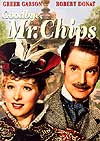
as Stolen Hours (1963) with Susan Hayward- the classic film about a British school teacher, Goodbye,
Mr. Chips (1939), with two scenes of tremendous pathos: the death
of Mr. Chips' (Robert Donat) young wife Katherine (Greer Garson) in childbirth
and his dazed but resilient appearance in his Latin classroom to teach a
lesson, and Chips' own deathbed scene ("I thought I heard you say 'twas
a pity, a pity I never had children. But you're wrong...I have...thousands
of them...thousands of them...and all boys!")
- Disney's animated classic Bambi (1942) with the
emotional scene of the tragic killing of young Bambi's mother by Man in
the forest
- Edward Dmytryk's suspenseful B-film Hitler's Children
(1943), the highest grossing film of all time for RKO Studios, told
a story of taboo love between a Nazi Hitler youth (Tim Holt) and his American
girlfriend (Bonita Granville) amidst anti-Nazi propaganda
- Frank Capra's Christmas classic It's a Wonderful Life (1946) about an Everyman named George Bailey
(James Stewart) who realized how life would be like in his tiny town of
Bedford Falls without him, and the tear-jerking finale when his friends,
townsfolk, and family supportively surround him
 Disney's Old Yeller (1957), with the stray dog gallantly and heroically protecting
young Travis (Tommy Kirk) and his family from a rabid wolf, and Travis'
sad realization that he must pull the trigger on his infected and dying
companion Disney's Old Yeller (1957), with the stray dog gallantly and heroically protecting
young Travis (Tommy Kirk) and his family from a rabid wolf, and Travis'
sad realization that he must pull the trigger on his infected and dying
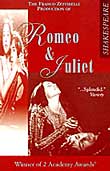
companion- the tragic, heartbreaking ending of Franco Zeffirelli's
youthful version of the classic, all-consuming love story Romeo
and Juliet (1968) featured a double-suicide sequence, in which Romeo
(Leonard Whiting) looked upon Juliet's (a beautiful Olivia Hussey) lifeless
body and asked: "Why art thou yet so fair?" before poisoning himself,
and Juliet's awakening and her own "happy dagger" response; Leonard
Bernstein's musical West Side Story (1961) included a similar, ill-fated romance between
star-struck lovers, and an ending in which Puerto Rican Maria (Natalie Wood)
grieved over her fallen lover and Anglo Jets gang-member Tony (Richard Beymer)
while reprising Somewhere ("Hold my hand and I'll take you there")
- Arthur Hiller's successful but manipulative Love
Story (1970) - the quintessential melodrama about young lovers (Ryan
O'Neal and Ali McGraw) from different educational and societal levels -
who experience a culminating, tragic, and tearjerking terminal illness ("Love
means never having to say you're sorry")
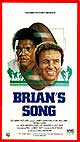
- the
made-for-TV movie Brian's Song (1971), the true-to-life drama of
the strong bond between two Chicago Bears football players: white Brian
Piccolo (James Caan) and black Gale Sayers (Billy Dee Williams), with its
sappy and depressing ending - includes the scene of a tribute being given
to Sayers and his dedication of his Courage award to his cancer-stricken
teammate in his acceptance speech: "I love Brian Piccolo. And I'd like
all of you to love him, too. And tonight when you hit your knees, please
ask God to love him"
 other sports film about sports greats who died by film's
end include: the biopic The Pride of the Yankees (1942) - famous
for Lou Gehrig's (Gary Cooper) on-field retirement speech after he fell
ill with ALS ("Today, I consider myself the luckiest man on the face
of the earth"), the story of the legendary Notre Dame football player
and coach - Knute Rockne: All American (1940) - and dying George Gipp (Ronald Reagan) with his "win one for the Gipper"
quote, and Bang the Drum Slowly (1973) about a friendship between
a pitcher (Michael Moriarty) and a terminally-ill catcher (Robert DeNiro) other sports film about sports greats who died by film's
end include: the biopic The Pride of the Yankees (1942) - famous
for Lou Gehrig's (Gary Cooper) on-field retirement speech after he fell
ill with ALS ("Today, I consider myself the luckiest man on the face
of the earth"), the story of the legendary Notre Dame football player
and coach - Knute Rockne: All American (1940) - and dying George Gipp (Ronald Reagan) with his "win one for the Gipper"
quote, and Bang the Drum Slowly (1973) about a friendship between
a pitcher (Michael Moriarty) and a terminally-ill catcher (Robert DeNiro)- the animated Charlotte's Web (1973) with the heart-felt
death of the title-character spider who spins a web to save the life of
her friend Wilbur the pig
- Michael Cimino's The Deer Hunter
(1978) - with its second lethal scene of "one-shot, one-kill"
Russian roulette in one of Saigon's back alleyways that kills Michael's
(Robert DeNiro) steelworker/Vietnam Vet friend Nick (Christopher Walken),
and the final tragic ending sequence in Pennsylvania in which all gather
together for a breakfast wake, sing "God Bless America," and toast
Nick ("Here's to Nick")
- Robert Benton's domestic melodrama and Best Picture Kramer
vs. Kramer (1979), about Manhattan adman Ted (Dustin Hoffman) - a recently-divorced
man who cares for his son (Justin Henry) and his subsequent battle with
ex-wife Joanna (Meryl Streep) when she later decides that she wants custody
of the boy
- the across-time, passionate, and impossible fantasy romance
between a 1912 actress Elise McKenna (Jane Seymour) and a young playwright
Richard Collier (Christopher Reeve) in the 1980s in Somewhere in Time
(1980)
 Steven
Spielberg's E.T.: The Extra-Terrestrial (1982), especially the overwrought death
scene of the stranded, odd-looking alien witnessed by a heart-broken 10-year
old Elliott (Henry Thomas), and ET's tearful goodbyes and departure onto
an awaiting spaceship Steven
Spielberg's E.T.: The Extra-Terrestrial (1982), especially the overwrought death
scene of the stranded, odd-looking alien witnessed by a heart-broken 10-year
old Elliott (Henry Thomas), and ET's tearful goodbyes and departure onto
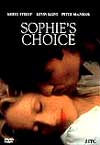
an awaiting spaceship - in Alan J. Pakula's dramatic Sophie's Choice (1982),
haunted Holocaust Auschwitz survivor and Polish immigrant Sophie Zatkowska
(Oscar-winning Meryl Streep who spoke in three languages: Polish, broken
English, and German) suffered heart-wrenching, horrific guilt when remembering
her traumatic past, in flashback, the awful forced choice she was given
by a Nazi officer
- the stylish "soap opera" and maternal melodrama/comedy Terms of Endearment (1983) that covered
a thirty year span of time in the lives of Houston mother Aurora (Shirley
MacLaine) and her daughter Emma (Debra Winger), and ended with a case of
terminal cancer; its deathbed/hospital scenes at the film's conclusion guaranteed
sobs (Winger's final goodbye to her two children, and MacLaine's screaming
at the nurses: "My daughter's in pain. Give her the shot. Do you understand
me? Give my daughter the shot!")
- Steven Spielberg's The Color Purple (1985), an adaptation
of Alice Walker's novel about 40 years in the lives of three black southerner
women, including Celie (Whoopi Goldberg) - married to abusive sharecropper
Albert (Danny Glover), an oppressed Sofia (Oprah Winfrey), and Albert's
mistress Shug (Margaret Avery)
- the first AIDS melodrama, Parting Glances (1986),
by writer/director Bill Sherwood who died of AIDS at 37 in 1990, featured
an early role for Steve Buscemi
- David Jones' 84 Charing Cross Road (1987), a romantic
melodrama about struggling writer Helene Hanff (Anne Bancroft) and her correspondence
partner, a UK used-book store owner in London named Frank P. Doel (Anthony
Hopkins) - the two never meet face-to-face, touchingly realized by Helene
when she finally travels to the UK and finds that both the store and Frank
have deceased
- the ultimate in sappy tearjerker melodramas, Beaches
(1988), with Bette Midler as free-spirited, Bronx Jew, and show-biz
singer CC Bloom, and upper-class elitist Hillary Whitney Essex (Barbara
Hershey) from San Francisco, as two lifelong friends who meet one final
summer on the beach in Atlantic City, to experience Hillary's death, followed
by her funeral (heard with 'Wind Beneath My Wings'), and CC's adoption of
Hillary's daughter
- in Peter Weir's Dead Poets Society (1989), the moment
of unorthodox (Carpe Diem or "Seize the Day") English teacher
John Keating's (Robin Williams) dismissal and departure from the uptight
and exclusive Welton Academy in Vermont, and the protest from his liberated
students by standing on their desks
 Phil
Alden Robinson's fantasy melodrama Field of Dreams
(1989) with its climactic reunion scene in which the father of Iowa
farmer Ray (Kevin Costner) emerges from a cornfield to play a game of catch Phil
Alden Robinson's fantasy melodrama Field of Dreams
(1989) with its climactic reunion scene in which the father of Iowa
farmer Ray (Kevin Costner) emerges from a cornfield to play a game of catch- Norman Jewison's In Country (1989), a Southern drama
with Bruce Willis in a serious dramatic role as a battle-scarred Vietnam
veteran, and Emily Lloyd as his niece Samantha, who both form a bond due
to their connections with her dead father; the film concluded with a poignant
scene at the Vietnam War Memorial
- the ultimate modern 'weepie' or 'women's film': Herbert
Ross' Steel Magnolias (1989), about six women from small-town Louisiana,
and specifically about an over-protective, strong-willed mother M'Lynn (Sally
Field) who stood by her dying, diabetic daughter Shelby (Julia Roberts)
at her hospital bedside when the plug was pulled, and raged about her death
at graveside. Its tagline: "The funniest movie ever to make you cry"
- another popular fantasy/melodrama Ghost (1990) with
Demi Moore as Molly and Patrick Swayze as Sam - a tearful story of romantic
love beyond the grave enhanced by Maurice Jarre's original score; it included
the memorable scene of Swayze's senseless murder and his last bittersweet
embrace, kiss and goodbye ("See ya") with Moore
- Longtime Companion (1990), an ensemble film starring
Bruce Davison and Campbell Scott - a melodramatic film that followed the
courageous lives of two white, homosexual New Yorkers during the decade
of the 80s, showcasing the death of the 'longtime companion' or partner
from AIDS (first called a rare form of cancer or "Gay-Related Immune
Disorder"), and ended with a heart-breaking fantasy sequence on a Fire
Island beach
- Joel Schumacher's sentimental Dying Young (1991) flip-flopped the roles of Love Story, with Julia Roberts providing
nursing caring for an educated man (Campbell Scott) afflicted by a debilitating
disease
 the
melodramatic portrayal of childhood innocence between precocious, 11 year-old,
adventurous tomboy Vada Sultenfuss (Anna Chlumsky) - living with her mortician
father, and her friendship with the equally-young Thomas J. Sennett (Macaulay
Culkin) in My Girl (1991) - including her first experience of loss
with the death of Thomas due to bee stings the
melodramatic portrayal of childhood innocence between precocious, 11 year-old,
adventurous tomboy Vada Sultenfuss (Anna Chlumsky) - living with her mortician
father, and her friendship with the equally-young Thomas J. Sennett (Macaulay
Culkin) in My Girl (1991) - including her first experience of loss
with the death of Thomas due to bee stings- the sleeper hit Forever Young (1992), a romantic
fantasy with Mel Gibson as a test pilot, cyrogenically frozen in the year
1939 (because of the loss of a loved one named Helen) and thawed out 50
years later - in time to experience a rebirth of love in the form of Claire
(Jamie Lee Curtis)
- in My Life (1993), the debilitating decline of terminally-ill
and expectant father Bob Jones (Michael Keaton), married to pregnant wife
Gail (Nicole Kidman) - who makes videotaped conversations to his unborn
son
- Tom Hanks' understated and heroic role as fired attorney
Andrew Beckett dying of AIDS and defending himself in a wrongful dismissal
suit with lawyer Joe Miller (Denzel Washington) in Jonathan Demme's Philadelphia
(1993)
- Merchant Ivory's deeply-moving Remains Of the Day (1993),
about a restrained, devoted and 'perfect' English butler named Stevens (Anthony
Hopkins) who has sacrificed everything to his duty, as well as love for
his housekeeper Miss Kenton (Emma Thompson), based on the novel by Ishiguro
Kazuo
- Spielberg's Best Picture-winning Schindler's List (1993), about a Polish Nazi businessman (Liam Neeson)
who saved the lives of 1,000 Jews with his trusted accountant (Ben Kingsley)
- with its weepy coda - the surviving Jews visiting Schindler's grave
- Richard Attenborough's memorable Shadowlands (1993) about the doomed love affair between Christian/children's fantasy novelist
C.S. Lewis (Anthony Hopkins) and a Jewish-American poet (Debra Winger)
- Robert Zemeckis' Forrest Gump (1994), often interpreted
as a schmaltzy, manipulative film about an IQ-challenged title character
(Tom Hanks) involved in many key events of the 50s-80s, including his weepy
visit to the Alabama grave of his love Jenny (Robin Wright Penn)
- the pivotal moments in director Clint Eastwood's The
Bridges of Madison County (1995), an adaptation of Robert James Waller's
bestselling novel, in which lonely Iowan small-town housewife Francesca
Johnson (Meryl Streep) gives up her own happiness by declining a life with
free-spirited photographer Robert Kincaid (Clint Eastwood) - Francesca's
temptation reaches a climax during a rainstorm when she does not open the
door of her husband's truck and run to Robert
- James Cameron's epic, ill-fated love-story Titanic (1997) culminating with the scene of poor boy Jack Dawson (Leonardo DiCaprio) professing
his love for rich girl Rose DeWitt Butaker (Kate Winslet) before sinking below the icy
waters (Jack: "Never let go." Rose: "I will never let go, Jack. I'll never let go.")
- director Jay W. Russell's filmic adaptation of Willie Morris'
memoirs in My Dog Skip (2000), about a frail, nine year-old boy named
Willie (Frankie Muniz) given a Jack Russell terrier named Skip by his stern
father (Kevin Bacon), capped by the dog's eventual aging and death
Other Recent Examples of Melodramatic Films:
Following the feminist movement of the
late 1960s, Martin Scorsese's first Hollywood studio production Alice
Doesn't Live Here Anymore (1974) capitalized on the strength of the women's
liberation movement, with Best Actress-winning Ellen Burstyn starring as a
widowed, thirty-something housewife and single mom pursuing her own career
in Phoenix, Arizona.  [The
film spawned a successful TV sitcom series titled Alice, with Linda
Lavin.] Herbert Ross' melodrama The Turning Point (1977) examined the
choices most women face between career (ballet in this case) and familial
responsibilities. And director Paul Mazursky's 'women's
film' An Unmarried Woman (1978) featured Jill Clayburgh as a newly-single
woman living in New York. [The
film spawned a successful TV sitcom series titled Alice, with Linda
Lavin.] Herbert Ross' melodrama The Turning Point (1977) examined the
choices most women face between career (ballet in this case) and familial
responsibilities. And director Paul Mazursky's 'women's
film' An Unmarried Woman (1978) featured Jill Clayburgh as a newly-single
woman living in New York.
An appealing three handkerchief 'soap opera,' similar to 40s
romances, was An Officer and a Gentleman (1982), the story of a challenged
romance between a Navy officer trainee (Richard Gere) and his lower-class
townie girlfriend (Debra Winger). Although Fatal Attraction (1987) was regarded as a tense action/thriller, Glenn Close's sexy, possessive role
as a scorned and deadly woman after a one-night stand fit the category of
melodramatically-doomed love.
Forest Whitaker's weepie soap opera Waiting to Exhale (1995),
with a predominantly African-American female cast (Whitney Houston, Angela
Bassett, Lela Rochon, and Loretta Devine), told a story of four romantically-wronged
women. It was part of a trilogy of films based upon works by novelist/screenwriter
Terry McMillan, including the restorative romantic melodrama How Stella
Got Her Groove Back (1998), and HBO-TVis romantic urban melodrama Disappearing
Acts (2000). |

 Melodrama Films