|
Special Effects (F/X) - Milestones in Film 1900-1905 |
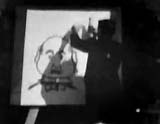
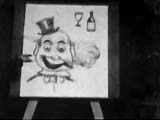
The Enchanted Drawing (1900) Pioneering animator and film-maker James Stuart Blackton produced The Enchanted Drawing, a Vitagraph Studios short film that featured a drawn character and some objects. It was the earliest surviving prototype of stop-motion (or stop-action) animation - the sequence was not composed of continuous frame-by-frame filming. It showed a cartoonist (Blackton himself) using a large stand-up easel on which he drew a round cartoon face of an elderly man. He then sketched a bottle of wine and a glass in the upper-right hand corner of the page - and then removed the two items from the paper, holding them up as real objects and pouring himself a glass of wine. He then placed the mouth of the wine bottle in the cartoon-man's mouth, causing a smile as he gave him a drink. The cartoonist then drew the man's hat - and again reached into the picture to borrow the hat and place it on his own head. He also borrowed the man's cigar, causing a frown. At the conclusion of the short segment, he then restored all the elements back into the picture. |
|
|||||||
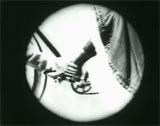
As Seen Through A Telescope (1900, UK) (aka The Professor and His Field Glass) British film-maker George Albert Smith's As Seen Through A Telescope (1900) (aka The Professor and His Field Glass) was a 45 second short, similar to Grandma's Reading Glass (1900, UK) (see below). However, its single POV closeup shot was seen "through" a telescope taken outdoors by a black-garbed elderly professor, who stood next to a stool positioned in front of a village shop. He used the telescope to view a woman's ankle and shoe at a distance up the street, when the woman's shoe became untied and her gentleman friend tied it for her. After the gent noticed the professor 'peeping' on them, he came up to the man, knocked off his hat, and sent him tumbling off his stool onto the ground. |
|
|||||||
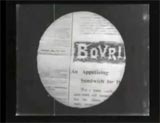
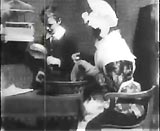
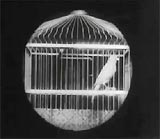
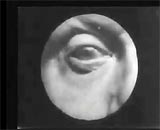
Grandma's Reading Glass (1900, UK) Grandma's Reading Glass (1900, UK) was a similar innovative two-minute short film from British film-maker George Albert Smith, who exploited the camera's capacity for magnification by employing a series of closely-scaled shots within a narrative framework. It featured the first use of a POV close-up insert shot, seen in multiple examples within the film.
A young grand-son used his Victorian-dressed grandmother's huge magnifying reading-glass to look at various items (from his POV, signaled by a circular viewing iris):
|
||||||||
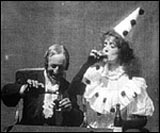
Let Me Dream Again (1900, UK) In this short one minute, two-shot film by UK film-maker George Albert Smith, a middle-aged man (Tom Green) sitting at a table was drinking and smoking with an attractive female, wearing a fancy clown costume. He flirtatiously kissed her - and then there was a transition from his fantasy-dream (the first-shot) to reality (the second-shot). The fanciful transition from dream-time was signaled by a primitive out-of-focus dissolve, one of its first uses in cinema. The first shot went out-of-focus before it cut to the second shot (also out-of-focus), but then the image gradually sharpened or refocused. The man found himself in his own bed at home, embracing his unattractive shrewish wife - except that they turned away from each other, presumably in a loveless and sexless marriage. |
|
|||||||
|
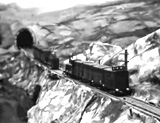
A Railway Collision (1900) Director W.R. Booth and producer Robert W. Paul (Paul's Animatograph Works) made this short 22-second film - one of the earliest attempts to realistically re-create a large-scale railroad disaster by using miniature scale models; the film depicted two trains speeding toward each other on the same track, and colliding on the embankment. |
|
||||||
|
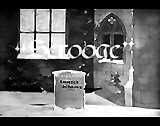
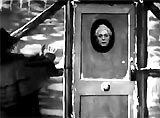
Scrooge, or Marley's Ghost (1901, UK) Director Walter R. Booth's short film was the first (earliest surviving) version of Dickens' tale of A Christmas Carol (although based upon J. C Buckstone's popular stage adaptation). Only one-half of the film survives to this day (approximately 3 and a half minutes of its approx. 10 minute length). It was produced by R.W. Paul's Animatograph Works company - and featured impressive and ambitious trick photography in its tale of Marley's ghostly visitation to miserly Ebenezer Scrooge. In scene II, it showed the superimposition of Marley's face in a black oval over Scrooge's door knocker, a vertical wipe-transition from bottom to top - probably the first ever seen (as Scrooge entered his house), and scenes (or "visions") presented by Marley's ghost of Scrooge's youth in Christmasses past - superimposed on a black curtain in Scrooge's bedroom. |
|
||||||
|
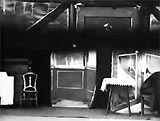
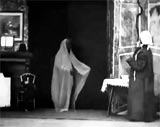
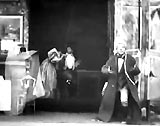
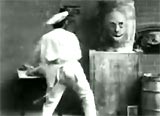
Fun in a Bakery Shop (1902) This was another early surviving example of stop-motion (or stop-action) animation (see the earlier The Enchanted Drawing (1900) above). It was a trick (experimental) film by Edwin S. Porter, released by Thomas A. Edison's Manufacturing Company. The 80 second film was a combination of stop-action photography and object manipulation. In the short, a baker's assistant sculpted dough thrown onto the side of a flour barrel, making various faces and comical shapes - executed with smooth edits between "freezes." |
|
||||||
|
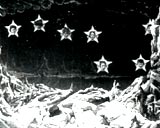
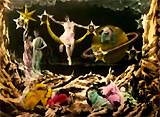
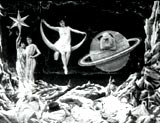
La Voyage
Dans la Lune (1902, Fr.), (aka
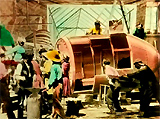
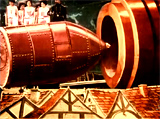
A Trip to the Moon) He made up and invented the film medium as he directed. It contained 30 separate tableaus (scenes) with innovative, illusionary cinematic 'editing' techniques (trick photography with superimposed images, double-exposures, dissolves and stop-motion jump cuts), live-action, animation, the use of matte paintings, the substitution shot, actors performing with themselves over split screens, and miniature models. It was one of the earliest, if not the first example, of the use of miniatures (the model spaceship, for example). Some versions were color-tinted.
He depicted many memorable, whimsical old-fashioned images, such as:
|
  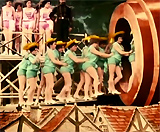 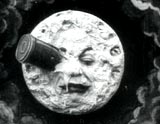 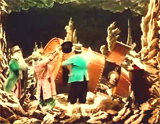  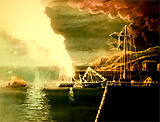
|
||||||
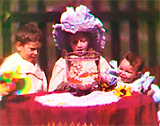
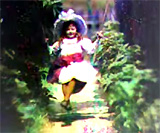
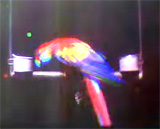
Test Footage of Colour Film (1902): Edward Raymond Turner Pioneering British inventor Edward Raymond Turner produced the earliest known colour motion picture film footage in some short test films, including one of his three children: Alfred Raymond, Agnes May, and Wilfred Sydney, seated at a table looking at a goldfish bowl, and waving sunflowers. Other footage was of Turner's heavily bonneted daughter on a swing, a brightly-colored macaw, a lengthy panning shot of Brighton Beach and Pier, soldiers marching in Hyde Park and what was thought to be the very first shot of traffic on London's Knightsbridge looking up to Hyde Park Corner. This would establish the claim that Turner was the father of moving colour film, pre-dating the first successful color film process known as Kinemacolor by eight years. |
|
|||||||
|
The Great
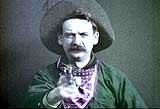
Train Robbery (1903) It was filmed in the 1.33:1 aspect ratio, which would remain virtually unchanged for half a century. It featured multiple camera positions, filming out of sequence and later editing the scenes into their proper order. One early special effect was a composite made of two separate images. The in-camera matte effect was of two separately filmed segments: the interior of a train station and its window (where a shot of a passing train was matted in). Also, in the interior of the express mailcar scene (# 3), through the open side door of the moving train car, scenery could be seen whishing by. There were 14 scenes with parallel cross-cutting between simultaneous events in its narrative story with multiple plot lines. Porter's film was a milestone in film-making for its storyboarding of the script (about a robbery, the getaway, the pursuit, and the capture), the first use of title cards, an ellipsis, and a panning shot, and for its cross-cutting editing techniques. Jump-cuts or cross-cuts were a new, sophisticated editing technique, showing two separate lines of action or events happening continuously at identical times but in different places. The film was intercut from the bandits beating up the telegraph operator (scene one) to the operator's daughter discovering her father (scene ten), to the operator's recruitment of a dance hall posse (scene eleven), to the bandits being pursued (scene twelve), and splitting up the booty and having a final shoot-out (scene thirteen). The film also employed the first pan shots (in scenes eight and nine), and the use of an ellipsis (in scene eleven). Rather than follow the telegraph operator to the dance, the film cut directly to the dance where the telegraph operator entered.
The film closed with a medium shot close-up of the bandit chief (with green-tinted shirt and red-tinted kerchief in some versions) (George Barnes) with his hat pushed back on his head. He pointed and shot his revolver point-blank, directly into the camera (and, of course, at the audience). This caused a tremendously terrifying sensation at the time. |
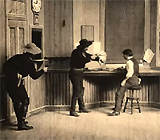 Train Station Robbery 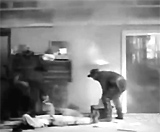 Train Window Matted In 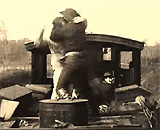 Bandit's Fist-Fight with Fireman 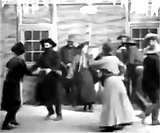 Dance Hall Posse Assembled |
||||||
|
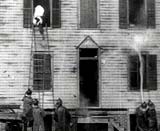
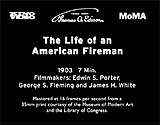
The Life of an American Fireman (1903) American director and film pioneer Edwin S. Porter, chief of production at the Edison studio, helped to shift film production toward narrative story telling with such films as this one -- the first realistic (or documentary) film with continuity editing. It featured overlapping action and cross-cut editing, and a last-minute rescue of a mother and child in a burning building (in an interior shot), interspersed with scenes of the firemen responding to the sound of the alarm (a hand pulled the alarm in close-up), descending on a fire pole, and coming to the rescue in a horse-drawn wagon pumper (in exterior shots), heightening suspense.
|
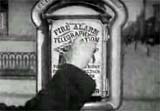 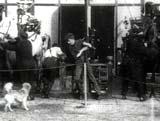 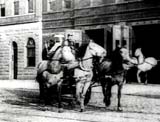 Fire Station Responding to Alarm |
||||||
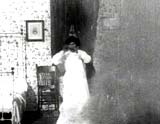
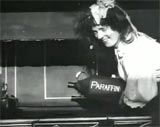
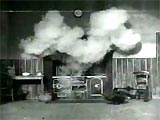
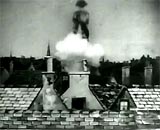
Mary Jane's Mishap (1903, UK) (aka Don't Fool With Paraffin) This 4 minute short silent film comedy directed by UK's George Albert Smith (his last film) was composed of a single self-explanatory story of a scullery housewife in her large mostly bare kitchen, although there were two other sets (the rooftop and the cemetery). The entire short was composed of 14 different shots. The complex, fairly-advanced film, one of the first modern films (predating The Great Train Robbery (1903) by a few months), contained many of Smith's cinematic narrative innovations that he had perfected up to this time, including close-ups, parallel action, Melies-style trick photography or special effects (jump-cuts), film editing (of multiple shots), multi-shot camera positioning, and more (two vertical wipe-transitions). The film opened with long or full establishing shots of the kitchen and medium shots of the sluttish, looney, and drunken housewife (Mrs. George A. Smith, or Laura Bayley), who yawned with armed outstretched, and laughably tried to accomplish a few tasks (with winking, comic facial asides toward the camera and audience). She shined a boot with blackened spit-polish (and after wiping her face with the brush in her hand found herself with polish on her upper lip, creating a moustache that she viewed in a mirror), and then carelessly ignited her stove with liquid paraffin - causing a massive, smoky explosion. A stop-motion jump-cut made her seem to disappear, although in an exterior roof-top shot, a "Mary Jane dummy" was blasted up her chimney into the sky, and pieces of her clothing fell all around (suggesting off-screen space).
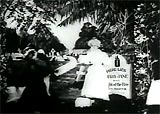
After a vertical wipe-transition (bottom to top), there was a close-up view (an insert shot) of her tombstone that served as an inter-title: Here Lies Mary Jane - Who Lighted the Fire With Paraffin - Rest in Pieces. Another wipe-transition (top to bottom) brought the scene to the graveyard, where a groundsman swept up. A conservative old lady brought three other servant-housemaids to gather around Mary Jane's grave, supposedly as an object lesson - and they were shocked by her ghostly reappearance (a super-imposed or double-exposed effect, called "spirit photography"), and frightened off. Mary Jane searched for her paraffin can and after conjuring it up, returned to her earthly grave, witnessed only by a graveyard cat. |
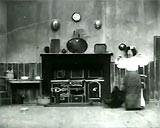 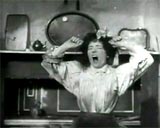 Views of Kitchen and Housewife 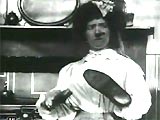 Wife Shining a Boot |
|||||||