 |
Part 1 |
 Adventure Films
Adventure films were intended to appeal mainly to men, creating major male heroic stars through the years. These courageous, patriotic, or altruistic heroes often fought for their beliefs, struggled for freedom, or overcame injustice. Modern adventure films, some of which have been successful blockbusters, have crossed over and added resourceful action heroes (and oftentimes heroines). Under the category of adventure films, we can include traditional swashbucklers, serialized films, and historical spectacles (similar to the epics film genre), searches or expeditions for lost continents, "jungle" and "desert" epics, treasure hunts and quests, disaster films, and heroic journeys or searches for the unknown. Adventure films are often set in an historical period, and may include adapted stories of historical or literary adventure heroes (Robin Hood, Tarzan, and Zorro for example), kings, battles, rebellion, or piracy. Adventure films share many elements with other genres - there are numerous examples of sci-fi, fantasy, and war films with characteristics of this genre. Adventure films, in a broader context, could include boxing movies, motor racing films, and films adapted from literary novels (i.e., King Solomon's Mines (1937 and 1950), The Thief of Bagdad (1924 and 1940), The Three Musketeers (1916, 1921, 1933, 1935, 1948, 1973, and 1993), and The Prisoner of Zenda (1937, 1952)). Directors and Stars of Classic Adventure Films: Individual directors often associated with adventure films include Cecil B. DeMille, Henry Hathaway, Michael Curtiz, Howard Hawks, John Huston, David Lean, Zoltan Korda, and Raoul Walsh. The major adventure film stars through the years have included Douglas Fairbanks Sr. (and Jr.), Errol Flynn, Clark Gable, Johnny Weismuller, Tyrone Power, Gary Cooper, Stewart Granger, Burt Lancaster, Kirk Douglas, Charlton Heston, Alan Ladd, Sabu, Cornel Wilde, Sean Connery, John Wayne, and Harrison Ford. The female stars in these movies often were secondary figures, or romantic interests for the male leads.
Other action-adventure heros of B-picture adventure films included Flash Gordon, and Buck Rogers. 'Buster' Crabbe was the most famous of all the serial action heroes in the 1930s and 1940s, starring as both Flash Gordon and Buck Rogers. But there were others: Kane Richmond (as the "Spy Smasher," "The Shadow," and a star in the "Cliffhanger Serials" and the "Rin-Tin-Tin" adventure serial), Tom Tyler (as "Captain Marvel" with countless episodes, and "The Phantom of the West"), and Don "Red" Barry (as "Red Ryder"). [See this site's writeup of superheroes in fantasy films.] Modern-Day Homage to the Earliest Adventure Films: Steven Spielberg's Raiders of the Lost Ark (1981) was an affectionate return and tribute to the early days of Saturday morning matinees and cinema, with comic-book archaeology hero Indiana Jones (Harrison Ford) battling the Nazis while searching for the sacred Ark of the Covenant - the first in a very successful trilogy of films. So were the adventure-action-romance-comedies Romancing the Stone (1984) and its sequel The Jewel of the Nile (1985) starring Michael Douglas as the American soldier-of-fortune, and Kathleen Turner as a romance novelist. The Swashbuckler and Douglas Fairbanks, Sr: The first major form of adventure film was the swashbuckler with energetic Hollywood, beefcake action-heroes in historically atmospheric settings of the 18th or 19th centuries. Swashbucklers included lavish sets, costumes, and weapons of the past, and were often built upon action scenes of sea battles, castle duels, sword and cutlass fighting, etc., and the romancing of damsels in distress.
In the first of four film versions of The Thief of Bagdad (1924), this one directed by Raoul Walsh, Fairbanks played the role of a roguish thief who won the heart of Bagdad's Princess (Julanne Johnston). Its imaginative special effects still dazzle. His most typical starring role was represented by The Black Pirate (1926) (filmed in two-strip Technicolor), in which he played a shipwrecked mariner who sought revenge against bloodthirsty pirates - the adventure swashbuckler was the first full-length blockbuster color film. The exciting film included a cutlass duel, an underwater swimming raid on the pirate ship, and Fairbanks' most famous stunt - riding down a ship's sail on the point of his knife. The Zorro Tales:
There have been many other versions of the Zorro tale: the serialized Zorro Rides Again (1937), the Italian-French production Zorro (1975), Disney's Zorro (1957-9) - a TV series starring Guy Williams, the tongue-in-cheek parody Zorro, The Gay Blade (1981) with George Hamilton as the foppish dandy, and Anthony Hopkins as an aging Zorro and Antonio Banderas as his younger protege in The Mask of Zorro (1998). Other Classic, Silent Swashbucklers: Another leading swashbuckler was Ramon Novarro, who starred in Metro Pictures' and director Rex Ingram's lush, dramatic adventure tale Scaramouche (1923), derived from Rafael Sabatini's novel. [Sabatini's literary works also inspired the making of Captain Blood and The Sea Hawk - see below.] The story, set in pre-revolutionary France, followed the exploits of a law student (Novarro) seeking revenge (in the guise of a clown named Scaramouche) after the murder of an agitator/friend by feared nobleman Marquis de la Tour d'Azyr (Lewis Stone). The film was remade in 1952 by director George Sidney - Scaramouche (1952), with Stewart Granger and Mel Ferrer in the lead roles - well-reknowned for a six-minute fencing duel. Another of the earliest swashbucklers was director Alan Crosland's Don Juan (1926), starring distinguished American stage and screen actor John Barrymore as the famed lover. It featured the silent screen's longest sword-fight between Montague Love and Barrymore. Errol Flynn in Swashbucklers:
Flynn played a 19th century British army officer stationed in India in the military swashbuckler The Charge of the Light Brigade (1936), and he portrayed Sherwood Forest's 12th century legendary outlaw in the three Oscar-winning The Adventures of Robin Hood (1938). The latter was his most popular film and the quintessential adventure-tale swashbuckler about the Robin Hood legend. The Technicolor film was noted for the lengthy swordfight in Nottingham Castle between Flynn and Basil Rathbone (as Sir Guy of Gisbourne), and Flynn's love for leading lady Olivia de Havilland. Later, Flynn also appeared in Michael Curtiz' swashbuckler The Sea Hawk (1940) as an English privateer (like Sir Francis Drake) who aided Queen Elizabeth I (Flora Robson reprising her role from a 1937 film) with plundering and attacks on the Spanish Armada. The film featured superior monochromatic cinematography by Sol Polito. [Note: Flynn was a star in a number of Westerns and war films during the same period.] One of Flynn's last romantic epic swashbuckling appearances was in The Adventures of Don Juan (1949) as the famous 16th century swordsman who fought for Queen Margaret of Spain. He also starred in Against All Flags (1952) with Maureen O'Hara (as a female buccaneer) and Anthony Quinn (as the head of a pirate band), by portraying Brian Hawke - a British naval officer who spied for the English by infiltrating a pirate haven. |




 Adventure Films are exciting stories,
with new experiences or exotic locales. Adventure films are very similar to
the
Adventure Films are exciting stories,
with new experiences or exotic locales. Adventure films are very similar to
the 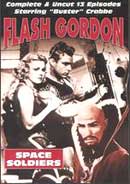 The
action/adventure film first became popular with weekly Saturday
The
action/adventure film first became popular with weekly Saturday 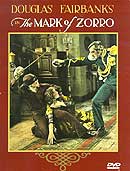 The
first successful swashbuckler star of the silent 1920s era was the
charming, exuberant, gracefully-athletic, gymnastic actor Douglas Fairbanks
Sr., who performed most of his own stunts and daring swordplay in
a wide range of costume
adventures, starring as Zorro, Robin Hood (in the large-scale film
version Robin Hood (1922)), and the acrobatic D'Artagnan (in
the film adaptation of Dumas' adventure classic The Three Musketeers
(1921)). Moving from
comedy-adventures to derring-do costume adventures at the start of the
decade, Fairbanks starred in director Fred Niblo's silent The Mark
of Zorro (1920),
adapted from Johnson McCulley's novel The Curse of Capistrano.
He starred in the dual role of Don Diego and the dashing young swordsman
Zorro - the hero of the oppressed poor by tyrants ruling in California
in the 1830s. This portrayal established Fairbanks as the predominant
dueling swashbuckler in the silent era, in a duel against Noah Beery.
The
first successful swashbuckler star of the silent 1920s era was the
charming, exuberant, gracefully-athletic, gymnastic actor Douglas Fairbanks
Sr., who performed most of his own stunts and daring swordplay in
a wide range of costume
adventures, starring as Zorro, Robin Hood (in the large-scale film
version Robin Hood (1922)), and the acrobatic D'Artagnan (in
the film adaptation of Dumas' adventure classic The Three Musketeers
(1921)). Moving from
comedy-adventures to derring-do costume adventures at the start of the
decade, Fairbanks starred in director Fred Niblo's silent The Mark
of Zorro (1920),
adapted from Johnson McCulley's novel The Curse of Capistrano.
He starred in the dual role of Don Diego and the dashing young swordsman
Zorro - the hero of the oppressed poor by tyrants ruling in California
in the 1830s. This portrayal established Fairbanks as the predominant
dueling swashbuckler in the silent era, in a duel against Noah Beery. 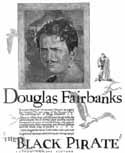 Fairbanks reprised his legendary role
as the son of the masked avenger in director Donald Crisp's two-hour sequel Don Q, Son of Zorro (1925), while romancing and saving Mary Astor.
One of the best silent swashbucklers was Robin Hood (1922) in which
he starred as the famed adventurer in love with Maid Marian - he also wrote
the film's screenplay and financed the expensive film. Fairbanks also appeared
in the title swashbuckling role as The Gaucho (1927) and danced a hot
tango with co-star Lupe Velez. [The Robin Hood story is one of the
most-often filmed swashbucklers - also the animated Robin Hood (1973), Robin Hood: Prince of Thieves (1991), and Robin Hood: Men in Tights
(1993).]
Fairbanks reprised his legendary role
as the son of the masked avenger in director Donald Crisp's two-hour sequel Don Q, Son of Zorro (1925), while romancing and saving Mary Astor.
One of the best silent swashbucklers was Robin Hood (1922) in which
he starred as the famed adventurer in love with Maid Marian - he also wrote
the film's screenplay and financed the expensive film. Fairbanks also appeared
in the title swashbuckling role as The Gaucho (1927) and danced a hot
tango with co-star Lupe Velez. [The Robin Hood story is one of the
most-often filmed swashbucklers - also the animated Robin Hood (1973), Robin Hood: Prince of Thieves (1991), and Robin Hood: Men in Tights
(1993).]  Creative
director Rouben Mamoulian stylishly remade the Fairbanks' 1920 Zorro tale
almost two decades later as the historical swashbuckler The Mark of Zorro
(1940) with Tyrone Power as the dashing, masked and foppish hero Don Diego
Vega in old California, who duels with a villainous oppressor (Basil Rathbone)
to the death in the film's climax. The 1940 version also featured glowing
and gorgeous Linda Darnell and Gale Sondergaard as the good and bad female
characters respectively.
Creative
director Rouben Mamoulian stylishly remade the Fairbanks' 1920 Zorro tale
almost two decades later as the historical swashbuckler The Mark of Zorro
(1940) with Tyrone Power as the dashing, masked and foppish hero Don Diego
Vega in old California, who duels with a villainous oppressor (Basil Rathbone)
to the death in the film's climax. The 1940 version also featured glowing
and gorgeous Linda Darnell and Gale Sondergaard as the good and bad female
characters respectively. Swashbucklers
- as a substantial sub-genre of adventure films, became extremely popular
and were reborn in the mid-1930s and 1940s. Fairbanks, in the silent
era, was succeeded by the dashing Australian actor Errol Flynn - the
major swashbuckling male star of the early sound era, when the awkwardness
of heavy sound equipment had finally been overcome, and action scenes
were truly revitalized. His first of
many historical, costume adventure films was director Michael Curtiz' Captain
Blood (1935) about an Irish surgeon
named Dr. Peter Blood who was charged with treason, sold into slavery,
and ultimately became a buccaneer in the Caribbean. This was Flynn's
first film (of eight features) with a young and lovely 19 year-old
Olivia de Havilland, and the film featured the first original film
score by Erich Wolfgang Korngold.
Swashbucklers
- as a substantial sub-genre of adventure films, became extremely popular
and were reborn in the mid-1930s and 1940s. Fairbanks, in the silent
era, was succeeded by the dashing Australian actor Errol Flynn - the
major swashbuckling male star of the early sound era, when the awkwardness
of heavy sound equipment had finally been overcome, and action scenes
were truly revitalized. His first of
many historical, costume adventure films was director Michael Curtiz' Captain
Blood (1935) about an Irish surgeon
named Dr. Peter Blood who was charged with treason, sold into slavery,
and ultimately became a buccaneer in the Caribbean. This was Flynn's
first film (of eight features) with a young and lovely 19 year-old
Olivia de Havilland, and the film featured the first original film
score by Erich Wolfgang Korngold.