|
Special Effects (F/X) - Milestones in Film Introduction |
(chronological order by film title) Introduction | 1880s-1890s | 1900-1905 | 1906-1920 | 1921-1929 | 1930-1939 | 1940-1949 | 1950-1959 1960-1969 | 1970-1974 | 1975-1979 | 1980-1982 | 1983-1985 | 1986-1988 | 1989-1991 | 1992-1994 1995-1996 | 1997-1998 | 1999-2000 | 2001-2002 | 2003-2005 | 2006-2007 | 2008-2009 | 2010-Present |
From even its earliest days, films have used visual magic ("smoke and mirrors") to produce illusions and trick effects that have startled audiences. It should be understood that the main reason motion pictures are possible is because of the phenomenon of persistence of vision (it was first described to some degree in 1824 by British physician Peter Mark Roget). The human eye is able to see a rapid series of individual frames (or images) of a movie as smooth, unbroken, and flowing action when projected.
The earliest Visual Effects processes were produced within the camera (in-camera effects), and/or by other simple means, such as:
Optical or More Advanced Visual Effects came slightly later, using film, light, shadow, lenses and/or chemical processes to produce the film effects. They included:
Physical Effects (also known as practical or mechanical), or the "real world" elements in a film, refer to:
Modern Computer-Generated Visual Effects or Imagery (known as CGI), beginning in the early 1980s, began to take over visual effects work, by using special software to accomplish many of the more traditional visual effects (such as mattes, compositing, bluescreen or makeup effects). Some of the modern techniques that became widely used for creating incredible special or visual effects included:
See also additional sections of site for more related information: Film Terms Glossary (illustrated), History of Film by Decade, and Milestones and Turning Points in Film History. |




 Greatest Visual-Special Effects (F/X) Milestones in Film History:
 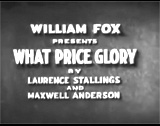 Although
the specific term "special effects" first appeared in screen
credits for the silent film What Price
Glory (1926), with credit given to L.B. Abbott,
"special effects" have always been a part of film-making.
Although
the specific term "special effects" first appeared in screen
credits for the silent film What Price
Glory (1926), with credit given to L.B. Abbott,
"special effects" have always been a part of film-making.