 |
FILMS Part 1 |

 Thriller - Suspense Films
If the genre is to be defined strictly, a genuine thriller is a film that rentlessly pursues a single-minded goal - to provide thrills and keep the audience cliff-hanging at the 'edge of their seats' as the plot builds towards a climax. The tension usually arises when the main character(s) is placed in a menacing situation or mystery, or an escape or dangerous mission from which escape seems impossible. Life itself is threatened, usually because the principal character is unsuspecting or unknowingly involved in a dangerous or potentially deadly situation. Plots of thrillers involve characters which come into conflict with each other or with outside forces - the menace is sometimes abstract or shadowy. Thrillers are often hybrids - there are lots of varieties of suspense-thrillers:
Another closely-related genre is the horror film genre (e.g., Halloween (1978)), also designed to elicit tension and suspense, taking the viewer through agony and fear. Suspense-thrillers come in all shapes and forms: there are murder mysteries, private eye tales, chase thrillers, women-in-danger films, courtroom and legal thrillers, erotic thrillers, surreal cult-film soap operas, and atmospheric, plot-twisting psychodramas. Thrillers keep the emphasis away from the gangster, crime, or the detective in the crime-related plot, focusing more on the suspense and danger that is generated. See also this site's listing of AFI's 100 Most Thrilling Films. Characters in thrillers include convicts, criminals, stalkers, assassins, down-on-their-luck losers, innocent victims (often on the run), prison inmates, menaced women, characters with dark pasts, psychotic individuals, terrorists, cops and escaped cons, fugitives, private eyes, drifters, duplicitious individuals, people involved in twisted relationships, world-weary men and women, psycho-fiends, and more. The themes of thrillers frequently include terrorism, political conspiracy, pursuit, or romantic triangles leading to murder. In mid-June, 2001, the American Film Institute in Los Angeles, California made its definitive selection of the 100 greatest American "heart-pounding" and "adrenaline-inducing" films of all time, as determined by more than 1,800 actors, directors, screenwriters, historians, studio executives, critics, and others from the American film community. To be eligible, the 400 nominated films had to be U.S.-made, feature-length fiction films, whose thrills have "enlivened and enriched America's film heritage," according to the rules. AFI also asked jurors to consider "the total adrenaline-inducing impact of a film's artistry and craft," regardless of the genre. Early Thrillers:
Director George Cukor's classic psychological thriller Gaslight
(1944) (first made in Britain in 1939 with Anton Walbrook
and Diana Wynward) featured a scheming husband (Charles Boyer)
plotting to make his innocent young wife (Ingrid Bergman) go
insane, in order to acquire her inheritance. The film noir Laura
(1944) told about a thrilling
murder investigation (for a beautiful missing advertising executive named
Laura) conducted by a police detective (Dana Andrews), with suspects
including an acid-tongued columnist (Clifton Webb) and a gigolo
fiancee (Vincent Price). And the eerie The Picture of Dorian
Gray (1945), from Oscar Wilde's
masterful tale, refashioned the Faustian story of a man (Hurd Hatfield)
who made a deal with Mephistopheles (George Sanders) A mute domestic servant (Dorothy McGuire) in a haunted house was terrorized by a serial murderer, thinking she was the next victim in The Spiral Staircase (1946). In a taut thriller starring Orson Welles and Rita Hayworth titled The Lady From Shanghai (1948), a beautiful woman, her crippled lawyer/husband and his partner, and an Irish sailor ended up involved in a murder scheme. In Sorry, Wrong Number (1948), an invalid woman (Barbara Stanwyck) overheard a murder plot on the phone - against herself. The Third Man (1949), one of the best suspense films of all time, told the story of a writer (Joseph Cotten) in post-WW II Vienna who found out that his old friend (Orson Welles), a black marketeer, was not dead after all. Hitchcock: The Master of Suspense Thrillers Alfred Hitchcock has been considered the acknowledged auteur master of the thriller or suspense genre, manipulating his audience's fears and desires, and taking viewers into a state of association with the representation of reality facing the character. He would often interweave a taboo or sexually-related theme into his films, such as the repressed memories of Marnie (Tippi Hedren) in Marnie (1964), the latent homosexuality in Strangers on a Train (1951), voyeurism in Rear Window (1954), obsession in Vertigo (1958), or the twisted Oedipus complex in Psycho (1960). Hitchcock's films often placed an innocent victim (an average, responsible person) into a strange, life-threatening or terrorizing situation, in a case of mistaken identity, misidentification or wrongful accusation (i.e., in The 39 Steps (1935), The Wrong Man (1956), and in North by Northwest (1959)). He also utilized various cinematic techniques (i.e., the first British 'talking picture' - Blackmail (1929), the extreme zoom shot of the key in Notorious (1946), the glowing glass of milk in Suspicion (1941), the prolonged cross-cutting between a tennis match and sewer-grating in Strangers on a Train (1951), the virtuoso set-piece of the crop duster in North by Northwest (1959), the montage in the shower sequence accentuated with composer Bernard Herrmann's screeching violin score in Psycho (1960), the dolly-zoom shots in Vertigo (1958), or the heightening of anticipation with the long pull-back shot from inside a building to the outside and across the street in Frenzy (1972)). Visually-expressive motifs were also his specialty (i.e., the surrealistic dream sequences in Spellbound (1945), the key in Notorious (1946), the staircase or the use of profiles and silhouettes in Vertigo (1958), the strangulation-murder reflected in the victim's fallen glasses in Strangers on a Train (1951), the concept of "pairs" and guilt transference in Shadow of a Doubt (1943)), or the making of technically-challenging films (such as Lifeboat (1944) and Rope (1948)).
In many of his films, there was the inevitable life and death chase concluding with a showdown at a familiar landmark (for example, London's Albert Hall in The Man Who Knew Too Much (1956), the British Museum in Blackmail (1929), the Statue of Liberty in Saboteur (1942), the UN and Mount Rushmore in North by Northwest (1959), the assassination attempt atop Westminster Cathedral's Tower in Foreign Correspondent (1940), and the Golden Gate Bridge in Vertigo (1958)). He also reveled in tight and confined spaces, to heighten emotion (i.e., Lifeboat (1944), Rope (1948), or Rear Window (1954), etc.) or restrictive train journeys (i.e., The Lady Vanishes (1938), and North by Northwest (1959), etc). Hitchcock's MacGuffins (or McGuffins) The famed director often capitalized on a 'red herring' or gimmicky plot element to catch the viewer's attention - dubbed a McGuffin (or MacGuffin), that would propel the plot along its course. Usually, the McGuffin initially appeared to be of utmost importance, but functioned to intentionally misdirect the audience - it then quickly faded into the background and ended up being trivial, irrevelant, or incidental to the film's story. The MacGuffin normally referred to the mystery to be solved (or the fugitive's innocence to be proven), or an object, or some other kind of motivator. See separate page for listing of all of Hitchcock's MacGuffins. More About Hitchcock's Films Hitchcock usually cast leading actors against type (Gregory Peck, James Stewart, Cary Grant) opposite cool blondes (Madeleine Carroll, Joan Fontaine, Ingrid Bergman, Grace Kelly, Kim Novak, Janet Leigh, Tippi Hedren) who were often subject to misogynistic abuse, threatening humiliation, or murder. Hitchcock would then explore the darker sides of human nature through the situation, including sexuality and voyeurism, guilt and punishment, or paranoia and obsession. He usually let the viewer know that some horrible event would happen - creating unbearable suspense while viewers waited for the inevitable.
After Hitchcock's classic films of the 1950s, his films were wildly uneven, although he produced the shocking and engrossing thriller Psycho (1960) about a loner mother-fixated motel owner and taxidermist - with the classic set piece (the 'shower scene'), and the suspenseful and strangely terrifying The Birds (1963) about a invasion of birds in a N. California coastal town and its effect upon archetypal cool blonde Tippi Hedren. His film Frenzy (1972), Hitchcock's first British film in almost two decades, was given an R rating for its vicious and explicit strangulation scene. |




 Thriller
and Suspense Films: These are
types of films known to promote intense excitement, suspense, a high level of
anticipation, ultra-heightened expectation, uncertainty, anxiety, and nerve-wracking
tension. Thriller and suspense films are virtually synonymous and interchangeable
categorizations, with similar characteristics and features.
Thriller
and Suspense Films: These are
types of films known to promote intense excitement, suspense, a high level of
anticipation, ultra-heightened expectation, uncertainty, anxiety, and nerve-wracking
tension. Thriller and suspense films are virtually synonymous and interchangeable
categorizations, with similar characteristics and features. One
of the earliest 'thrillers' was Harold Lloyd's comic
One
of the earliest 'thrillers' was Harold Lloyd's comic 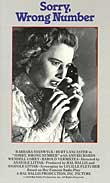 to
forever remain young.
to
forever remain young. No
list of suspense or thriller films can be complete without mention of English
film-maker/director Alfred Hitchcock. He helped to shape the modern-day thriller
genre, beginning with his early silent film The Lodger (1927), a suspenseful
Jack-the-Ripper story, followed by his next thriller Blackmail (1929),
his first sound film (but also released in a silent version). Hitchcock would
make a signature cameo appearance in his feature films, beginning with his
third film The Lodger (1927), although his record was spotty at first.
After 1940, he appeared in every one, except for The Wrong Man (1956).
[See all of Hitchcock's cameos
No
list of suspense or thriller films can be complete without mention of English
film-maker/director Alfred Hitchcock. He helped to shape the modern-day thriller
genre, beginning with his early silent film The Lodger (1927), a suspenseful
Jack-the-Ripper story, followed by his next thriller Blackmail (1929),
his first sound film (but also released in a silent version). Hitchcock would
make a signature cameo appearance in his feature films, beginning with his
third film The Lodger (1927), although his record was spotty at first.
After 1940, he appeared in every one, except for The Wrong Man (1956).
[See all of Hitchcock's cameos  Notable
examples of Hitchcock's early British suspense-thriller films include The
Man Who Knew Too Much (1934), his first great spy-chase/romantic thriller
Notable
examples of Hitchcock's early British suspense-thriller films include The
Man Who Knew Too Much (1934), his first great spy-chase/romantic thriller  In
the 1950s, Hitchcock added technicolor to his still-brilliant dark
and moody films, now with exotic locales and glamorous stars. He reached
the zenith of his career with a succession of classic films:
In
the 1950s, Hitchcock added technicolor to his still-brilliant dark
and moody films, now with exotic locales and glamorous stars. He reached
the zenith of his career with a succession of classic films: