The Best Actor Academy Awards
Facts and Trivia
The Best Actor award should actually be titled "the
best performance by an actor in a leading role." The same rules that
govern the Best Actor category apply to the Best Actress category. (See
the complete list of all Best Actor and Best Supporting Actor winners
here)
The Top Best Actor Winner:
Daniel Day-Lewis is the only actor to win three Best
Actor awards: My Left Foot (1989), There
Will Be Blood (2007), and Lincoln (2012). (His nominations
were from 1989-2017.)
Ten actors have won the Best Actor Oscar twice:
The most nominated actors (Best
Actor roles only) are Laurence Olivier
(9) and Spencer Tracy (9).
Top Best Actor Oscar
Winner/Nominee
|
Best Actor Wins
|

Daniel Day-Lewis
6 career nominations
(6 B.A. noms),
3 wins
|
My Left Foot (1989)
There Will Be Blood (2007)
Lincoln (2012)
|

Spencer Tracy
9 career nominations
(9 B.A. noms),
2 wins
|
Captains Courageous
(1937)
Boys Town (1938)
|
Other Top Best Actor Oscar
Winners and Nominees
|
Best Actor Wins
|

Jack Nicholson
12 career nominations
(8 B.A. noms),
3 wins (2 B.A.)
|
One Flew Over The Cuckoo's Nest (1975)
As Good As It Gets (1997)
|
Marlon Brando
8 career nominations
(7 B.A. noms),
2 wins |
On The Waterfront (1954)
The Godfather (1972)
|
Dustin Hoffman
7 career nominations
(7 B.A. noms),
2 wins |
Kramer vs. Kramer (1979)
Rain Man (1988)
|
Anthony Hopkins
6 career nominations
(4 B.A. noms)
2 wins
|
The Silence of the Lambs (1991)
The Father (2020)
|
Gary Cooper
5 career nominations
(5 B.A. noms),
2 wins
|
Sergeant York (1941)
High Noon (1952)
|
Fredric March
5 career nominations
(5 B.A. noms),
2 wins
|
Dr. Jekyll and Mr. Hyde (1931/32)
The Best Years of Our Lives (1946)
|
Tom Hanks
5 career nominations
(5 B.A. noms),
2 wins |
Philadelphia (1993)
Forrest Gump (1994)
|
Sean Penn
5 career nominations
(5 B.A. noms),
2 wins
|
Mystic River (2003)
Milk (2008)
|
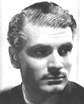
Laurence Olivier
11 career nominations
10 acting nominations
(9 B.A. noms),
1 win
|
Hamlet (1948)
|
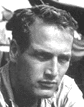
Paul Newman
9 acting nominations
(8 B.A. noms)
1 win
|
The Color of Money (1986)
|

Peter O'Toole
8 acting nominations
(8 B.A. noms)
0 wins
|
|
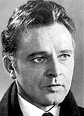
Richard Burton
7 career nominations
(6 B.A. noms)
0 wins
|
|
The Most Best Actor Wins:
There were ten actors who have received two Best Actor
Oscar wins (details above):
- Spencer Tracy (9) - with two wins (Captains Courageous (1937), Boys Town (1938)); three
were consecutive nominations (from 1936-1938), and two others were
consecutive nominations (from 1960-1961)
- Jack Nicholson (8) - with two wins ( One Flew Over the Cuckoo's Nest (1975), As Good As It Gets (1997)); three were consecutive nominations (from 1973-1975)
- Marlon Brando (7) - with two wins ( On the Waterfront (1954), The Godfather (1972)); four were consecutive nominations (from 1951-1954) (A RECORD!); also consecutive from 1972-1973
- Dustin Hoffman (7) - with two wins (Kramer vs. Kramer (1979), Rain Man (1988))
- Anthony Hopkins (6) - with two wins (The Silence
of the Lambs (1991), The Father (2020))
- Gary Cooper (5) - with two wins (Sergeant York (1941), High Noon (1952)); three
were consecutive nominations (from 1941-1943)
- Fredric March (5) - with two wins (Dr. Jekyll and Mr. Hyde (1931/32), The Best Years of Our Lives (1946));
two were consecutive nominations (from 1930/31-1931/32)
- Tom Hanks (5) - with two wins (Philadelphia (1993), Forrest Gump (1994)); two were
consecutive nominations (from 1993-1994)
- Sean Penn (5) - with two wins (Mystic River (2003) and Milk (2008)); nominations were from 1995-2008
- Adrien Brody (2) - with two wins (The Pianist
(2002) and The Brutalist (2024)); nominations
were from 2002-2024
The Most Best Actor Nominations:
Actors with the highest number of Best Actor acting
nominations (in parentheses) include:
- Spencer Tracy (9) - with two wins
- Laurence Olivier (9) - with one win (Hamlet (1948)); two were
consecutive nominations (from 1939-1940)
- Jack Nicholson (8) - with two wins
- Paul Newman (8) - with one win (The Color of Money (1986)); two were
consecutive nominations (from 1981-1982)
- Peter O'Toole (8) - with no wins; two were consecutive
nominations (from 1968-1969); nominations from 1962-2006
- Marlon Brando (7) - with two wins
- Dustin Hoffman (7) - with two wins
- Jack Lemmon (7) - with one win (Save the Tiger (1973)); two were consecutive nominations (from 1959-1960, and from 1979-1980)
- Denzel Washington (7) - with one win (Training
Day (2001)); highest for an African-American, nominations
from 1992-2021
- Paul Muni (6) - with one win (The Story of Louis Pasteur (1936)); three were consecutive
nominations (from 1935-1937)
- Richard Burton (6) - with no wins; three were consecutive
nominations (from 1964-1966)
- Daniel Day-Lewis (6) - with three wins; nominations
(from 1989 to 2017)
- Anthony Hopkins (6) - with two wins; nominations
from 1991-2020
- Gary Cooper (5) - with two wins
- Tom Hanks (5) - with two wins
- Fredric March (5) - with two wins
- Sean Penn (5) - with two wins
- James Stewart (5) - with one win ( The Philadelphia Story (1940)); two were
consecutive nominations (from 1939-1940)
- Gregory Peck (5) - with one win ( To Kill a Mockingbird (1962)); three were
consecutive nominations (from 1945-1947)
- Al Pacino (5) - with one win (Scent of a Woman
(1992)); three were consecutive nominations (from 1973-1975)
- Robert De Niro (5) - with one win ( Raging Bull (1980)); two were consecutive nominations (from 1990-1991)
- Burt Lancaster (4) - with one win (Elmer Gantry (1960)); nominations were from 1953-1981
- Albert Finney (4) - with no wins; two were consecutive nominations (from 1983-1984); nominations from 1963-1984
- Leonardo DiCaprio (4) - with one win (The Revenant
(2015); nominations were from 2004-2015
- Charles Laughton (3) - with one win (The Private Life of Henry VIII (1932/33)); nominations from 1932/33-1957
- Clark Gable (3) - with one win ( It Happened One Night (1934)); two were consecutive nominations (from 1934-1935)
- James Cagney (3) - with one win ( Yankee Doodle Dandy (1942)); the two others were in different decades: 1938 and 1955
- Bing Crosby (3) - with one win (Going My Way (1944)); two were consecutive nominations (from 1944-1945); nominations from 1944-1954
- Ronald Colman (3) - with one win (A Double Life (1947)); one set of nominations was
in the same year (1929/30); nominations from 1929/30 to 1947
- Humphrey Bogart (3) - with one win ( The African Queen (1951)); nominations from 1943-1954
- William Holden (3) - with one win (Stalag 17 (1953)); nominations from 1950-1976
- Jon Voight (3) - with one win (Coming Home (1978)); nominations from 1969-1985
- Robert Duvall (3) - with one win (Tender Mercies (1983)); nominations from 1980-1997
- William Hurt (3) - with one win (Kiss of the Spider Woman (1985)); three were
consecutive nominations (from 1985-1987)
- Russell Crowe (3) - with one win (Gladiator (2000)); three were
consecutive nominations (from 1999-2001)
- Jeff Bridges (3) - with one win (Crazy Heart (2009)); nominations from 1984-2010
- Will Smith (3) - with one win (King Richard (2021));
nominations from 2001-2021
- George Clooney (3) - with no wins; nominations from
2007-2011
Consecutive Best Actor-Winning Performers:
There are only two actresses
(Luise Rainer and Katharine Hepburn) who have received two consecutive Best
Actress awards, as there are only two actors who have received
two consecutive Best Actor statuette wins:
- Spencer Tracy (Captains Courageous (1937) and Boys Town (1938))
- Tom Hanks (Philadelphia (1993) and Forrest Gump (1994))
[Note: Jason Robards won two consecutive Best Supporting
Actor Oscars in 1976 and 1977.]
Winners of Both a Lead and Supporting Actor Oscar:
In 1997, Jack Nicholson tied Walter Brennan for the
most wins (3) for a male performer (Brennan has three Best Supporting
Actor trophies, Nicholson has two for Best Actor and one for Best Supporting
Actor). The only stars to win both a Best Actor and a Best Supporting Actor (BSA) Oscar are the following:
The Only Best Actor Tie:
In the Best Actor category, an unusual tie (the only
occurrence among male acting performances) occurred in 1931/32 between
Wallace Beery and Fredric March, for their respective performances in The Champ (1931/32) and Dr. Jekyll and Mr. Hyde (1931/32).
The Most Best Actor Oscar Nominations - Without Winning:
Peter O'Toole is the only star with eight Best Actor
Oscar nominations without a single win. His record extends 44 years,
from 1962 to 2006.
Richard Burton was nominated seven times (and never won), although his first nomination was as Best Supporting Actor for My Cousin Rachel (1952) -- his last six nominations were as Best Actor.
Oscar-Winning Actor Roles and Trends:
Biographies of remarkable, real-life individuals (military
figures or soldiers, law-and-order enforcers, historical figures) and
portrayals of the mentally ill are heavily represented among male Oscar
winners, particularly in the acting awards. It helps an actor's chances
of winning an Oscar if the character dies a tragic death during the
movie, or is slightly eccentric (or genius).
Physical and Mental Disabilities or Diseases
An overwhelming number
of actors have won (or been nominated for) the top acting (and supporting)
awards for portraying characters with physical or mental disabilities
(personality disorders, amnesia) or diseases (with handicaps, such
as blindness or muteness, tics, etc.):
- Fredric March won the Best Actor Oscar for his dual,
split personality role as a respected doctor and as a fiendish
mad-man in Dr.
Jekyll and Mr. Hyde (1931/32)
- Ronald Colman was nominated as Best Actor for his
role as shell-shocked amnesiac Charles Rainier in Random
Harvest (1942)
- Harold Russell (real-life amputee) won the Best
Supporting Actor Oscar for his role as courageous and resourceful
returning sailor Homer Parrish in
The Best Years of Our Lives (1946) [Note: Russell
is the only performer to win two Oscars for the same performance.
In 1946, he won Best Supporting Actor and was voted an Honorary Oscar
that same year for his performance.]
- Arthur Kennedy was nominated as Best Actor for his
role as veteran Larry Nevins made blind in WWII combat
in Bright
Victory (1951)
- Cliff Robertson won the Best Actor Oscar for his
title role as Charly Gordon - a mentally-retarded, thirty year-old
bakery worker temporarily made a genius through surgery in Charly
(1968)
- Alan Arkin was nominated as Best Actor for his role
as deaf-mute Singer in The Heart is a Lonely Hunter (1968)
- Sir John Mills won the Best Supporting Actor Oscar
for his role as mute, gentle, mis-shaped village idiot
Michael in
Ryan's Daughter (1970) - he became the sole male actor to
win an Oscar for a non-speaking role
- Jack Nicholson won the Best Actor Oscar for his
role as life-affirming, ill-fated, free-spirited, anarchic misfit
patient Randle Patrick McMurphy in
One Flew Over the Cuckoo's Nest (1975)
- Jon Voight won the Best Actor Oscar for his role
as handicapped Luke Martin - a bitter but sensitive paraplegic
veteran paralyzed during the Vietnam War in Coming
Home (1978)
- Timothy Hutton won the Best Supporting Actor Oscar
for his role as guilt-ridden, depressed teenaged Conrad Jarrett
in Ordinary
People (1980)
- John Malkovich was nominated as Best Supporting
Actor for his role as blind boarder Mr. Will in Places
in the Heart (1984)
- Dustin Hoffman won the Best Actor Oscar for his
role as institutionalized, ultimately loveable, autistic idiot
savant Raymond ('Ray(n)' 'Man(d)') Babbitt in Rain
Man (1988)
- Daniel Day-Lewis won the Best Actor Oscar for his
role as Irish-born artist and author Christy Brown - a self-reliant,
spastic quadriplegic cerebral palsy victim who could only write
and draw with his foot in My
Left Foot (1989)
- Anthony Hopkins won the Best Actor Oscar for his
role as cannibalistic, menacing, psychopathic serial psychiatrist/killer
Dr. Hannibal "Cannibal" Lecter in The
Silence of the Lambs (1991)
- Al Pacino won the Best Actor Oscar for his role
as foul-mouthed, suicidal, blind (as a result of a boozing-related
accident), retired Lt. Col. Frank Slade in Scent of
a Woman (1992)
- Tom Hanks won the Best Actor Oscar for his role
as AIDS-infected corporate attorney and victim Andrew Beckett in Philadelphia
(1993) - Hanks' 1994 acceptance speech
for his Best Actor Oscar win for Philadelphia (1993) directly
inspired the homosexuality-themed film In & Out (1997),
about an outed English literature teacher (Kevin Kline) in an
Indiana town when one of his former students (Matt Dillon) thanked
him at the Academy Awards and mentioned he was gay
- Tom Hanks won the Best Actor Oscar again for his
title role as Forrest Gump, a good-hearted, naive, eccentric,
dim-witted protagonist (an idiot-savant) in Forrest
Gump (1994)
- Geoffrey Rush won the Best Actor Oscar for his role
as talented but agonizingly-troubled, mentally-disabled Australian
concert pianist David Helfgott who suffered a crippling nervous
breakdown in Shine
(1996)
- Jack Nicholson won the Best Actor Oscar for his
role as rich, bigoted, obsessive-compulsive romance novelist Melvin
Udall living in New York in As
Good As It Gets (1997)
- Geoffrey Rush was also nominated as Best Actor
for his role as sexually-crazed French novelist Marquis de Sade
in Quills
(2000)
- Jamie Foxx won the Best Actor Oscar for his role
as legendary blues singer and blind pianist Ray Charles in Ray
(2004)
- Forest Whitaker won the Best Actor Oscar for his
role as brutal, infamous, genocidal Ugandan dictator Idi Amin in
The Last King of Scotland (2006)
- Colin Firth won the Best Actor Oscar for his role
as stuttering monarch George VI in The King's Speech (2010)
- Eddie Redmayne won the Best Actor Oscar for his
role as ALS-diagnosed physicist Stephen Hawking in The Theory of
Everything (2014)
- Joaquin Phoenix won the Best Actor Oscar for his
role in Joker (2019) as violent, delusional,
sociopathic Gotham City title character - the mentally-ill outcast,
aspiring comedian and party clown Arthur Fleck
- Anthony Hopkins won the Best Actor Oscar for his
role in The Father (2020) as Anthony - a family's father suffering from a degenerative disease
Alcoholics
And a number of other actors have won Oscar
awards (or been nominated) for portraying alcoholic characters:
- Lionel Barrymore won the Best Actor Oscar for his
role as dissolute and drunken lawyer Stephen Ashe (co-star Norma
Shearer's father) in A
Free Soul (1930/31)
- Van Heflin won the Best Supporting Actor Oscar for
his role as Shakespeare-quoting, alcoholic confidant Jeff Hartnett
who befriended gangster co-star Robert Taylor in
Johnny Eager (1942)
- Ray Milland won the Best Actor Oscar for his role
as whiskey-soaked, boozing, writer's blocked Don Birnam in The
Lost Weekend (1945)
- Fredric March won Best Actor for his role as anguished,
middle-aged, alcoholic banking executive - and returning war veteran
and ex-sergeant Al Stephenson in The
Best Years of Our Lives (1946)
- James Mason was nominated as Best Actor for his
role as ruined, alcoholic actor Norman Maine in A
Star Is Born (1954)
- Jack Lemmon was nominated as Best Actor for his
role as alcoholic advertising man Joe Clay in Days
of Wine and Roses (1962)
- Lee Marvin won the Best Actor Oscar for his dual
role as cold-eyed, ruthlessly evil desperado
Tim Strawn (with an artificial silver nose) and Strawn's aging,
once-famous, drunken and whiskey-soaked twin gunman Kid Shelleen
in Cat
Ballou (1965)
- Dudley Moore was nominated as Best Actor for his
role as drunk, spoiled, amiable and millionaire-rich playboy -
title character Arthur Bach in Arthur
(1981)
- Paul Newman was nominated as Best Actor for his
role as alcoholic, ambulance-chasing, Boston trial lawyer Frank
P. Galvin in The
Verdict (1982)
- Robert Duvall won Best Actor for his role as ex-drinking,
ex-country/western music star Mac Sledge in Tender
Mercies (1983)
Note:
in 1983, all five Best Actor nominees played drunks of one sort or
another (two were nominated for the film The Dresser (1983),
Albert Finney and Tom Courtenay)
- Albert Finney was nominated as Best Actor for his
role as self-destructive alcoholic Geoffrey Firmin drinking himself
to death in the shadow of a Mexican volcano in Under
the Volcano (1984)
- Nicolas Cage won the Best Actor Oscar for his role
as failed, Hollywood scriptwriter and fatally-destructive, genial,
but suicidal alcoholic Ben Sanderson in Leaving
Las Vegas (1995)
- Robert Duvall was nominated as Best Actor for his
role as Texas Pentecostal preacher Eulis ("Sonny") Dewey
who became 'The Apostle' of God in Louisiana to escape his past
in The
Apostle (1997)
- James Coburn won the Best Supporting Actor Oscar
for his role as Nick Nolte's tyrannical, abusive and alcoholic
father Glen "Pop" Whitehouse in Affliction (1998)
- Jeff Bridges won the Best Actor Oscar for his role
as broken-down, aging, boozy country-music singer Bad Blake in Crazy
Heart (2009)
- Denzel Washington was nominated as Best Actor for
his role as tragic, heroic, and addicted boozy airline
pilot Whip Whitaker in Flight (2012)
Homosexual Roles
Some straight actors have been nominated
(and often won) for homosexual roles:
- Peter Finch received his first Best Actor nomination
(without winning) for his role as middle-aged, homosexual Jewish Dr.
Daniel Hirsh involved
in a three-sided love story in Sunday,
Bloody Sunday (1971)
- William Hurt won Best Actor for his role as imprisoned,
flamboyant gay South American Luis Molina in Kiss of the
Spider Woman (1985)
- Tom Hanks won Best Actor for his role as dying AIDS patient Andrew Beckett in Philadelphia (1993)
- Sean Penn won the Best Actor Oscar for his role
as openly pioneering San Francisco gay camera store owner Harvey
Milk who successfully was serving in public office as mayoral aide
when he was assassinated, in Milk (2008)
- Rami Malek won Best Actor for his role
as AIDS-suffering lead singer Freddie Mercury of
the legendary and iconic rock band Queen, in Bohemian Rhapsody (2018)
Mediocre or Compensatory Oscar Wins:
Oscar victories for Best Actor haven't always been
for the stars' best work either, but have often been an effort to
right past injustices, or retroactively for an entire body of work:
- 56 year-old Ronald Colman's late win as Best Actor
for A Double Life (1947) - a tribute to his entire silent and
sound film career
- 62 year-old John Wayne's belated win as Best Actor
for True Grit (1969), when he should have been honored years
earlier for
Stagecoach (1939),
Red River (1948), She Wore a Yellow Ribbon (1949),
Sands of Iwo Jima (1949),
The Quiet Man (1952),
The Searchers (1956), or The Man Who Shot Liberty Valance
(1962)
- James Stewart's win for Best Actor (his first and
sole award) for his role in
The Philadelphia Story (1940) was because he had lost the
previous year for
Mr. Smith Goes to Washington (1939)
- Jack Lemmon won his sole Best Actor award for Save
the Tiger (1973), but he should have won instead when nominated
for
Some Like It Hot (1959), The Apartment
(1960), or Days of Wine and Roses (1962)
- Paul Newman's sole Oscar win for reprising his "Hustler"
role as pool player Eddie Felson in The Color of Money (1986)
was a dubious honor - it really represented praise for his entire
career's work, for his colorful non-conformist roles in The
Hustler (1961), Hud (1963),
and Cool Hand Luke (1967)
- A late-career win was also given to Al Pacino for
Scent of a Woman (1992) for his role as a blind, suicidal
ex-Army officer, after seven acting nominations, including four
Best Actor losses for Serpico
(1973),
The Godfather, Part II (1974), Dog Day Afternoon (1975),
and And Justice For All (1979), and three other Best Supporting
Actor losses ( The
Godfather (1972), Dick
Tracy (1990) and Glengarry Glen Ross (1992))
- Sean Connery won Best Supporting Actor for The
Untouchables (1987), but he should have been nominated (and won)
for earlier, more deserving performances in The Hill (1965),
The Molly Maguires (1970), or The Man Who Would Be King
(1975)
- John Gielgud won Best Supporting Actor for his performance
as the butler in Arthur (1981), but he should have won instead
for either Julius Caesar (1953), Richard III (1955) or
Becket (1964)
- A seriously-ill, 76 year-old Henry Fonda won Best
Actor for On Golden Pond (1981), despite the brilliant performance
of Burt Lancaster in Atlantic City (1981). Fonda should have
won years earlier for any number of performances, including
The Grapes of Wrath (1940) or The Ox-Bow
Incident (1943)
Also, elderly nominees seem to fare better, such as
54 year-old Art Carney winning the Best Actor Oscar for Harry
and Tonto (1974), 60 year-old Peter Finch's posthumous Best
Actor award for Network (1976),
83 year-old Anthony Hopkins winning the Best Actor Oscar for The
Father (2020), 80 year-old George Burns winning the Best Supporting
Actor Oscar for The
Sunshine Boys (1975), Melvyn Douglas winning the Best Supporting
Actor Oscar for
Being There (1979), Don Ameche winning the Best Supporting
Actor Oscar for Cocoon (1985), and 72 year-old Alan Arkin winning
the Best Supporting Actor Oscar for Little Miss Sunshine
(2006).
Many other
elderly actors have been nominated for supporting roles, including
Eric von Stroheim for
Sunset Boulevard (1950), Sessue Hayakawa for
The Bridge on the River Kwai (1957), John Mills for Ryan's
Daughter (1970), Lee Strasberg for
The Godfather, Part II (1974), Burgess Meredith for Rocky
(1976), Robert Preston for Victor/Victoria (1982),
Denholm Elliott for A Room With a View (1986), and Armin Mueller-Stahl
for Shine (1996).
Post-Humous Acting Nominations and Award(s):
There are only been eight post-humous performance
nominees in Academy history. Only two posthumous nominees have won
the Oscar: the first by Peter Finch and and the second by Heath Ledger
- see below:
- Jeanne Eagels - unofficially nominated for a Best Actress Oscar
for The Letter (1928/29) posthumously (Academy records indicated that she was "under consideration" for an award)
- James Dean - the only actor who was twice
nominated (in two consecutive years) for a Best Actor Oscar after his death and lost, for East
of Eden (1955), and Giant (1956)
- Spencer Tracy - nominated for a Best Actor Oscar
for Guess Who's Coming to Dinner (1967) posthumously
- Peter Finch - nominated and winning
the Best Actor Oscar for Network (1976)
posthumously - Finch was the first performer to have won
the Oscar after his death
- Ralph Richardson - nominated for a Best Supporting
Actor Oscar for Greystoke: The Legend of Tarzan, Lord of the Apes
(1984) posthumously
- Italian actor Massimo Troisi - nominated for a Best
Actor Oscar for The Postman (Il Postino) (1995) posthumously
- Heath Ledger - nominated and winning the
Best Supporting Actor Oscar for The
Dark Knight (2008) posthumously - Ledger was the second performer
to win posthumously
- Chadwick Boseman - nominated for a Best Actor Oscar
for Ma Rainey’s Black Bottom (2020) posthumously
The Most Best Actor Nominations for a Single Film:
The film with the most Best Actor nominations (3)
was Mutiny on the Bounty (1935), for Clark
Gable, Franchot Tone, and Charles Laughton. It was the first film to have three acting nominations,
and the first film to have three co-performers competing against each other
in the same category - as Best Actor.
African-American (or Black) Notables:
There have only been twenty-nine African-American
(or black) nominations for Best Actor, divided amongst seventeen different
performers. Four actors (Poitier, Freeman, Washington and Smith)
have been nominated twice (or more) for the top award. Some regard
Denzel Washington as the first African-American performer
to win Best Actor -- because previous Oscar-winner Sidney Poitier
was of Bahamas descent:
In total, there have only been 31 different African-American
(or black, or non-white) performers nominated for the top
award (either Best Actor or Best Actress).
Only twenty-four awards have been won by
African-Americans (or blacks) in both lead and supporting categories
(five Best Actor, one Best Actress, seven Best Supporting Actor,
and eleven Best Supporting Actress). Only six black performers have
won the Oscar in the lead category (five Best Actor, one Best Actress).
Only five African-American
actors have won the Best Actor Oscar:
- Sidney Poitier for Lilies of the Field (1963)
- Denzel Washington for Training Day (2001)
- Jamie Foxx for Ray (2004)
- Forest Whitaker for The Last King of Scotland (2006)
- Will Smith for King Richard (2021)
In 2021, Denzel Washington became the most-nominated
black actor in Oscar history with his Best Actor nomination for The
Tragedy of Macbeth (2021). He had two Best Supporting Actor nominations,
and seven Best Actor nominations, plus a producer nomination for Fences
(2016). He previously won Best Actor for Training Day (2001),
and Best Supporting Actor for Glory (1989).
In 2020, six black African-American performers were
nominated in three of the four acting categories. 9 of the 20 acting
nominees were of color or from ethnic-minority backgrounds. Only one
black nominee won: Daniel Kaluuya for Judas and the Black Messiah
(2020).
2016 was the first year in Academy history
in which black actors/actresses were nominated in each of the four
acting categories. Seven
of the 20 acting nominations in 2016 were non-white nominees (six
African-American and one Britisher/Indian). This bested the record
of five nominated blacks in 2006 and 2004. In 2017, there were four non-white
nominees. Three nominated blacks occurred in three different years
(2001, 1985, and 1972).
Jamie Foxx also set a record for being the first black
to debut as a nominee in two categories in the same year, lead
and supporting, for Ray (2004) and Collateral (2004).
Denzel Washington is the only black actor nominated
nine times for Best Actor or Best Supporting Actor. And he
was the first African American actor to win two Oscars
for acting (one Best Actor and one Best Supporting Actor). He was then
joined by Mahershala Ali with two acting Oscars (Ali won two Best Supporting
Actor Oscars, in 2016 and 2018, and became the first black actor
to repeat a win in the same category).
[With
Denzel Washington's nomination for Flight
(2012),
he became the most nominated
African-American actor in Academy history. Then, with
his nomination for Fences (2016), he broke
his own record for most Oscar nominations for a black male actor,
and then broke the record again for Roman J. Israel, Esq. (2017) and
for The Tragedy of Macbeth (2021). He was the first black actor to
have won two competitive Oscars (as Best Supporting Actor for Glory
(1989) and
as Best Actor for Training
Day (2001). The second black actor to win two competitive Oscars
(as Best Supporting Actor for Moonlight (2016) and Green
Book (2018)) was Mahershala Ali.]
Two African-American actors have been nominated
for Best Actor in the same year, numerous times:
Morgan Freeman's Best Supporting Actor
win for Million Dollar Baby (2004), paired with Jamie Foxx's
Best Actor win for Ray (2004), was the first
time that African-American actors won in their respective categories
in the same year.
In three instances, African-Americans have won
two of the four acting prizes:
- 2006: Forest Whitaker for The Last King of Scotland,
Jennifer Hudson for Dreamgirls
- 2004: Morgan Freeman for Million Dollar Baby,
Jamie Foxx for Ray
- 2001: Halle Berry for Monster's Ball, Denzel
Washington for Training Day
Latino, Asian and Other Ethnic-Minority (Non-English) Performers:
There have been only a few Best Actor Oscar wins by
ethnic/other minority (or non-English) performers:
- Arab-American Rami Malek (of Egyptian descent)
became the first Arab American to win the Best Actor Oscar
for Bohemian
Rhapsody (2018), and the second Arab-American to be
nominated for an acting Oscar (Omar Sharif was nominated as Best
Supporting Actor for Lawrence
of Arabia (1962))
- French
actor Jean Dujardin won Best Actor for The Artist (2011) -
he was the first French
actor to win the Best Actor Oscar
- Italian actor Roberto Benigni won the Best Actor
Oscar for Life is Beautiful (1998) - he
was the first male actor to win an
Oscar for a foreign-language film (his Best Actor Oscar win
was only the second time a nominee won an acting Oscar for a
foreign language film role - the earlier winner was Sophia Loren)
- Ben Kingsley, with half-Indian (birth name Krishna
Bhanji) and half-English descent, won the Best Actor Oscar for Gandhi
(1982) - he became the first South Asian performer to achieve
such a feat
- Puerto Rican-born Jose Ferrer won the Best Actor
Oscar for his role in Cyrano de Bergerac (1950)
Notable ethnic/minority performance nominations for
Best Actor include:
- Irish-born Cillian Murphy was nominated (and won)
Best Actor for Oppenheimer (2023) - the first ever Irish-born
winner
- Afro-Latino Colman
Domingo was nominated as Best Actor for Rustin (2023) -
a first
- South Korean actor Steven Yeun was nominated as
Best Actor for Minari (2020) - Yuen became the first
Asian-American nominee for Best Actor
- English (and Pakistani Muslim) actor Riz Ahmed was
nominated as Best Actor for Sound of Metal (2020) - he became
the first Muslim (and first of Pakistani descent) Best Actor nominee
- Spanish actor Antonio Banderas was nominated as
Best Actor for
Pain and Glory (2019, Sp.)
- Australian actor Hugh Jackman was nominated as Best
Actor for Les Miserables (2012)
- Mexican-born actor
Demián
Bichir was nominated as Best Actor for A Better Life (2011)
- Part Indian/Britisher Ben Kingsley was nominated
as Best Actor for House
of Sand and Fog (2003)
- Spanish/Latino actor Javier Bardem was nominated
as Best Actor for Before Night Falls (2000), Biutiful
(2010), and Being the Ricardos (2021) - he was the first Best
Actor nominee for a fully Spanish-language role
- Australian actor Geoffrey Rush was nominated as Best Actor for Shine (1996) (win) and Quills (2000) - Geoffrey Rush became the first Australian actor
to win Best Actor (for the role of the mad pianist in Shine (1996))
since Peter Finch won posthumously for Network
(1976)
- Italian actor Massimo Troisi was nominated as Best Actor for The Postman (Il Postino) (1995)
- French actor Gerard Depardieu was nominated as Best Actor for Cyrano de Bergerac (1990)
- Swedish actor Max Von Sydow was nominated as Best Actor for Pelle the Conqueror (1988)
- Mexican-American Edward James Olmos was nominated
as Best Actor for Stand and Deliver (1988)
- Italian actor Marcello Mastroianni was nominated as Best Actor for Dark Eyes (1987)
- Italian actor Marcello Mastroianni was nominated as Best Actor for A Special Day (1977)
- Italian actor Giancarlo Giannini was nominated as Best Actor for Seven Beauties (1976)
- Italian actor Marcello Mastroianni was nominated as Best Actor for Divorce - Italian Style (1962)
- Mexican-born Anthony Quinn was nominated twice as
Best Actor for Wild Is the Wind (1957) and Zorba the Greek
(1964)
- Puerto Rican-born Jose Ferrer was nominated as Best
Actor for Moulin Rouge (1952)
Note: In 1985, all ten of the Best Actor/Actress
nominees were American-born - the first time in Oscar history. Also, in 1964 and in 2007, all four winners of the performance/acting Oscars were non-Americans.
Multiple Nominations for the Same Character -- The Most Oscar-Friendly Role:
The character of Henry VIII has the most acting nominations
(three) and is the most Oscar-friendly role:
- Charles Laughton as Henry VIII in The Private
Life of Henry VIII (1933) - the only winner of the three - a Best Actor Oscar
- Robert Shaw as Henry VIII in A Man for All Seasons
(1966) - nominated as Best Supporting Actor
- Richard Burton as Henry VIII in Anne of the Thousand
Days (1969) - nominated as Best Actor
Other historical or fictional characters with two acting
nominations include: Norman Maine, Mr. Arthur Chipping ("Mr.
Chips"), Abraham Lincoln, Father Chuck O'Malley, King Henry
V, Professor Henry Higgins, Cyrano de Bergerac, Joe Pendleton, President
Richard Nixon, Vito Corleone, Billie Holiday. (See below).
Only three nominees in Oscar history have been nominated
for playing the role of a real-life Oscar nominee:
- Cate Blanchett
as Best Supporting Actress (win) for playing the role of Katharine
Hepburn in The Aviator (2004)
- Robert Downey,
Jr. nominated as Best Actor for the title role of Oscar nominee Charlie
Chaplin in Chaplin
(1992)
- Renee Zellweger, nominated as Best Actress (win)
for playing the role of two-time Oscar nominee Judy Garland in
Judy (2019)
Multiple Nominations (and Wins) for the Same Character:
It is a rare occurrence for two actors to win Oscars
for playing the same character in two different films:
- Marlon Brando won Best Actor for playing Don Vito
Corleone in The Godfather (1972) and
then Robert De Niro won Best Supporting Actor for the same role
in The Godfather, Part II (1974)
- Heath Ledger previously won the Best Supporting
Actor Oscar (posthumously) for his version of the Joker in The
Dark Knight (2008), and then Joaquin
Phoenix won Best Actor Oscar for his role as Arthur Fleck in Joker
(2019).
Five actors have been nominated twice for
playing the same character in two different films
(wins are marked with an *):
- Bing Crosby as Father Charles "Chuck" O'Malley in Going
My Way (1944)* and The Bells of St. Mary's (1945)
- Paul Newman as 'Fast' Eddie Felson in The
Hustler (1961) and The Color of Money (1986)*
- Peter O'Toole as King Henry II in Becket (1964)
and The Lion in Winter (1968)
- Al Pacino as Michael Corleone in
The Godfather (1972) and
The Godfather, Part II (1974)
- Sylvester Stallone as Rocky Balboa in Rocky (1976)
and Creed (2015)
(*Crosby won Best Actor for his first role, and Newman
won Best Actor for his second role.)
Only one actress has ever received two nominations
for playing the same character in two different films:
- Cate Blanchett became the fifth performer to draw
mentions for the same role (Queen Elizabeth I) in two different films:
Best Actress for Elizabeth (1998) and Best Actress for Elizabeth:
The Golden Age (2007)
Performers who were nominated as Best Actor for the same character in different films in different years include:
- Fredric March and James Mason as Norman Maine in A Star is Born (1937) and A Star is Born (1954)
- Robert Donat and Peter O'Toole as Mr. Arthur Chipping ("Mr. Chips") in Goodbye, Mr. Chips (1939) and Goodbye, Mr. Chips (1969)
- Laurence Olivier and Kenneth Branagh as King Henry V in Henry V (1944) and Henry V (1989) - both were directed by their stars
- Charles Laughton and Richard Burton as King Henry VIII in The Private Life of Henry VIII (1933) and Anne of the Thousand Days (1969)
- Leslie Howard and Rex Harrison as Professor Henry Higgins in Pygmalion (1938) and My Fair Lady (1964)
- Jose Ferrer and Gerard Depardieu as Cyrano de Bergerac in Cyrano de Bergerac (1950) and Cyrano de Bergerac (1990)
- Robert Montgomery and Warren Beatty as Joe Pendleton in Here Comes Mr. Jordan (1941) and Heaven Can Wait (1978)
- Anthony Hopkins and Frank Langella as President Richard Nixon in Nixon (1995) and Frost/Nixon (2008)
- John Wayne and Jeff Bridges as Rooster Cogburn in True Grit (1969) and True Grit (2010)
- Raymond Massey and Daniel Day-Lewis as President
Abraham Lincoln in Abe Lincoln in Illinois (1940) and Lincoln (2012)
Multiple Male Acting Nominations:
After 1929/30, an actor could not receive more than
one nomination per category. In 1944, the rules permitted Barry Fitzgerald
to be nominated for Best Actor and Best Supporting Actor (which he won)
for the same performance - Father Fitzgibbon in Going My Way
(1944). Subsequently, new rules have prevented this from re-occurring,
although an actor may still be nominated in both categories for two
different roles. (See the Best Supporting Actor and Best
Supporting Actress pages for further information on double nominees.)
Barry Fitzgerald is the only actor to be nominated
for both Best Actor and Best Supporting Actor for the same
character (or performance) in the same year. Since then,
two other male performers have been double-nominated in a single
year (wins are marked with *) - Pacino was the first actor
to be nominated for Best Actor and Best Supporting Actor in two different roles;
the second actor in Oscar history to do so was Jamie Foxx in 2004:
- Barry Fitzgerald (Best Actor for Going My Way
(1944)* and Best Supporting Actor for Going My Way (1944))
- Al Pacino (Best Actor for Scent of a Woman (1992)*
and Best Supporting Actor for Glengarry Glen Ross (1992))
- Jamie Foxx (Best Actor for Ray (2004)* and
Best Supporting Actor for Collateral (2004))
One Nomination for Multiple Roles:
Peter Sellers is the only actor to be nominated
(as Best Actor) for playing three entirely-different roles in the same film,
Dr. Strangelove or: How I Learned to Stop Worrying and Love the Bomb
(1964) - as Captain Lionel Mandrake, President Merkin Muffley,
and Dr. Strangelove. He lost his bid to Rex Harrison in My Fair Lady (1964).
Entire Cast Nominations:
Three films have had the entire
speaking casts nominated for awards:
- Sleuth (1972), with Best Actor nominations
for Michael Caine and Laurence Olivier
- Give 'Em Hell, Harry! (1975), with a Best
Actor nomination for James Whitmore
-
Who's Afraid of Virginia Woolf? (1966), with various nominations
for all four cast members, Elizabeth Taylor (Best Actress win), Richard Burton (Best Actor loss), George
Segal (Best Supporting Actor loss), and Sandy Dennis (Best Supporting Actress win)
Actors Who Won An Oscar for a Dual Role:
- Fredric March, Best Actor winner for Dr. Jekyll
and Mr. Hyde (1931/32): Dr. Jekyll and Mr. Hyde
- Laurence Olivier, Best Actor winner for Hamlet
(1948, UK): Hamlet and the Voice of the Ghost (uncredited)
- Lee Marvin, Best Actor winner for Cat Ballou (1965):
Tim Strawn and Kid Shelleen
The Best Actor Award for Two Films in the Same Year:
- Emil Jannings was the only performer to win the
Best Actor award for his performances in two films in the same year: The
Last Command (1927/28) and The Way of All Flesh (1927/28) -
he was the very first actor to win the Academy Award for
Best Actor; the Switzerland-born actor was the first non-American
to win the award, which was presented to him a month before the
ceremony.
Winning Co-Stars: Best Actor and Best
Actress in the Same Film:
Seven films have won in both the leading actor and leading
actress categories:
Male Performers with Oscars in Both Lead and Supporting
Categories: (in order of accomplishment)
- Jack Lemmon, Best Supporting Actor (Mister Roberts (1944)), Best Actor (Save the Tiger (1973))
- Robert De Niro, Best Supporting Actor ( The
Godfather, Part 2 (1974)), Best Actor ( Raging
Bull (1980))
- Jack Nicholson, Best Actor ( One Flew Over the Cuckoo's Nest (1975) and As Good As It Gets (1997)), Best Supporting Actor (Terms of Endearment (1983))
- Gene Hackman, Best Actor (The French Connection (1971)), Best Supporting Actor (Unforgiven (1992))
- Kevin Spacey, Best Supporting Actor (The Usual Suspects (1995)), Best Actor (American Beauty (1999))
- Denzel Washington, Best Supporting Actor (Glory (1989)), Best Actor (Training Day (2001))
Films With the Most Oscars for Acting: (see also here)
The Only Films in Which Three Stars Won Performance Oscars
-
A Streetcar Named Desire (1951)
- 12 nominations total, 4 acting nominations, 3 acting wins: Vivien
Leigh (Best Actress), Karl Malden (Best Supporting Actor), Kim Hunter
(Best Supporting Actress)
- Network (1976) - 10
nominations total, 5 acting nominations, 3 acting wins: Peter Finch
(Best Actor), Faye Dunaway (Best Actress), Beatrice Straight (Best
Supporting Actress)
- Everything Everywhere All at Once (2022) -
11 nominations total, 3 acting nominations, 3 acting wins: Michelle
Yeoh (Best Actress), Ke Huy Quan (Best Supporting Actor), Jamie
Lee Curtis (Best Supporting Actress); it was the
first film to win three acting awards and Best Picture
Actors/Actresses With Two Career Nominations and
Wins: 2-2 Perfect Score
- Luise Rainer: Best Actress for The Great Ziegfeld
(1936) and The Good Earth (1937)
- Vivien Leigh: Best Actress for Gone
With The Wind (1939), and A
Streetcar Named Desire (1951)
- Helen Hayes: Best Actress for The Sin of Madelon
Claudet (1931/32) and Best Supporting Actress for Airport
(1970)
- Hilary Swank: Best Actress for Boys Don't Cry
(1999) and Million Dollar Baby (2004)
- Kevin Spacey: Best Supporting Actor for The Usual
Suspects (1995) and Best Actor for American Beauty (1999)
- Christoph Waltz: Best Supporting Actor for Inglourious
Basterds (2009) and Django Unchained (2012)
- Mahershala Ali: Best Supporting Actor for Moonlight
(2016) and Green Book (2018)
- Adrien Brody: Best Actor for The Pianist (2002) and The
Brutalist (2024)
Film Debut Nominees/Winners for Best Actor Oscars:
Not a single actor has ever won the Best Actor
Oscar for a feature film debut. A few of those below had very small debuting roles before a substantial film appearance. Others have
received nominations for Best Actor for their debut role (a sampling):
- Paul Muni in The Valiant (1928/29) (nomination)
- Lawrence Tibbett in The Rogue Song (1929-30)
(nomination)
- Orson Welles in
Citizen Kane (1941) (nomination)
- Montgomery Clift in The Search (1948) (nomination)
- Alan Arkin in The Russians Are Coming! The Russians
Are Coming! (1966) (nomination) (he had a minor role in a film a decade earlier)
- Dustin Hoffman in
The Graduate (1967) (nomination)
- Ben Kingsley in Gandhi (1982) (win) (he had a bit role in his feature film debut, Fear is the Key (1972))
- Geoffrey Rush in Shine (1997) (win) (he had a bit role in a few earlier films, including Hoodwink (1981))
Reprising an Acclaimed Stage Role:
Six Best Actor winners won the Oscar for an acclaimed
stage role that they reprised on the screen. Those with an asterisk (*) won both a Best Actor Oscar and a Tony Award for musical roles they had created on stage:
- George Arliss for Disraeli (1929/30)
- Paul Lukas for Watch on the Rhine (1943)
- Jose Ferrer for Cyrano de Bergerac (1950)
- Yul Brynner for The King
and I (1956) *
- Rex Harrison for My Fair Lady
(1964) *
- Paul Scofield in A Man For All Seasons (1966)
Oscar-Winning Roles First on TV:
The only two Best Actor winners who first played their
Oscar-winning roles on TV were:
- Maximilian Schell for Judgment at Nuremberg (1961)
[Note: Schell is the lowest-billed performer to win a Best Actor
Academy Award. He received fifth billing - behind Spencer Tracy, Burt
Lancaster, Richard Widmark, and Marlene Dietrich.]
- Cliff Robertson for Charly (1968)
Best Actors Refusing Their Oscar Trophy:
- George C. Scott refused his Best Actor Oscar for Patton (1970)
- Marlon Brando refused his Best Actor Oscar for The Godfather (1972)
- Note: Much earlier in 1935, Dudley Nichols (the Best Writing Oscar winner for The Informer (1935)) also boycotted the Oscars, thereby refusing his Academy Award
Actors/Actresses With the Most Consecutive Acting
Nominations (in both Leading and Supporting categories)
(wins marked with *):
| Five Nominations in Consecutive
Years: |
Films |
| Bette Davis (1938-1942) |
Jezebel (1938)*, Dark Victory (1939), The
Letter (1940), The Little Foxes (1941), Now,
Voyager (1942) |
| Greer Garson (1941-1945) |
Blossoms in the Dust (1941), Mrs. Miniver (1942)*, Madame Curie (1943), Mrs.
Parkington (1944), The Valley of Decision (1945) |
| Four Nominations in Consecutive
Years: |
|
| Jennifer Jones (1943-1946) |
The Song of Bernadette (1943)*, Since You Went Away (1944), Love
Letters (1945), Duel in the Sun (1946) |
| Thelma Ritter (1950-1953) - all for Best Supporting Actress |
All About Eve (1950), The Mating Season (1951), With a Song in My Heart (1952), Pickup on South Street (1953) |
| Marlon Brando (1951-1954) |
A Streetcar Named Desire
(1951), Viva Zapata! (1952), Julius Caesar (1953), On the Waterfront (1954)* |
| Elizabeth Taylor (1957-1960) |
Raintree County (1957), Cat
on a Hot Tin Roof (1958), Suddenly,
Last Summer (1959), Butterfield 8 (1960)* |
| Al Pacino (1972-1975) |
The Godfather (1972), Serpico (1973), The Godfather, Part II (1974), Dog Day Afternoon (1975) |
| Three Nominations in Consecutive
Years: |
|
| Spencer Tracy (1936-1938) |
San Francisco (1936), Captains
Courageous (1937)*, Boys Town (1938)* |
| Gary Cooper (1941-1943) |
Sergeant York (1941)*, The
Pride of the Yankees (1942), For Whom the Bell Tolls (1943) |
| Ingrid Bergman (1943-1945) |
For Whom the Bell Tolls (1943), Gaslight (1944)*, The Bells of
St. Mary's (1945) |
| Gregory Peck (1945-1947) |
The Keys of the Kingdom (1945), The Yearling (1946), Gentleman's Agreement (1947) |
| Deborah Kerr (1956-1958) |
The King and
I (1956), Heaven Knows, Mr. Allison (1957), Separate
Tables (1958) |
| Richard Burton (1964-1966) |
Becket (1964), The Spy Who
Came In From the Cold (1965), Who's Afraid of Virginia
Woolf? (1966) |
| Jack Nicholson (1973-1975) |
The Last Detail (1973), Chinatown (1974), One Flew Over the Cuckoo's
Nest (1975)* |
| Jane Fonda (1977-1979) |
Julia (1977), Coming Home
(1978)*, The China Syndrome (1979) |
| Meryl Streep (1981-1983) |
The French Lieutenant's Woman (1981), Sophie's Choice (1982)*, Silkwood (1983) |
| Glenn Close (1982-1984) |
The World According to Garp (1982), The Big Chill (1983), The Natural (1984) |
| William Hurt (1985-1987) |
Kiss of the Spider Woman (1985)*, Children of a Lesser God (1986), Broadcast News (1987) |
| Russell Crowe (1999-2001) |
The Insider (1999), Gladiator
(2000)*, A Beautiful Mind (2001) |
| Renee Zellweger (2001-2003) |
Bridget Jones's Diary (2001), Chicago (2002), Cold Mountain (2003)* |
| Bradley Cooper (2012-2014) |
Silver Linings Playbook (2012), American
Hustle (2013), American
Sniper (2014) |
Longest Time Period Between First and Last Nomination/Win:
- 49 years - Robert De Niro was first nominated and
won Best Supporting Actor for The Godfather,
Part II (1974) and then
49 years later was nominated for Best Supporting Actor for Killers
of the Flower Moon (2023)
- 48 years - Katharine Hepburn was first nominated
and won Best Actress for Morning Glory (1932/33) and then 48
years later was nominated and won Best Actress for On Golden Pond
(1981) - her fourth (and last) Oscar win!
- 47 years - Jodie Foster was first nominated as Best
Supporting Actress for Taxi Driver (1976), and then 47 years later
was nominated as Best Supporting Actress for Nyad (2023)
- 46 years - Alan Arkin was nominated as Best Actor
for The Russians are Coming, The Russians are Coming! (1966) and
then two years later as Best Actor for The
Heart is a Lonely Hunter (1968). Then, there was a long gap
- 38 years later, after which he won Best Supporting Actor for Little
Miss Sunshine (2006). He topped that with another six year
wait for another Best Supporting Actor nomination for Argo (2012).
- 42 years - Judd Hirsch was first nominated as Best
Supporting Actor for Ordinary People (1980) in 1981, and
then received a second similar nomination 42 years later, for The
Fabelmans (2022) in 2023.
- 41 years - Henry Fonda was first nominated in 1940
as Best Actor for
The Grapes Of Wrath (1940),
and wasn't nominated again until 41 years later - when he won his
sole Oscar (Best Actor) for On Golden Pond
(1981)
- 40 years - Mickey Rooney was first nominated as
Best Actor for Babes in Arms (1939), then as Best Actor for
The Human Comedy (1943), then as Best Supporting Actor for
The Bold and the Brave (1956), and then as Best Supporting
Actor for The Black Stallion (1979), 40 years later, but he
didn't ever win!
- 39 years - Sylvester Stallone was first nominated
as Best Actor for Rocky (1976),
then again as Best Supporting Actor for Creed (2015)
- 39 years - Jack Palance was
nominated as Best Supporting Actor for Sudden Fear (1952) and
then as Best Supporting Actor for
Shane (1953)
- it was a time span of 39 years from his first nomination to his
eventual victory as Best Supporting Actor for City Slickers (1991)!
- 38 years - Helen Hayes had
to wait 38 years between her only Oscar nominations (both wins), Best
Actress for The Sin of Madelon Claudet (1931/32), and Best
Supporting Actress for Airport (1970)
- 37 years - Albert Finney was
first nominated as Best Actor for Tom Jones (1963) and then
received three more nominations for Best Actor: for Murder on the
Orient Express (1974), The Dresser (1983), and Under
the Volcano (1984) -- 37 years after his first nomination, he
received his fifth and final Oscar nomination for Best Supporting
Actor for Erin Brockovich (2000) - he never won!
- 31 years - Ralph Fiennes was
first nominated as Best Actor for Schindler's
List (1993),
and then received a 2nd Best Actor nomination for The English
Patient (1996) followed by a 3rd Best Actor nomination for Conclave
(2024) - he has never won!
Longest Gap Between First Nomination and First Winning
Film:
- 41 years - Henry Fonda was
first nominated in 1940 as Best Actor for
The Grapes Of Wrath (1940),
and didn't win an acting award (Best Actor) until 41 years later for
On Golden Pond (1981),
and these were his only two career acting nominations (Note: Fonda
did receive a producing Best Picture nomination for 12
Angry Men (1957))
- 32 years - Geraldine Page was first nominated in
1953 as Best Supporting Actress for Hondo (1953), and won Best
Actress for A Trip to Bountiful (1985), 32 years later; she was the only actress with seven unsuccessful nominations (in both categories) before finally winning Best Actress with nomination # 8
- 28 years - Paul Newman was first nominated in 1958
as Best Actor for Cat on a Hot Tin Roof (1958),
and won Best Actor for The Color of Money (1986), 28 years
later; he was the only actor with six unsuccessful Best Actor nominations before finally winning Best Actor with nomination # 7 - and he later added another nomination as Best Actor for Nobody's Fool (1994), and his first Best Supporting Actor nomination also came later for Road to Perdition (2002)
- 25 years - Shirley MacLaine was first nominated in
1958 as Best Actress for Some Came Running (1958), and won
Best Actress for Terms of Endearment (1983),
25 years later
- 22 years - Leonardo DiCaprio
was first nominated in 1993 as Best Supporting Actor for What's
Eating Gilbert Grape (1993), and won Best Actor for The
Revenant (2015), 22 years later
- 20 years - Al Pacino was first nominated in 1972
as Best Supporting Actor for
The Godfather (1972),
and won Best Actor for Scent of a Woman (1992), 20 years later
- 20 years - John Wayne was first nominated in 1949
as Best Actor for Sands of Iwo Jima (1949), and won Best Actor
for True Grit (1969), 20 years later
- 18 years - Ronald Colman was first nominated in 1929/30
as Best Actor for Bulldog Drummond (1929/30), and won Best
Actor for A Double Life (1947), 18 years later
- 17 years - Gregory Peck was first nominated in 1945
as Best Actor for The Keys of the Kingdom (1945), and won Best
Actor for
To Kill a Mockingbird (1962),
17 years later
- 17 years - Julianne Moore was first nominated in
1997 as Best Supporting Actress for Boogie Nights (1997),
and won Best Actress for Still Alice (2014), 17 years later
- 14 years - Susan Sarandon was first nominated in
1981 as Best Actress for Atlantic City (1981), and won Best
Actress for Dead Man Walking (1995), 14 years later
- 13 years - Rod Steiger was first nominated in 1954
as Best Supporting Actor for
On the Waterfront (1954),
and won Best Actor for In the Heat of the Night
(1967), 13 years later
Shortest Best Actor Performance:
- Anthony Hopkins had the shortest screen time for his Best Actor Oscar win - as Hannibal "Cannibal"
Lecter in Silence of the Lambs (1991)
- supposedly 16 minutes of screen time
Only Non-Human Best Actor-Nominated Performance:
- Jeff Bridges as the alien 'Starman' in Starman
(1984)
Directors Directing Themselves to a Best Actor
Oscar or Nomination:
There are only two actors/performers that have directed themselves to an Oscar-winning Best Actor Oscar:
- British actor Laurence Olivier as the title character in Hamlet (1948, UK) - Olivier became the first individual to win both an acting Oscar and Best Picture Oscar (as producer) - this time for the same film
- Italian actor Roberto Benigni as Guido in Life is Beautiful (1998, It.)
Many actors have directed themselves to Best Actor Oscar nominations, most prominently:
- Charles Chaplin for The Great Dictator (1940)
- Orson
Welles for Citizen
Kane (1941)
- Laurence
Olivier for Henry V (1946), Hamlet
(1948) and Richard III (1956)
- Woody Allen
for Annie
Hall (1977)
- Warren
Beatty for Heaven Can Wait (1978) and Reds
(1981)
- Kenneth Branagh for Henry V (1989)
- Billy
Bob Thornton for Sling Blade (1996)
- Roberto
Benigni for Life
is Beautiful (1998)
- Ed Harris for Pollock (2000)
-
Clint Eastwood for Million Dollar Baby (2004)
- Bradley Cooper for Maestro (2023)
Michael Douglas became the second individual to win both an acting Oscar and Best Picture Oscar, this time for different films: Best Picture ( One Flew Over the Cuckoo's Nest (1975)) and Best Actor (Wall Street (1987)).
Winning Performances Portraying Royalty:
- Charles Laughton, Best Actor as King Henry VIII in The Private Life of Henry VIII (1932/33)
- Yul Brynner, Best Actor as King Mongkut of Siam in The King and I (1956)
- Ingrid Bergman, Best Actress as Anastasia (possibly daughter of murdered Russian czar Nicholas II) in Anastasia (1956)
- Katharine Hepburn, Best Actress as Eleanor of Aquitaine in The Lion in Winter (1968)
- Helen Mirren, Best Actress as Queen Elizabeth II in The Queen (2006)
- Colin Firth, Best Actor as King George VI in The King's Speech
(2010)
Married (or Attached) Oscar-Winners:
Only three times have married
couples (husband-wife) won acting Oscars:
- Laurence Olivier, Best Actor for Hamlet (1948),
and Vivien Leigh, Best Actress for Gone
With the Wind (1939) and
A Streetcar Named Desire (1951)
[Note: They were not yet married when Leigh won her first Oscar
in 1939.]
- Paul Newman, Best Actor for The Color of Money
(1986), and Joanne Woodward, Best Actress for The Three
Faces of Eve (1957). [Note: They were married in 1958,
prior to Woodward receiving 1957's Best Actress Award.] Newman
also directed Woodward to her second Best Actress nomination
for his Best Picture-nominated film Rachel,
Rachel (1968).
- Catherine Zeta-Jones, Best Supporting Actress for
Chicago (2002), and husband Michael Douglas, Best Actor for
Wall Street (1987) [Note: The couple
were not married until the year 2000.]
Married Oscar-Nominees/Winners:
Six married couples
have earned acting nominations in the same year (often, the
husband-and-wife team were nominated for the same picture),
and a few times, one of the two won the Oscar:
- Alfred Lunt and Lynn Fontanne, Best Actor and Best
Actress nominations for The Guardsman (1932) - both lost
- Charles Laughton and Elsa Lanchester, Best Actor
and Best Supporting Actress nominations for Witness for the Prosecution
(1957) - both lost
- Richard Burton and Elizabeth Taylor (win), Best Actor and
Best Actress nominations for
Who's Afraid of Virginia Woolf? (1966)
- Frank Sinatra, Best Supporting Actor nomination (and win) for
From Here to Eternity (1953), and Ava
Gardner, Best Actress nomination for Mogambo (1953)
- Rex Harrison, Best Actor nomination for Cleopatra
(1963), and Rachel Roberts, Best Actress nomination for This
Sporting Life (1963) - both lost
- Javier Bardem, Best Actor nomination for Being
the Ricardos (2021), and Penélope Cruz, Best Actress
nomination for Parallel
Mothers (Sp.) (aka Madres Paralelas) (2021) - both lost
Partnered Couples That Were Nominees/Winners:
There are many partnered, girlfriend/boyfriend, or
unmarried companions (who were romantically linked but never officially
married) who received acting nominations (with some Oscar wins),
often for the same film:
- Katharine Hepburn and Spencer Tracy were both nominated
for Guess Who's Coming to Dinner (1967) - Hepburn won Best
Actress
- Al Pacino was nominated for both The
Godfather (1972) and The Godfather:
Part II (1974) (co-starring
with Diane Keaton)
- Diane Keaton was the Best Actress winner for Best
Director-winning Woody Allen's Annie Hall
(1977)
- Amy Madigan won Best Supporting Actress for Twice
in a Lifetime (1985), and Ed Harris was nominated four times
(1995, 1998, 2000, 2002) [Note: Harris directed himself to a
Best Actor nomination for Pollock (2000).]
- Anjelica Huston and Jack Nicholson were both nominated
for Prizzi's Honor (1985) - Huston won Best Actress
- William Hurt and Marlee Matlin were both nominated
for Children of a Lesser God (1986) - Matlin won
- Susan Sarandon won Best Actress for Dead Man
Walking (1995) (directed by her Best Director-nominated husband
(unofficial live-in) Tim Robbins); and Robbins won Best Supporting
Actor for Mystic
River (2003); earlier, Sarandon was married to Chris Sarandon,
nominated for Best Supporting Actor for Dog Day Afternoon
(1975)
- Michelle Williams and Heath Ledger were both nominated
for Brokeback Mountain (2005) - both lost
- Kirsten Dunst and Jessie Plemmons were both nominated
for The Power of the Dog (2021) - both lost
The only divorced couple to co-star in a film with each receiving an Oscar nomination:
Brother-Sister Oscar Winners/Nominees:
The only brother and sister to win acting Oscars
are:
- Lionel Barrymore, Best Actor for A Free Soul
(1930/31)
- Ethel Barrymore, Best Supporting Actress for None
But the Lonely Heart (1944)
The only sisters to win acting Oscars are:
- Joan Fontaine, Best Actress for Suspicion (1941)
- Olivia de Havilland, Best Actress for To Each
His Own (1946), and The
Heiress (1949)
The only brothers nominated for acting Oscars
are:
- River Phoenix, nominated as Best Supporting Actor
for Running on Empty (1988)
- Joaquin Phoenix, nominated as Best Supporting Actor
for Gladiator (2000), Best Actor for Walk the Line (2005), and
Best Actor for The Master (2012)
|