
|

(alphabetical and illustrated) Introduction | A - 1 | A - 2 | B - 1 | B - 2 | C - 1 | C - 2 | C - 3 | D | E | F G - H | I - J - K | L - M | N - O | P | Q - R | S - 1 | S - 2 | T | U - V - W - X - Y - Z |
|
|
|
|
the main character, person, group, society, nature, force, spirit world, bad guy, or villain of a film or script who is in adversarial conflict with the film's hero, lead character or protagonist; also sometimes termed the heavy. |
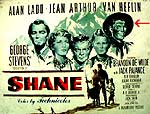 Example:
Jack Palance as black-garbed, mean gunslinger Jack Wilson in Shane
(1953). Example:
Jack Palance as black-garbed, mean gunslinger Jack Wilson in Shane
(1953). |
|
| a multi-part or multi-segmented film with a collection or series of various tales or short stories sometimes linked together by some theme or by a 'wrap-around' tale; often the stories are directed by different directors or scripted by various screenwriters, and are in the horror film genre; also known as an episode film or omnibus film; this term may also refer to a full-length, compilation-documentary film of excerpted segments or clips from other films (i.e., That's Entertainment (1974)). AKA: omnibus film or package film. See also: portmanteau film |  Examples
of true anthology films include: Creepshow (1982), a collection
of five tales inspired by the EC horror comics of the 1950s, the sequel Creepshow
2 (1987), or Stephen King's Nightshift Collection (1986);
also Dead of Night (1945), O. Henry's Full House (1952),
Twilight Zone: The Movie (1983), Cat's Eye (1985), Tales From
the Darkside: The Movie (1990), and Tales From the Hood (1995). Examples
of true anthology films include: Creepshow (1982), a collection
of five tales inspired by the EC horror comics of the 1950s, the sequel Creepshow
2 (1987), or Stephen King's Nightshift Collection (1986);
also Dead of Night (1945), O. Henry's Full House (1952),
Twilight Zone: The Movie (1983), Cat's Eye (1985), Tales From
the Darkside: The Movie (1990), and Tales From the Hood (1995). |
|
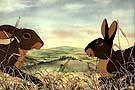
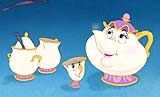
| the tendency in animated films to give creatures or objects human qualities, abilities, and characteristics. |
|
|
| anything in a film, usually following the film's high point, zenith, apex, crescendo, or climax, in which there is an unsatisfying and disappointing let-down of emotion, or what is expected doesn't occur. | 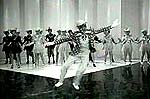 Example:
the end of Fred Astaire's controversial 'blackface' tribute dance to
Bill
"Bojangles" Robinson in Swing Time (1936) -
when he simply waves his hand dismissively and walks off stage. Example:
the end of Fred Astaire's controversial 'blackface' tribute dance to
Bill
"Bojangles" Robinson in Swing Time (1936) -
when he simply waves his hand dismissively and walks off stage. |
|
| the principal protagonist of a film who lacks the attributes or characteristics of a typical hero archetype, but with whom the audience identifies. The character is often confused or conflicted with ambiguous morals, or character defects and eccentricities, and lacks courage, honesty, or grace. The anti-hero can be tough yet sympathetic, or display vulnerable and weak traits. Specifically, the anti-hero often functions outside the mainstream and challenges it. |  Anti-hero
characters in films include: Paul Newman in Hud
(1963), Hombre (1967), and Cool
Hand Luke (1967), Clint Eastwood's 'Man with No Name' in various spaghetti
westerns and his role as 'Dirty Harry' in Dirty
Harry (1971), Jack Nicholson's rebellious anti-hero in One
Flew Over the Cuckoo's Nest (1975), Harrison Ford's Han Solo
in Star Wars (1977), and James Dean in Rebel
Without a Cause (1955). Anti-hero
characters in films include: Paul Newman in Hud
(1963), Hombre (1967), and Cool
Hand Luke (1967), Clint Eastwood's 'Man with No Name' in various spaghetti
westerns and his role as 'Dirty Harry' in Dirty
Harry (1971), Jack Nicholson's rebellious anti-hero in One
Flew Over the Cuckoo's Nest (1975), Harrison Ford's Han Solo
in Star Wars (1977), and James Dean in Rebel
Without a Cause (1955). |
|
|
|
refers to the measurement of the opening in a camera lens that regulates the amount of light passing through and contacting the film. |
 The red highlighted portion of the lens above is the aperture, which can be adjusted to either let in more or less light |
| a shot in which the subject(s) is photographed by an encircling or moving camera. | 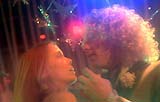 Example:
the dizzying camera shot during the Carrie (1976) prom scene
(pictured), or the reunion scene and embrace at the airport in Obsession
(1976) Example:
the dizzying camera shot during the Carrie (1976) prom scene
(pictured), or the reunion scene and embrace at the airport in Obsession
(1976) |
|
|
|
a character, place, or thing, that is repeatedly presented in films with a particular style or characterization; an archetype usually applies to a specific genre or type classification. |
|
| French word meaning 'halt' or 'stop'; refers to the in-camera trick technique of stopping the camera, then removing or inserting an object, then restarting the camera to have an object magically disappear or appear; one of the earliest techniques of silent film | 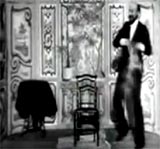 Examples: Georges Melies' The Vanishing Lady (1896) (pictured), or Edwin S. Porter's The Great Train Robbery (1903) - throwing a person/dummy off a train Examples: Georges Melies' The Vanishing Lady (1896) (pictured), or Edwin S. Porter's The Great Train Robbery (1903) - throwing a person/dummy off a train |
|
|
|
refers to the individual (a member of the film's art department) responsible for the design, construction, look, and feel of a film's set, including the number and type of props (furniture, windows, floors, ceilings dressings, and all other set materials) and their placement |
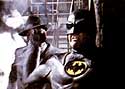 Example:
the dark, goth moodiness and oppressive look of the set for Tim Burton's
Batman (1989), created by art director Anton Furst. Example:
the dark, goth moodiness and oppressive look of the set for Tim Burton's
Batman (1989), created by art director Anton Furst. |
|
|
a niche motion picture theater that shows foreign, low-budget, or non-mainstream independent films, often refers to films that are considered high-brow or 'art' films (see below). | |
|
|
films, often low budget or 'art' films, that are acknowledged as having artistic merit or aesthetic pretensions, and are shown in an art-house theatre; films shown usually include foreign-language films, independent films, non-mainstream (sometimes anti-Hollywood) films, shorts, documentaries, explicitly-erotic films, and other under-appreciated cinema of low mass appeal; began to appear in the 1950s and provided a distinct contrast to commercial films. |  Examples:
La Cage Aux Folles (1978), The Sweet Hereafter (1997), Dancer
in the Dark (2000), All About My Mother (1999). Examples:
La Cage Aux Folles (1978), The Sweet Hereafter (1997), Dancer
in the Dark (2000), All About My Mother (1999). |
|
|
occurs when a character in a film breaks the 'fourth wall' and directly addresses the audience with a comment. | 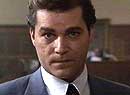 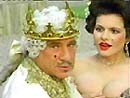 Examples:
Henry Hill (Ray Liotta) speaking toward the camera a few times at the conclusion
of GoodFellas (1991); also the running gag of King Louis XVI (Mel Brooks) addressing the camera every time he wantonly sexually pleased himself, saying: "It's good to be the King!" in History of the World, Part I (1981) Examples:
Henry Hill (Ray Liotta) speaking toward the camera a few times at the conclusion
of GoodFellas (1991); also the running gag of King Louis XVI (Mel Brooks) addressing the camera every time he wantonly sexually pleased himself, saying: "It's good to be the King!" in History of the World, Part I (1981) |
|
|
in general, a term for how the image appears on the screen based on how it was shot; refers to the ratio of width (horizontal or top) to height (vertical or side) of a film frame, image or screen; the most common or standard aspect ratio in early films to the 1950s was called Academy Aperture (or ratio), at a ratio of 1.33:1 (the same as 4:3 ratio on a non-widescreen TV); normal 35mm films are shot at a ratio of 1.85:1; new widescreen formats and aspect ratios were introduced in the 1950s, from 1.65:1 and higher; CinemaScope (a trade name for a widescreen movie format used in the US from 1953 to 1967) and other anamorphic systems (such as Panavision) have a 2.35:1 AR, while 70mm formats have an AR of 2.2:1; Cinerama had a 2.77:1 aspect ratio; letterboxed videos for widescreen TV's are frequently in 16:9 (or 1.77:1) AR. |
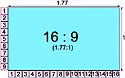 An example of an aspect ratio of 16:9 (or 1.77:1). Any number of films to the 1950s could be examples. |
|
|
the first stage or step of editing, in which all the shots are arranged in script order. | |
|
|
refers to audio-track sounds that are mismatched or out of conjunction or unison with the images in the visual frame (or screen); sometimes accidental, but sometimes intentional; aka non-synchronized | |
|
|
refers to any concrete or nebulous quality or feeling that contributes a dimensional tone to a film's action. | Examples: spookiness, howling wind, searing heat, blinding light, a rain downpour, etc. |
|
|
refers to spectators, viewers, participants - those who serve as a measure of a film's success; although usually audiences are viewed in universal terms, they can also be segmented or categorized (e.g., 'art-film' audiences, 'chick film' audiences, etc.). |
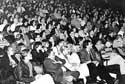 Audience members |
|
|
refers to the sound portion of a film. | Audio clip:
 (73 k), from Young Frankenstein (1974)
 |
|
|
refers to an outgoing sound (either dialogue or sound effects) in one scene that continues over into a new image or shot - in this case, the soundtrack, not a visual image, connects the two shots or scenes; aka lightning mix | Examples: many examples in Citizen Kane (1941) and also in Apocalypse Now (1979) - the sound of helicopter blades are linked to the next scene of the spinning blades of an overhead fan |
|
|
the process whereby an actor-performer seeks a role by presenting to a director or casting director a prepared reading or by 'reading cold' from the film script, or performing a choreographed dance; after the initial audition, a performer may be called back for additional readings or run-throughs. | 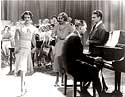 Example:
Auditions for "Ah, The Moon Is Here"
for producer Chester Kent (James Cagney) in Footlight
Parade (1933) Example:
Auditions for "Ah, The Moon Is Here"
for producer Chester Kent (James Cagney) in Footlight
Parade (1933) |
|
(or auteur theory) |
literally the French word for "author"; in film criticism, used in the terms auteurism or auteur theory, denoting a critical theory (originally known as la politique des auteurs or "the policy of authors") popular in France in the late 1940s and early 1950s that was introduced by Francois Truffaut and the editors (including legendary film critic and theorist Andre Bazin) of the celebrated French film journal Cahiers du Cinéma (literally 'cinema notebooks'), arguably the most influential film magazine in film history; their ideas were subsequently enlarged upon in the 1960s by American critic Andrew Sarris, among others; the theory ascribed overall responsibility for the creation of a film and its personal vision, identifiable style, thematic aspects and techniques to its film-maker or director, rather than to the collaborative efforts of all involved (actors, producer, production designer, special effects supervisor, etc); the theory posited that directors should be considered the 'true' authors of film (rather than the screenwriters) because they exercise a great deal of control over all facets of film making and impart a distinctive, personal style to their films; simply stated, an auteur can refer to a director with a recognizable or signature style. |
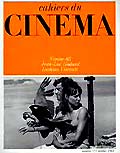 Cover from early edition of the French film review journal Cahiers du Cinema. 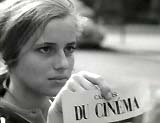 (From auteur Jean-Luc Godard's Breathless (1960, Fr.)) |
|
|
the naturally-existing light in an off-set location; a film's realism is enhanced by using available or natural light rather than having artificial light. | |
|
|
refers to an experimental, abstract, or highly independent, non-independent film that is often the forerunner of a new artistic genre or art form; avant-garde films self-consciously emphasize technique over substance; also loosely applies to a group of French and German filmmakers in the early 20th century and to some modern American experimental filmmakers (e.g., Andy Warhol), and their film movement that challenged conventional film-making; see also cinema verite, surrealism, and abstract form | 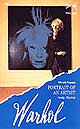 Example:
American pop artist Andy Warhol produced/directed Sleep (1963), The
Chelsea Girls (1967), Flesh (1968), Lonesome Cowboys (1968),
Trash (1972), and Women in Revolt (1971). Example:
American pop artist Andy Warhol produced/directed Sleep (1963), The
Chelsea Girls (1967), Flesh (1968), Lonesome Cowboys (1968),
Trash (1972), and Women in Revolt (1971). |
| an imaginary or invisible line (or axis) that passes through two main subjects being filmed in a scene, who face each other (one is left, the other is right); conventionally, the camera must maintain that left-right relationship or orientation in order to avoid disorienting or distracting the viewer with a reverse angle shot (although sometimes this effect is intentional); see also 180 degree rule | ||




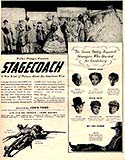 Examples:
the whore with a heart of gold and the many other disparate characters
on the trip to Lordsburg in
Examples:
the whore with a heart of gold and the many other disparate characters
on the trip to Lordsburg in