|
Greatest War Movies 1960s-1 |

| Film Title/Year/Director, War-time Setting and Brief Description | ||

|
The Alamo (1960)
John Wayne both directed (his debut film) and starred (as Davy Crockett) in this highly mythologized version of the struggle between about 180 Texans and Mexican leader General Santa Anna's forces. The final violent assault upon the Alamo was on a large scale, realistically recreated. Remarkably, the film was nominated for seven Academy Awards (including Best Picture), winning only Best Sound. |
|
|
Spartacus (1960)
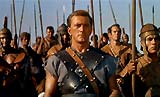
Stanley Kubrick's ancient 1st century BC epic was a somewhat dated, uneven historical costume (and sword and sandal) epic adapted by openly-credited, blacklisted screenwriter Dalton Trumbo from left-leaning Howard Fast's 1952 fictionalized novel about a slave revolt in Rome between 73-71 BC. This was the story of Thracian Spartacus (Kirk Douglas), who led the colossal slave rebellion against Rome and massive final battle sequence (with projected fireballs). Roman patrician Marcus Licinius Crassus' (Laurence Olivier) deal for betrayal was foiled when each devoted slave - in an inspirational scene - proclaimed: "I'm Spartacus" to save the real Spartacus from execution by standing up and daring to be identified as such. |
|
|
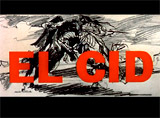
El Cid (1961)
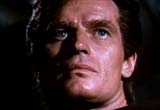
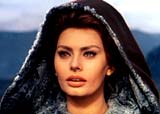
Anthony Mann's big-budget, Cinemascopic historical epic about freedom-fighting was also a biopic of legendary Spanish hero, Rodrigo Diaz (known popularly as "El Cid") (Charlton Heston), who sought to unite Spain's warring factions. In the historical romance, Sophia Loren co-starred as fiancee Jimena. The film included an exciting swordfight duel between Rodrigo and Count Gomez (Andrew Cruickshank), the father of his fiancee, and an equally-thrilling jousting gauntlet sequence. |
|
|
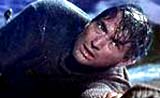
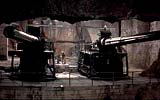
The Guns of Navarone (1961)
J. Lee Thompson's thrilling, big-budget adventure film, based on Alistair MacLean's 1957 book, was the top-grossing film of its year. It starred Gregory Peck as Capt. Keith Mallory, who headed a guerrilla mission of mercenaries to destroy a heavily-fortified German cave fortress with giant, long-range guns atop a 400 foot cliff on the Greek island of Navarone in the Aegean Sea, that controlled Mediterranean Sea routes and prevented the evacuation of British troops. |
|
|
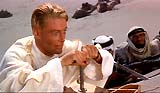
Lawrence of Arabia (1962)
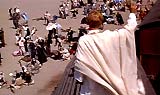
David Lean's film was one of the greatest films of all time, with rich cinematography of the immense desert. The sweeping, breath-taking, cinematic biographical epic, winner of Best Picture and Best Director, followed the true-life exploits of a famed British officer, T. E. Lawrence (Peter O'Toole in his first major film), and his transformation from an enigmatic eccentric to a hero in WWI Arabia. Assigned there, he courageously united the warring Arab fractions into a guerrilla front to battle the Turks, Germany's allies. Two of the film's greatest sequences were the guerrilla attack on the Turkish train in the desert, and the cavalry charge from land into the heavily-defended port of Aqaba. |
|
|
The Longest Day (1962)
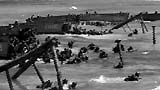
Producer Darryl F. Zanuck's authentic-looking, three-hour black and white war epic (dubbed "Z-Day" when the producer bailed out the film with his own finances) was about the Normandy landing on D-Day (June 6, 1944) (restaged in Corsica). This landmark film, based on the best-selling book by Cornelius Ryan, was told from four points of view, with four directors (American, English, French, and German) and in three languages. It required 43 major roles (including major stars John Wayne, Robert Mitchum, Richard Burton, Henry Fonda, Sean Connery, Robert Ryan, and more) and 23,000 extras. |
|

|
The Manchurian Candidate (1962)
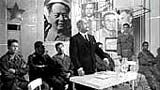
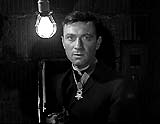
Based on Richard Condon's novel, and adapted by George Axelrod, this chilling film was a complex, realistic depiction of brainwashing in a frightening, satirical psychological thriller. An American platoon fighting in the Korean War was captured and brainwashed by Communist North Koreans in Manchuria. Upon their return to the US, one of the veterans Major Bennett Marco (Frank Sinatra) was haunted by recurring nightmares about their frightening incarceration. He slowly realized that fellow hero and Congressional Medal of Honor winner Sgt. Raymond Shaw (Laurence Harvey) was controlled and manipulated by his power-hungry, manipulative spy-agent "Queen of Diamonds" ambitious mother (Angela Lansbury). |
|

|
The Great Escape (1963)
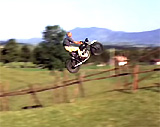
John Sturges' star-studded (with James Coburn, Richard Attenborough, Charles Bronson, Donald Pleasence and James Garner) POW prison break film was based on Paul Brickhill's 1950 factual account. It told the true story of 76 Allied servicemen POWs during World War II who escaped from Stalag Luft Nord III in Germany. The war film was enhanced by a stirring musical score by Elmer Bernstein. This "great escape' - the largest mass escape during the war, also featured Steve McQueen as Virgil "Cooler King" Hilts - memorable for leaping over a barbed wire fence on a hijacked motorcycle (performed by stuntman Bud Elkins). |
|
(chronological by film title) Introduction | 1900s-1920s | 1930s | 1940s-1 | 1940s-2 | 1950s | 1960s-1 | 1960s-2 | 1970s | 1980s | 1990s | 2000s | 2010s |




 Texan War of Independence against Mexico, 13 day siege of Battle of the Alamo in 1836