
|
Film Kisses of All Time in Cinematic History 1926-1927 |

| Film Title/Year and Description of Kiss in Movie Scene | ||
|
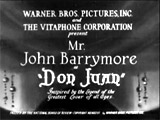
Don Juan (1926)
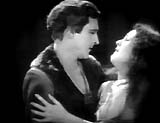
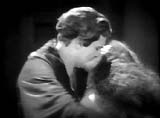
Director Alan Crosland's film for Warner Bros. told about a womanizer named Don Juan. This was the first Vitaphone feature film in which music and sound effects were synchronized and integrated into the film action, although it had no spoken dialogue. It was reported by Warner Bros' press agents that 42 year-old star John Barrymore (as a roguish Casanova swashbuckler named Don Juan de Marana) kissed his two leading ladies, Estelle Taylor (as jealous Lucretia Borgia) and 17 year old Mary Astor (as innocent and pious Adriana Della Varnese) 127 times in this picture. Smooches with other female companions added up to a grand total of 191 kisses. |
|
|
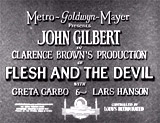
Flesh and the Devil (1926)
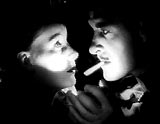
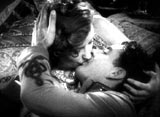
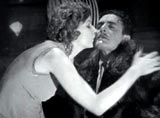
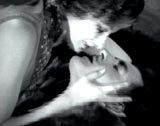
A luminous, torrid, real-life love affair occurred between stars Greta Garbo (as amoral, insatiably sexual and sultry temptress-siren, Countess Felicitas von Rhaden) and John Gilbert (as Austrian soldier Leo von Harden) during the making of this sensual Clarence Brown drama, filmed in 1926 and released late in the year. Their love/kissing scenes were beautifully photographed by William Daniels, using natural lighting (such as a match's light). In a shadowy garden scene, he told her: "You are very beautiful." She responded: "You are very young" - their faces lit only by a single match flame as they shared a cigarette together, exquisitely photographed and very erotic. He interpreted her blowing out the match as an invitation to kiss her - and although clothed, they shared their first steamy kiss together, in the first of the film's three extended love scenes. Reportedly, this was Hollywood's first French (open-mouthed) kiss on screen. In the next scene, as the Countess laid back on a chaise-lounge, she and Leo kissed again - allegedly the first-ever horizontal-position kiss in an American film. She removed her wedding ring and placed it on his little finger, promising: "So that you may not forget me." The two lovers were caught kissing by her enraged aristocratic husband Count Rhaden (Marc MacDermott), and a deadly duel ensued in which the Count was killed. Eventually, von Harden's best friend Ulrich (Lars Hanson) married the Countess while Leo was exiled to serve in the military in N. Africa for three years. When Leo returned, he was tempted to carry on a sinful adulterous affair with her after she told him: "Why do we pretend? I love you, and you love me." Unhappily married to Ulrich, Felicitas confessed to Leo: "If you stay away from me, I can't go on with Ulrich." Driven emotionally mad with lust for each other, they succumbed to kissing again, lying down, during Ulrich's absence, causing Leo to become crazed and mad with love for the femme fatale: "This is the end, Felicitas! I can blow out my brains or run away!" Although they decided to run away together, the deadly and fateful conclusion of the film proved otherwise. |
|
|
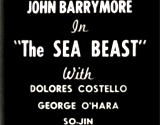
The Sea Beast (1926)
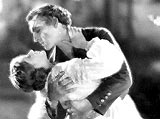
This romanticized silent screen film was loosely based on the Herman Melville tale of Moby Dick. John Barrymore starred as hard-loving, peg-legged roustabout seaman Captain Ahab Ceeley. In one infamous scene, four takes of the same kiss-embrace were spliced together to extend the male star's kiss with co-star Dolores Costello (as the lovely minister's daughter Esther Harper - and Barrymore's future real-life wife), who reportedly fainted afterwards. |
|
|
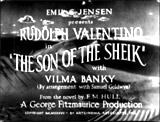
The Son of the Sheik (1926)
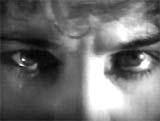
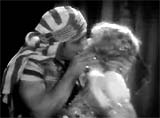
The decade's most popular, legendary male screen lover Rudolph Valentino (in his final film before his sudden death in August 1926 following his collapse at the film's NY premiere) starred in the title dual role as the now-older Sheik and his hot-blooded son Ahmed. He played opposite alluring, kidnapped bejeweled dancer, Yasmin (Vilma Banky). This was the superior follow-up silent adventure/melodramatic romance film to The Sheik (1921). It engendered criticism for being "morally objectionable" for its vengeful rape scene against Yasmin (only suggestively seen by a sequence of wide-eyed, soft-focus close-ups), as he forced himself upon her. As he approached her, he said: "For once, your kisses are free!" - when the screen faded to black. |
|
|
7th Heaven (1927) (aka Seventh Heaven)
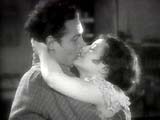
The ethereal and spiritual nature of romance was evidenced in this silent film by director Frank Borzage - it was one of the first films to be nominated for Best Production (or Best Picture). The couple in love, in a 7th floor bohemian loft (nearer to the stars) were:
When the two lovers were separated by war (she ended up as a munitions worker) and he was blinded, they still remained in telepathic communication with their hearts and minds each night at 11. The film ended with the scene of their jubilant reconciliation following the war's end in a shaft of light. |
|

|
Sunrise (1927) (aka Sunrise: A Song of Two Humans)
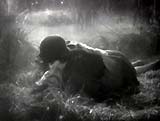
A story of corruption and redemption and the winner of the first Best Picture Academy Award (Unique and Artistic Production) by German director F.W. Murnau, it told of a rustic farmer - a fallen, married country Man (George O'Brien), who was living in a romanticized rural town. He fell prey to the seductive wiles of a city vamp and tempting mistress (Margaret Livingston) in an illicit affair. She summoned him with a soft, clandestine whistle at his window, and they rendezvoused together on the edge of the misty, moonlit marshes. The supernatural spell and erotic charm of the city woman seduced him and he pulled her into his arms for a passionate, fervent kiss. She stole his sanity and soul as she literally pulled him down into the swamp. While being kissed as they laid on the grass, the seductress tempted him, visualizing for him how to murder his wife and enjoy the allure of city life (seen in a kaleidoscope of images). |
|
|
|
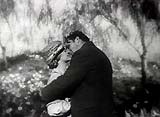
Later, after the country Man (George O'Brien) had reunited with his wife (Janet Gaynor) after threatening to kill her on their trip to the city, they were without fear and guilt. The couple seemed invulnerable to the dangerous traffic they walked through. Magically, they appeared in a wooded country field with beautiful blooming flowers - their internal perceptions, visions, and feelings took on an objective reality. They walked into their fantasy world of the country and kissed - their love triumphed over chaotic evil in a commonly-shared dream. They suddenly reappeared super-imposed back within the congested city while still kissing and stopping traffic. |
|
|
|
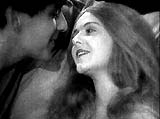
The farmer/husband (George O'Brien) and his presumed-drowned wife (Janet Gaynor) were reunited after she had been found alive but unconscious. He rushed to his wife's bedside in the farmhouse where they were joyously reunited. He attentively sat by his wife's bedside, where she slept with their infant until the dawn's light appeared. She opened her eyes and smiled at him with an angelic face and long-flowing hair after releasing her tight bun. She opened her eyes and turned her head on the pillow toward her husband. Their lips slowly drew together for a kiss, dissolving into the bright rays of an art-deco sun filling the screen. The word "Finis" floated upward to take the place of the sun as the music dramatically swelled. |
|
|
Wings (1927)
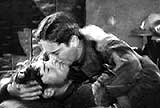
This first Best Picture winner, a silent war film about WWI fighter pilots, directed by William A. Wellman, was also noted as portraying the first on-screen fraternal male-male kiss on the lips. It occurred when handsome young soldier John "Jack" Powell (Charles "Buddy" Rogers) placed a lingering kiss on the mouth of his dying friend David Armstrong (Richard Arlen). |
|
(in chronological order by film title) Introduction | 1896-1925 | 1926-1927 | 1928-1932 | 1933-1936 | 1937-1939 | 1940-1941 1942-1943 | 1944-1946 | 1947-1951 | 1952-1954 | 1955 - 1 | 1955 - 2 | 1956-1958 | 1959-1961 1962-1965 | 1966-1968 | 1969-1971 | 1972-1976 | 1977-1981 | 1982 1983-1984 | 1985-1986 | 1987 | 1988 | 1989-1990 | 1991 | 1992-1993 | 1994 1995 | 1996 | 1997 | 1998 | 1999 | 2000 | 2001 | 2002 | 2003 | 2004 | 2005 | 2006-2007 | 2008 | 2009- |




 A
Record Number of Kisses in One Film
A
Record Number of Kisses in One Film