|
ANIMATED FILMS Part 2 |
 Animated Films
Beginning in the 1930s, feature films were often preceded by obligatory cartoon shorts, showcasing a rapidly-developing film technique. While working on the development of Mickey Mouse shorts, Disney also began a new venture - called Silly Symphonies - an ambitious, innovative and groundbreaking series of stand-alone animations with musical accompaniment. He used the series of 75 shorts (that lasted 10 years from 1929 until 1939) to experiment with different processes, techniques, characters, stories, and technologies to be later used in his full-length feature animations. They won a total of seven Academy Awards for Best Animated Short Subject (see chart below). There were numerous imitators, including Warner Bros' Merrie Melodies (see below).
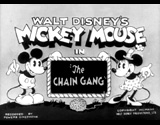
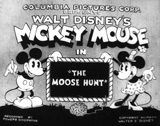
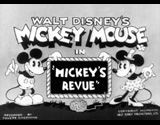
Other Disney Cartoon Characters: The cartoon character Pluto was first introduced (unnamed) in 1930 in the Mickey Mouse cartoon The Chain Gang (1930) and named Rover (Minnie Mouse's dog) in The Picnic (1930). It took another Mickey Mouse short, The Moose Hunt (1931) before he attained his familiar name. The 1931 cartoon was also famous for having Pluto's only spoken line of dialogue - to Mickey: "Kiss." Eventually, Lend a Paw (1942), with Pluto in the lead role, won an Oscar for Best Short Subject: Cartoon. Goofy debuted as an extra in Mickey's Revue (1932). [Recently, he was featured in his own full-length film, A Goofy Movie (1995).] A sailor-suited, web-footed Donald Duck was introduced in 1934 in Silly Symphony's The Wise Little Hen (1934) (with his brief opening words "Who--me? Oh no! I got a bellyache!"), and then in Orphan's Benefit (1934) (this also marked Donald's first appearance in a Mickey Mouse cartoon, and with Goofy - of course, this was the first time that all three characters appeared together). Mickey Mouse (and Minnie Mouse) first appeared together for their screen debut in Steamboat Willie (1928), but Mickey's official debut was in The Band Concert (1935) (made in color). Donald's female partner, Daisy (first named "Donna Duck") was introduced in Don Donald (1937), and made her first official appearance (speaking like Donald) in Mr. Duck Steps Out (1940).
Columbia Pictures Cartoons: Krazy Kat
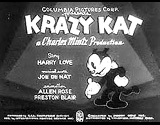
Krazy Kat, of an ambiguous gender, was an obstinate black cat who had an infatuation for his evil rival, Ignatz Mouse (who often threw bricks at Krazy). The third component of a love triangle was a dog named Offissa Bull Pupp, a police officer. Over the years, Krazy more and more resembled the more popular Felix the Cat and later, Mickey Mouse.
The cartoon Kat had been established as early as 1916 by Hearst's International Film Service, Inc. with their Introducing Krazy Kat and Ignatz Mouse (1916). In 1918, Krazy Kat was acquired by Bray's Goldwyn-Bray Pictographs until 1921. Then, after a short break, Winkler Pictures took over from 1925 until 1929, and then Columbia acquired the series. Columbia Pictures' first Krazy Kat cartoon (the first one released with sound) was Ratskin (1929), followed by Canned Music (1929), while Columbia's last Krazy Kat cartoon was Krazy's Shoe Shop (1939). Terry Toons: After leaving Fables Studio (created by newspaper cartoonist Paul Terry in 1921 for his Aesop's Film Fables series), Terry set up his own Terry Toons animation studio in New Rochelle, NY in 1929. [Note: The Fables Studio was renamed Van Beuren Studios in 1929.] Terry (as producer/writer) and partner Frank Moser (as director) began producing cartoons by 1930 (until 1935) that were first distributed by Fox Pictures, and then by Paramount Pictures. The early cartoons that came from the "budget" studio were cheapy made and rushed to print, and the studio was infamously known for resisting the new technologies of sound and color. The titles of their first 25 films in the early 1930s were all food items, such as: Caviar (1930), Pretzels (1930), Spanish Onions (1930), Indian Pudding (1930), Roman Punch (1930), Hot Turkey (1930) - and many more. Their first star in the 1930s was Farmer Alfalfa, a familiar grizzly-farmer character that had appeared in some of Paul Terry's earlier cartoons (in Bray Studios from 1916-1923 and for the Aesop's Film Fables series from 1922-1929), and now reappeared in Terry Toons' cartoons (a major period from 1930-1937). His first Terry Toons cartoons were French Fried (1930) and Golf Nuts (1930). Among others, four additional minor cartoon series (with new characters) were also released in the mid-to-late 1930s:
Terry Toons had to wait until the 1940s to really find success. The most famous and valuable cartoon character from Terry Toons (and 20th Century Fox) was Mighty Mouse, a Superman-like mouse superhero that first debuted as a prototype "Super Mouse" in the short The Mouse of Tomorrow (1942).
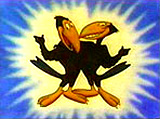
The other most famous of Terry Toons characters were Heckle & Jeckle, two identical black, large yellow-billed, wise-cracking crows (or magpies) who first appeared in the mid-40s in Paul Terry's The Talking Magpies (1946). Their debut appearance was actually in a Farmer Alfalfa cartoon, where the pair were depicted as a squabbling married couple. Their last animated cartoon theatrical film appearance was in Messed Up Movie Makers (1966), their 52nd short. Leon Schlesinger: The Early Days at Warners and the Character of Bosko
In the pilot, Rudolf Ising sat at his drawing board and sketched the character of Bosko, an African-American boy that interacted with him. At the end of the cartoon, just before Bosko was sucked back into the inkwell, he said, "Well, so long, folks! See yah all later!" - the origination of the later famous "That's all, folks!" end title. The Bosko pilot short was the impetus for the birth of Warner Bros.' Looney Tunes (see more below).
The Ascendancy of Warner Bros: Looney Tunes
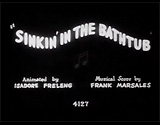
The earliest talking 'Looney Tune' was the black and white comedy short Sinkin' in the Bathtub (1930), released on May 30, 1930. It again featured Bosko in the starring role, and also included the song later popularized by Tiny Tim: "Tiptoe Through the Tulips." And it was notable as the first non-Disney animated cartoon with a pre-recorded soundtrack (like the pilot), seen with synchronized speech and dancing. Unfortunately, Bosko's character helped contribute to the accusation that racial and ethnic stereotypes were being promoted. Bosko ended the film with the first spoken instance of "That's all, folks!"
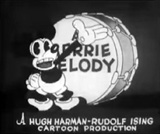
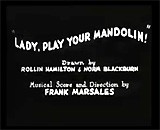
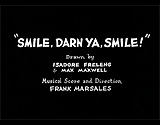
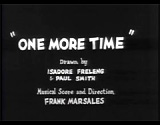
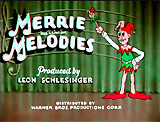
Merrie Melodies Following their success with Looney Tunes in the early 1930s, Warners expanded with a lively new series called Merrie Melodies (produced by Leon Schlesinger, and also headed up by Harman and Ising, although assisted by Bob Clampett). The original idea for the new Merrie Melodies cartoon series was to feature music from the soundtracks of current Warner Bros. films, without recurring characters. The first three Merrie Melodies introduced a mouse-like male character named Foxy, created by animator Rudy Ising. The first Merrie Melodie was Lady, Play Your Mandolin! (1931), released on August 31, 1931. The second and third shorts were Smile, Darn Ya, Smile! (1931) (animated by Isadore Freleng & Max Maxwell) and One More Time (1931) (Foxy's last cartoon appearance). At the end of each of the three shorts, Foxy came out from behind a bass drum and said to viewers: "So long, folks!" - another example of the familiar ending: "That's all folks!" The Merrie Melodies were mildly popular, and even achieved an Academy Award nomination in their second year for the cat-and-mouse tale It's Got Me Again! (1932) - it became the first Warner Bros. cartoon nominated for an Academy Award.
Competition from MGM: Happy Harmonies (1934-1938)
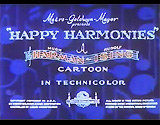
By 1934 at MGM, Hugh Harman and Rudolf Ising had created a new Happy Harmonies series of cartoons, eventually producing a total of 37 films in the series by 1938. The last Happy Harmonies short was The Little Bantamweight (1938). Some of the early shorts in the series again starred the character of Bosko, who was soon modified to resemble an African-American boy:
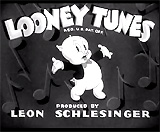
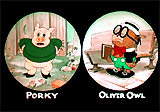
The Reinvention of Warner Bros. From 1933-1935, Warner Bros. was forced to invent and introduce new characters for its future cartoons - Buddy, Beans the Cat, Porky, twin singing puppies Ham and Ex, Little Kitty, and Oliver Owl (see more below), hoping that one or more of them would stand out and become popular. Producer Leon Schlesinger began assembling more staff for Warners, including Friz Freleng and Disney animator Jack King (famous for The Three Little Pigs) to begin creating new Looney Tunes and Merrie Melodies series. Friz Freleng headed the Merrie Melodies productions, while Jack King took over the Looney Tunes series.
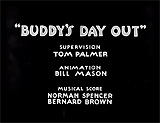
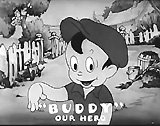
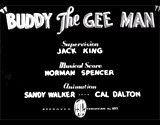
For a couple of years, Looney Tunes were forced to rely on a new main character - Buddy, a Bosko-like young boy character. The first Looney Tune cartoon to feature Buddy was Buddy's Day Out (1933), followed quickly by a number of others (from 1933-1935). At the end of the cartoons, Buddy would wave and say: "That's all, folks!"
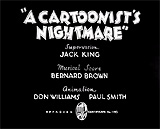
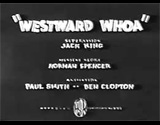
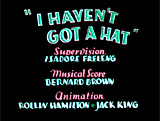
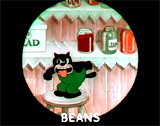
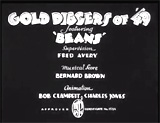
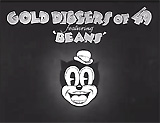
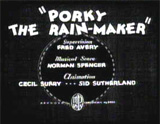
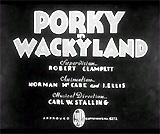
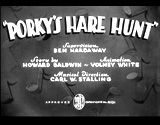
However, a new popular character began to emerge - Beans the Cat, a "Mickey Mouse-like" feline whose first solo appearance was in the next film in the series: A Cartoonist's Nightmare (1935). Beans ended his first film with the same familiar farewell: "That's all folks!" As Beans' popularity decreased within a year or two, he was soon to be supplanted by the character of his supporting co-star Porky Pig. Beans' last cartoon (and his last short with Porky and puppies Ham and Ex) was Looney Tunes' Westward Whoa (1936) - it marked the last appearance of Porky in the "Beans" series. During this time, the first color (Cinecolor, not Technicolor) WB Merrie Melodies was released, Honeymoon Hotel (1934). WB's first three-strip Technicolor short was Flowers for Madame (1935). The Classic Warners' Cartoon Characters: Beginning in 1935, Warners' hired a new third full-time director of animation, Fred 'Tex' Avery who was recruited from Lantz (see more below) to join Jack King and Friz Freleng. The trio would soon be creating some of the best-loved cartoon characters and animations of all time. They worked in a run-down back lot building known as 'Termite Terrace.' Looney Tunes and Merrie Melodies produced cartoons that directly imitated or copied their major competitor, Disney's Silly Symphonies. Animators at Warner Bros. studios began to challenge the style, form and creative content of Disney's pastoral animations in the early 1930s and after. Their cartoons were characterized as being more hip, adult-oriented, and urban than the comparable Disney cartoons of the same period. They also came up with innovations in their cartoons, such as their first full-color Looney Tune short The Hep Cat (1942). The Merry Melodies' two-strip (red-green) Technicolored I Haven't Got a Hat (1935), directed by Isadore Freleng, featured a number of anthropomorphic animals, including Beans the Cat and a secondary stuttering character known as Porky Pig (in his film debut). This short launched Porky Pig's career. Bob Clampett was also involved with the animation team - his first screen credit was for the Freleng-directed Shake Your Powder Puff (1934), and he played a role in the creation and development of the cartoon characters of Porky Pig (and later Bugs). Avery's first WB cartoon created with the 'Termite Terrace' unit was Looney Tunes' Gold Diggers of '49 (1935) featuring Beans the Cat (in his third appearance), and also starring Porky Pig (redesigned) in his second short. As his popularity declined, Beans the Cat was gradually being replaced by Porky, and completely disappeared in 1936. The first cartoon in the Porky Pigs series was Looney Tunes' Plane Dippy (1936), with a short final cameo by Beans. The very pig-like Porky was again redesigned by Avery in his fourth directed film featuring Porky, now made to look more cartoonish (smaller and rounder) in Looney Tunes' Porky the Rain-Maker (1936), notable for having an off-screen narrator. Porky's first appearance with Daffy Duck was in Porky's Duck Hunt (1937), when Mel Blanc took over his voice. And Porky first encountered an early version of Bugs Bunny in Porky's Hare Hunt (1938). In Looney Tunes' Porky in Wackyland (1938), Porky hunted the last elusive and zany Do-Do bird in Wackyland, populated with surrealistic, Salvador Dali-inspired characters. [Note: The cartoon was remade eleven years later (in Cinecolor) and released as a Merrie Melodies short, Dough For The Do-Do (1949).]
From 1935 onward until the early 40s, Avery was responsible for much of the manic, satirical, absurdist, extra-violent, crude characters and corny gags and slapstick of numerous productions. Avery's animations, often designed for adult audiences, were often noted for 'pushing the envelope' of acceptable taste.
Warners' New Animated Characters: Daffy Duck and Bugs Bunny Along with his famed animating staff - Friz Freleng, Bob Clampett and Chuck Jones, Tex Avery created two more of the greatest stars for Warners: Daffy Duck and Bugs Bunny (with his famous catchphrase: "What's up, Doc?") (Through most of these years, voice artist Mel Blanc provided the voice for all the starring WB characters: Bugs Bunny, Sylvester the Cat, Porky Pig, Daffy Duck, Yosemite Sam, Speedy Gonzalez, and many others.)
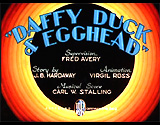
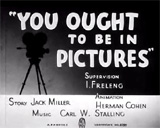
Daffy Duck's first appearance was in Tex Avery's Looney Tunes' Porky short, Porky's Duck Hunt (1937) (Bob Clampett animated the crucial scenes), remade the next year as Looney Tunes' Porky's Hare Hunt (1938). The name Daffy Duck (derived from the name of famed baseball player Dizzy Dean's brother Daffy) was used for the first time in the title of Avery's second, remade Merrie Melodies' duck-hunt picture Daffy Duck & Egghead (1938) - this was also the first Daffy Duck cartoon in color. [Note: Egghead was the prototype for the character of Elmer Fudd - see below.] The black and white Looney Tunes' You Ought To Be in Pictures (1940) directed by Friz Freleng was a hybrid live-action/animated spoof satire of emerging, fast-talking, trouble-making star Daffy who convinced Porky to quit his job at Warners by ending his cartoon contract with studio head Leon Schlesinger.
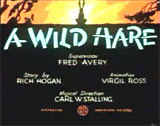
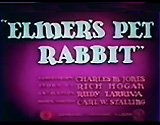
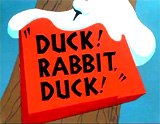
A prototype of Bugs Bunny debuted with co-star Porky Pig in Porky's Hare Hunt (1938) as a wiseguy hare (named Happy Rabbit). Bugs first said his famous line ("Eh, what's up, Doc?" voiced by Mel Blanc) during his fourth appearance in the Oscar-nominated Tex Avery and Merrie Melodies' cartoon, A Wild Hare (1940) - the first true or "official" Bugs Bunny cartoon with Elmer Fudd as a rabbit hunter (and noted for Elmer's first use of his 'wabbit' voice). Elmer Fudd's most-recognizable, redesigned appearance was in Chuck Jones' and Merrie Melodies' Elmer's Candid Camera (1940) where he appeared with Bugs Bunny (identified properly on a title card) in his fourth appearance. Bugs finally received his properly-identifiable name by his fifth cartoon, Merrie Melodies' Elmer's Pet Rabbit (1941) (Chuck Jones' first Bugs Bunny cartoon). And then Bugs made his official debut as a starring, top-billed Looney Tunes cast member in Buckaroo Bugs (1944). At Warners after Avery's departure in 1942, Chuck Jones furthered the character development of both Bugs Bunny and Porky Pig. He was also responsible for Elmer Fudd, who first appeared in Merrie Melodies' Elmer's Candid Camera (1940) (although the name "Elmer Fudd" had first been applied in WB cartoons to the Egghead character in Merrie Melodies' A Feud There Was (1938)). Jones provided the famous Looney Tunes' Hunting Trilogy of cartoons about 'wabbit-season'/'duck-season' in the early 50s, with Bugs Bunny, hunter Elmer Fudd, and the hapless Daffy Duck. Rabbit Fire (1951) was the first film to feature a feud between Bugs and Daffy.
Other Looney Tunes' and Merrie Melodies' Animated Characters:
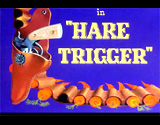
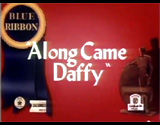
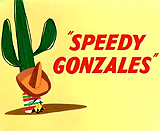
Friz Freleng also introduced the characters of hot-tempered, red-haired, short-statured Yosemite Sam (who first appeared in Merrie Melodies' Hare Trigger (1945)), Bugs' gun-slinging arch-enemy known for saying "Great horny-toads!" There were only two cartoons in which Sam did not battle against Bugs Bunny, including Looney Tunes' Along Came Daffy (1947), where Sam's antagonist was Daffy instead. Also, Speedy Gonzales - "The Fastest Mouse in all Mexico" first appeared 'officially' as a redesigned incarnation in Freleng's and Merrie Melodies' Speedy Gonzales (1955), an Academy Award-winning Best Animated Short Film. The short brought together Speedy with Sylvester (see below) for the first time.
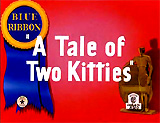
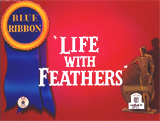
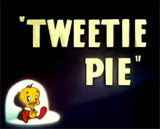
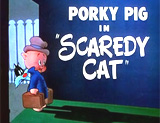
The character of Tweety (Bird), who preceded his feline predator, originated by Bob Clampett, first appeared as a flesh-colored or pink baby birdie (with no feathers) named Orson in Merrie Melodies' A Tale of Two Kitties (1942). Sylvester's first film was Merrie Melodies' Life With Feathers (1945) although he was unnamed - it was an Academy Award-nominee for Best Animated Short Subject. Freleng brought lisping cat Sylvester (known for his trademark: "Thufferin' Thuccotash!") and yellow Tweety (Bird) (with the trademark: "I tawt I taw a puddy tat!") together in a series of Friz Freleng-directed films from 1947-1964. Their first film together (in which a mute Sylvester was called "Thomas" - a reference to the 'tom-cat' in MGM rival Tom & Jerry cartoons, and Tweetie finally was a real canary with feathers) was Merrie Melodies' Tweetie Pie (1947) - it brought the Warner Bros. cartoon department its first Academy Award for Best Animated Short Subject. Sylvester finally received his name in the Merrie Melodies' Porky cartoon Scaredy Kat (1948).
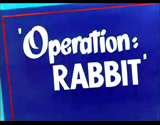
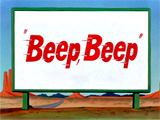
Freleng-directed cartoons won several Oscars over the years: Tweety Pie (1947), Speedy Gonzalez (1955), Birds Anonymous (1957), and Knighty Knight Bugs (1958). Chuck Jones: Chuck Jones was best known for his work from 1933 onwards with Warner Bros.' Looney Tunes and Merrie Melodies shorts, starring Porky Pig, Daffy Duck, Elmer Fudd and Bugs Bunny. He also created the Road Runner series with the Road Runner ("Meep, Meep" or "Beep, Beep") (known as Accelerati Incredibulis) and Wile E. Coyote (known as Carnivarious Vulgaris), debuting together in Looney Tunes' Fast and Furry-ous (1949). The setting for the cartoons was always the American Southwest, with the hapless Coyote devising various vain schemes to catch the non-combative, speedy Road Runner - who zoomed along the winding roads through the desert. Intended to be a one-time only appearance, their popularity called for another cartoon produced 3 years later, Merrie Melodies' Beep, Beep (1952), and then followed by a continuing series of cartoons for many years. Before they were paired together a second time, Coyote had also appeared in five cartoons opposite Bugs Bunny, beginning with Looney Tunes' Operation: Rabbit (1952) and ending with Hare-Breadth Hurry (1963).
Chuck Jones also developed more minor animated characters such as Pepe Le Pew, Inki, Marvin Martian, Michigan J. Frog (see below), Gossamer, and Charlie Dog. As Disney did with Fantasia (1940), Jones fused classical music (Rossini's Barber of Seville, Mendelssohn's Wedding March, and a visual gag about Mozart's The Marriage of Figaro) into the cartoon form in one of his best animations - Rabbit of Seville (1950), featuring Elmer Fudd and Bugs as opera singers.
Jones' main period of work in cartoon shorts was from 1938 to 1961. Then, he opened his own company, Chuck Jones Enterprises, in 1962, producing nine 30-minute animated films. As animation studios were closing down, he slowly began to move into television and the production of features. From 1963-1971, Jones headed the MGM animation department. His The Dot and the Line (1965) was an Academy Award winner for Best Short Subject: Cartoon. One of Jones' greatest accomplishments was directing (as chief animator) the popular half-hour animated holiday TV special Dr. Seuss' How the Grinch Stole Christmas (1966), a Peabody Award winner, with horror actor Boris Karloff providing the voice of the Grinch. Jones also directed/produced other Seuss classics, including Peabody Award-winning Dr. Seuss: Horton Hears a Who! (1970) and Dr. Seuss: The Cat in the Hat (1972). For Chuck Jones' first and only feature-length film, he adapted the children's fantasy novel The Phantom Tollbooth (1970), based on Norton Juster's classic children's book, about a young boy who traveled through a mysterious tollbooth into a magical world, with educationally-oriented numbers and words kingdoms, such as Digitopolis and Dictionopolis. His next project was executive producing an animated, Oscar-winning made-for-TV half-hour short subject A Christmas Carol (1971) with Alastair Simm reprising his 1951 film role as the voice of Scrooge - the only version of Dickens' tale to win an Oscar. Later, he developed The Bugs Bunny/Road Runner Movie (1979), a compilation of eleven shorts including his own two masterpieces mentioned above, and an 11-minute Road Runner montage-compilation consisting of 31 gags from 16 cartoons. One of his final works was an original cartoon short in Peter Hyams' satirical view of TV titled Stay Tuned (1992) in which an American suburban couple (John Ritter as Roy and Pam Dawber as Helen) became transformed into cartoon mice. He also directed an animation segment for the feature film Mrs. Doubtfire (1993). With a 60 year career, and about 300 animated films, three of Chuck Jones's animated shorts (cartoons) won Academy Awards. Jones was also nominated twice as co-writer/director for Best Animated Short Subject for Beep Prepared (1961) and Nelly's Folly (1961). Jones was presented with an Honorary Oscar in 1996 "for the creation of classic cartoons and cartoon characters whose animated lives have brought joy to our real ones for more than a half century."
|
||||||||||||||||||||||||||||||||||||||||||||||||||||||||||||||||||||||||||||||||||||||||||||||||||||||||||||||||||||||||||||||||||||||||||||||||||||||||||||||||||||||||||||||||||||




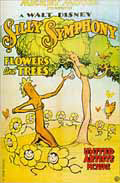 Walt Disney's Silly Symphonies:

 Columbia
Pictures became involved in the world of animated films when the
studio began distributing Mickey Mouse and other shorts from The
Walt Disney Studios. Even before it set up its own animation studio
in 1934, it had been producing a long-running series of black and
white cartoons, beginning in 1929 (in 1935
they became Technicolored), featuring the character of Krazy Kat. Krazy
Kat was based on the 1913 newspaper comic by George Herriman, that
ran until 1944 when the comic artist died. In particular, several
of the IFS/Bray Krazy shorts in the first few years of Krazy Kat's
appearances in cartoons were adapted from comic strips.
Columbia
Pictures became involved in the world of animated films when the
studio began distributing Mickey Mouse and other shorts from The
Walt Disney Studios. Even before it set up its own animation studio
in 1934, it had been producing a long-running series of black and
white cartoons, beginning in 1929 (in 1935
they became Technicolored), featuring the character of Krazy Kat. Krazy
Kat was based on the 1913 newspaper comic by George Herriman, that
ran until 1944 when the comic artist died. In particular, several
of the IFS/Bray Krazy shorts in the first few years of Krazy Kat's
appearances in cartoons were adapted from comic strips.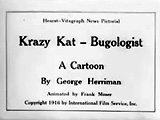
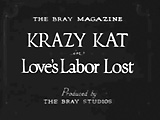
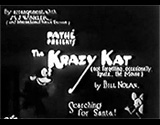
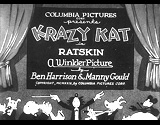
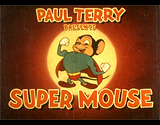
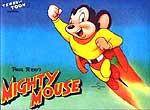 In a couple of years,
the more recognizable Mighty Mouse was born and renamed properly in
an appearance in his 8th film, The Wreck of the Hesperus (1944).
He became known for his yellow costume, red cape, and his anthem
song, with the words "Here
I come to save the day!"
Ultimately, Mighty Mouse appeared in 80 theatrical films between
1942 and 1961. Later, CBS-TV took the Mighty Mouse cartoons and packaged
them into a very popular Saturday morning television show called Mighty
Mouse Playhouse, beginning in late 1955 and lasting for a record
eleven years until 1967. Mighty Mouse was the first cartoon
character ever to appear on Saturday mornings.
In a couple of years,
the more recognizable Mighty Mouse was born and renamed properly in
an appearance in his 8th film, The Wreck of the Hesperus (1944).
He became known for his yellow costume, red cape, and his anthem
song, with the words "Here
I come to save the day!"
Ultimately, Mighty Mouse appeared in 80 theatrical films between
1942 and 1961. Later, CBS-TV took the Mighty Mouse cartoons and packaged
them into a very popular Saturday morning television show called Mighty
Mouse Playhouse, beginning in late 1955 and lasting for a record
eleven years until 1967. Mighty Mouse was the first cartoon
character ever to appear on Saturday mornings.  Warners'
producer of cartoons, Leon Schlesinger (from 1930-1944) (and Leon
Schlesinger Productions) released a 5-minute pilot film named Bosko
The TalkInk Kid (1929) -
the first synchronized
talking animated short/cartoon (as opposed to a cartoon with a soundtrack),
with a little black boy character named Bosko who actually spoke
dialogue. The Bosko pilot was drawn by two
ex-Disney animators -- Hugh Harman (1903-1982) and Rudolf Ising (1903-1992),
who along with animator Friz Freleng, produced and directed the
first cartoons for Warner Bros.
Warners'
producer of cartoons, Leon Schlesinger (from 1930-1944) (and Leon
Schlesinger Productions) released a 5-minute pilot film named Bosko
The TalkInk Kid (1929) -
the first synchronized
talking animated short/cartoon (as opposed to a cartoon with a soundtrack),
with a little black boy character named Bosko who actually spoke
dialogue. The Bosko pilot was drawn by two
ex-Disney animators -- Hugh Harman (1903-1982) and Rudolf Ising (1903-1992),
who along with animator Friz Freleng, produced and directed the
first cartoons for Warner Bros.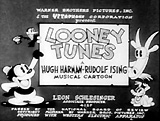
 Ultimately, Bosko was the star of
over three dozen Looney Tunes shorts released by Warner Bros.
from 1930-1933. His final Looney
Tunes WB
cartoon was Bosko's
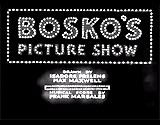
Picture Show (1933) - the first film to target Hitler. Controversy
plagued the short in one scene, when Bosko shouted
out what seemed to be a profanity ("The dirty f--k!"), although
the swear word could have been "fox"
or "mug." Some interpreted it as Harman's and Ising's farewell
to Warner Bros' chief Schlesinger when they departed for MGM (see more
below).
Ultimately, Bosko was the star of
over three dozen Looney Tunes shorts released by Warner Bros.
from 1930-1933. His final Looney
Tunes WB
cartoon was Bosko's
Picture Show (1933) - the first film to target Hitler. Controversy
plagued the short in one scene, when Bosko shouted
out what seemed to be a profanity ("The dirty f--k!"), although
the swear word could have been "fox"
or "mug." Some interpreted it as Harman's and Ising's farewell
to Warner Bros' chief Schlesinger when they departed for MGM (see more
below).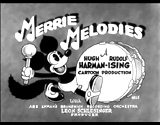
 Looney
Tunes and Merrie Melodies were
made with Harman-Ising until near mid-1933, but then there was a major
change when they split with Schlesinger Productions and Warner Bros.
and ventured off to MGM. Harman and Ising took with them the copyrights
to their characters and cartoons.
Looney
Tunes and Merrie Melodies were
made with Harman-Ising until near mid-1933, but then there was a major
change when they split with Schlesinger Productions and Warner Bros.
and ventured off to MGM. Harman and Ising took with them the copyrights
to their characters and cartoons. 
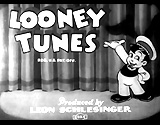
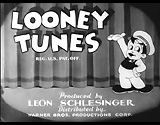
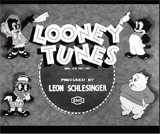
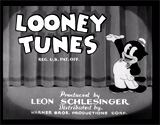
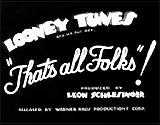
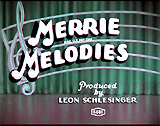
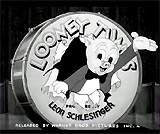
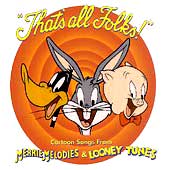 Looney
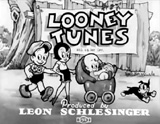
Tunes became known for closing with the familiar Porky Pig end tag: "That's
All Folks!" In 1936, composer Carl W. Stalling (who was the musical director
of Warners' animation department for over two decades) chose "Merrily
We Roll Along" (used most often for Merrie Melodies) and "The
Merry-Go-Round Broke Down" (used most often for Looney Tunes)
as the distinctive theme songs for Warners' cartoons.
Looney
Tunes became known for closing with the familiar Porky Pig end tag: "That's
All Folks!" In 1936, composer Carl W. Stalling (who was the musical director
of Warners' animation department for over two decades) chose "Merrily
We Roll Along" (used most often for Merrie Melodies) and "The
Merry-Go-Round Broke Down" (used most often for Looney Tunes)
as the distinctive theme songs for Warners' cartoons. 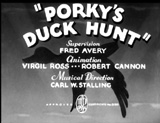
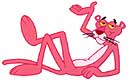 Friz
Freleng (and David DePatie) also created the cool, bluesy 'The Pink
Panther' animation with a pink feline character for the opening
credits of The Pink
Panther (1963). The first of a series of theatrical cartoons
based upon the pink character was titled The Pink Phink (1964),
and it won Freleng (and DePatie) the Oscar for Best Animated Short
Subject. In 1969, he successfully transitioned the character to television
as The
Pink Panther Show. One of his most
famous cartoons was a jazzy version of the original The Three Little
Pigs titled Three Little Bops (1957).
Friz
Freleng (and David DePatie) also created the cool, bluesy 'The Pink
Panther' animation with a pink feline character for the opening
credits of The Pink
Panther (1963). The first of a series of theatrical cartoons
based upon the pink character was titled The Pink Phink (1964),
and it won Freleng (and DePatie) the Oscar for Best Animated Short
Subject. In 1969, he successfully transitioned the character to television
as The
Pink Panther Show. One of his most
famous cartoons was a jazzy version of the original The Three Little
Pigs titled Three Little Bops (1957). 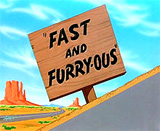
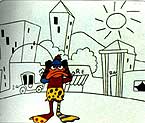 The
comic Warner Bros.' Merrie Melodies masterpiece Duck Amuck (1953),
inducted into the
The
comic Warner Bros.' Merrie Melodies masterpiece Duck Amuck (1953),
inducted into the 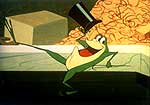 Another
of Jones' most famous cartoons was the renowned One Froggy Evening (1955) - about a singing/dancing frog (in retrospect named Michigan J. Frog) who
was unearthed from a condemned building's cornerstone. A construction worker
- who pursued a fortune with the talented croaker, was dismayed when the Frog
would only perform for him and not for an audience or talent agency. The cartoon
was noted for a lack of spoken dialogue, and a rich collection of ragtime
era songs - Steven Spielberg once noted that it was "the
Another
of Jones' most famous cartoons was the renowned One Froggy Evening (1955) - about a singing/dancing frog (in retrospect named Michigan J. Frog) who
was unearthed from a condemned building's cornerstone. A construction worker
- who pursued a fortune with the talented croaker, was dismayed when the Frog
would only perform for him and not for an audience or talent agency. The cartoon
was noted for a lack of spoken dialogue, and a rich collection of ragtime
era songs - Steven Spielberg once noted that it was "the 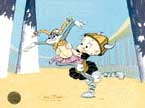 An
additional Jones' masterpiece was the 7-minute parody What's Opera, Doc? (1957) - featuring
Bugs' nemesis Elmer Fudd (as a Teutonic warrior-knight), a cross-dressed Bugs Bunny (as
"Brunhilda"), and music from Richard Wagner's 18-hour opera Der
Ring des Nibelungen. In 1992, What's Opera, Doc? became the first-ever
animated film to be inducted into the
An
additional Jones' masterpiece was the 7-minute parody What's Opera, Doc? (1957) - featuring
Bugs' nemesis Elmer Fudd (as a Teutonic warrior-knight), a cross-dressed Bugs Bunny (as
"Brunhilda"), and music from Richard Wagner's 18-hour opera Der
Ring des Nibelungen. In 1992, What's Opera, Doc? became the first-ever
animated film to be inducted into the 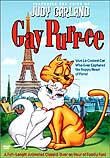 Jones
also contributed script and character designs to UPA's Gay Purr-ee (1962),
one of the last animations produced by the innovative studio. Similar to Disney's Lady and the Tramp (1955) (and Disney's later effort The
AristoCats (1970)) and The Wizard of Oz adventure tale about a country girl,
this full-length animated classic featured the voices of Judy Garland (as
young feline heroine Mewsette who set off for Paris in the Gay 90s), Robert
Goulet (as country bumpkin beau, Jaune-Tom in pursuit), and Hermione Gingold
(as cathouse manager Madame Rubens-Chatte), and original songs by Wizard
of Oz composers Harold Arlen and E.Y. (Yip) Harburg.
Jones
also contributed script and character designs to UPA's Gay Purr-ee (1962),
one of the last animations produced by the innovative studio. Similar to Disney's Lady and the Tramp (1955) (and Disney's later effort The
AristoCats (1970)) and The Wizard of Oz adventure tale about a country girl,
this full-length animated classic featured the voices of Judy Garland (as
young feline heroine Mewsette who set off for Paris in the Gay 90s), Robert
Goulet (as country bumpkin beau, Jaune-Tom in pursuit), and Hermione Gingold
(as cathouse manager Madame Rubens-Chatte), and original songs by Wizard
of Oz composers Harold Arlen and E.Y. (Yip) Harburg.