|
|

| H (continued) | |||||

|
This successful box-office United Artists production by Stanley Kramer and director Fred Zinnemann was one of the best Western films of all-time. Of its seven Academy Award nominations, it won four Oscars, including two for its music:
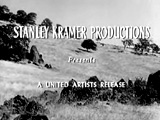
As the film opened with the credits (pictured thrice), it was accompanied by the High Noon title ballad song (a recurring theme throughout the entire film), played atop a scene of vengeful desperadoes gathering on the outskirts of the small, quiet, arid western town of Hadleyville in the 1870s. A solitary, stoic, honor-bound marshal/hero, Will Kane (Oscar-winning Gary Cooper), well past his prime and already retired, was left desolate and abandoned by the Hadleyville townspeople he had faithfully protected for many years, and was refused help at every turn against a revenge-seeking killer and his gang. The film also ended with the title song's famous melancholy ballad in the background, as the beleaguered Marshal Kane (and his new pacifist wife Amy (Grace Kelly)) rode off into the distance from the town in a buckboard, after saving it from the outlaws. |
|
|||
|
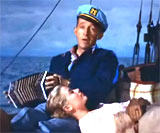
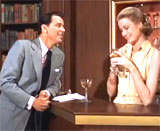
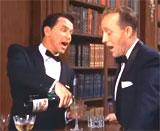
High Society (1956) This entertaining Technicolored MGM musical comedy with an original Cole Porter score (earning two Academy Award nominations for Best Score and Best Song - "True Love") was a tuneful remake of director George Cukor's screwball comedy The Philadelphia Story (1940). The original non-musical film set in Philadelphia starred Cary Grant, Katharine Hepburn, and James Stewart. Both films were based on Philip Barry's 1939 play The Philadelphia Story. The romantic musical comedy, now set amongst the rich elite of Newport, RI, starred miscast Bing Crosby as ex-husband CK Dexter Haven, Frank Sinatra as tabloid writer Mike Connor, and Grace Kelly (in her last film before marrying Prince Rainier of Monaco), as rich girl Tracy Samantha Lord. It marked the first teaming of Frank Sinatra and Bing Crosby.
|
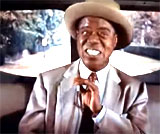 On a Chartered Bus to Newport, RI, Louis Armstrong: "High Society Calypso" 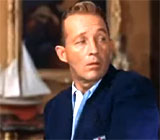 CK Dexter-Haven (Bing Crosby) 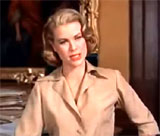 Tracy (Grace Kelly) Deriding Dexter as a "Jukebox Hero" 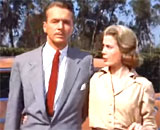 Tracy's Fiancee George Kittredge (John Lund) 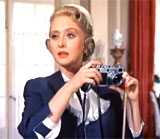 Liz Imbrie (Celeste Holm) 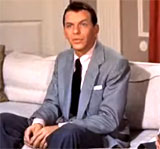 Mike Connor (Frank Sinatra) 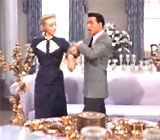 "Who Wants to Be a Millionaire?" 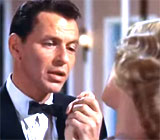 Mike with Tracy by the Pool, Singing "Mind If I Make Love to You" 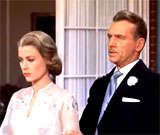 Tracy Attempting to Coax George Out of Their Planned Marriage 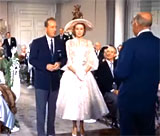 The Film's Ending: Wedding of Dexter and Tracy |
|||
|
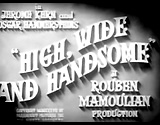
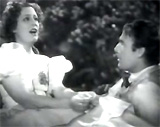
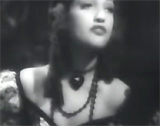
High, Wide and Handsome (1937) Director Rouben Mamoulian's and Paramount's lavish but forgotten western-flavored musical, a box-office failure, again teamed soprano Irene Dunne (as Sally Watterson) with the music of Jerome Kern and Oscar Hammerstein, due to the the studio's previous year's success with Showboat (1936). It was shot on location in California to tell its story of the 1870s struggle between farmers and railroaders led by Walt Brennan (Alan Hale) over western Pennsylvania oilfields. Its most memorable songs integrated into the plot were:
|
  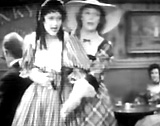 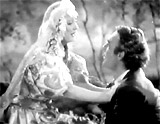
|
|||

|
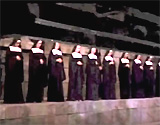
History of the World: Part 1 (1981) Director/writer/producer/actor Mel Brooks appeared as the Grand Inquisitor Torquemada of the Spanish Inquisition in this episodic comedy. He was featured leading the lengthy song and dance musical number The Inquisition (pictured) in which he sang with a chorus of monks:
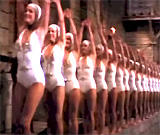
The sequence ended with an Esther Williams/Busby Berkeley set piece production depicting water torture (for the persecution of the Jews) which was introduced by Torquemada:
A long row of nuns appeared, removed their black and white habits to reveal one piece white bathing suits and caps - and then dove sideways into a large pool and performed a synchronized swimming routine (pictured). |
|
|||
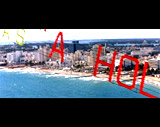
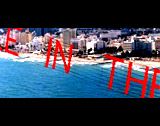 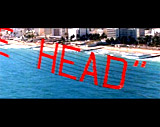
|
A Hole in the Head (1959)
Frank Capra's and United Artists' light comedy was based upon the 1957 Broadway play of the same name. The film was the recipient of only one Academy Award for its sole nomination: Best Song (with music by James Van Heusen and Sammy Cahn). Its main character was:
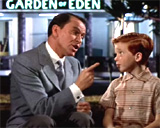
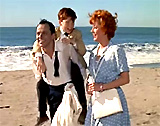
Tony was financially struggling with the hotel and having trouble raising his young 11 year-old son Alvin "Ally" Manetta (Eddie Hodges). Tony called upon his older brother Mario (Edward G. Robinson) in New York (married to Sophie (Thelma Ritter)) to help him save his hotel with a monetary bailout. There were also attempts to match Tony up with also-widowed Eloise (Eleanor Parker), a friend of Sophie's, to get him to be more fiscally responsible. The singing of the song High Hopes (pictured twice) was first performed by Tony and his son Ally in front of the hotel, and then in the film's ending by Tony, Eloise and Ally during a reunion scene on the beach. |
|
|||
|
Holiday Inn (1942)
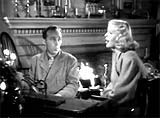
This Paramount homefront musical with 14 Irving Berlin songs teamed Bing Crosby and Fred Astaire in the first of their two appearances together. Of its three Oscar nominations, including Best Original Story and Best Score, it won one Award - Best Original Song. As song-and-dance men who competed in a love triangle for the same girl Linda Mason (Marjorie Reynolds, dubbed by Martha Mears), mellow-voiced Crosby delivered his first screen performance of Berlin's timeless classic and poignant Oscar-winning Best Song White Christmas (pictured) - the best-selling single in any music category for more than 50 years.
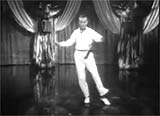
Astaire's best and most spectacular dance number was Say It With Firecrackers (pictured) - punctuated by exploding fireworks. |
|
|||
|
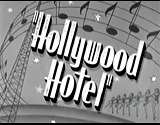
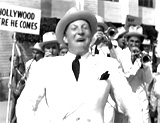
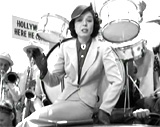
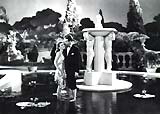
Hollywood Hotel (1937) This lively and amusing Busby Berkeley-directed musical comedy was famous for its musical numbers, although it appeared to be the last of the cycle of lavish musicals. It told about small-town jazz band member Ronnie Bowers (Dick Powell) winning a Hollywood talent contest and being assigned as his prize to escort a starlet to a movie premiere - in a case of mistaken identity. Its numbers included:
|
|
|||
|
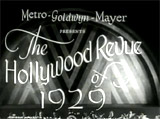
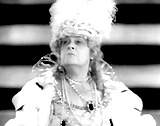
Hollywood Revue of 1929 (1929) MGM's elaborate, Best Picture-nominated film at the dawn of the talkies (with some color sequences) was an early all-star musical Broadway revue with many star performers from Hollywood. It was hosted by Jack Benny (including a bit in drag) and Conrad Nagel, and starred a number of big-name performers:
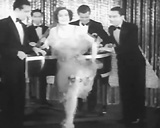
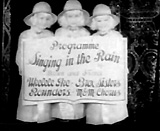
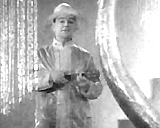
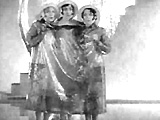
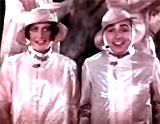
Its most famous and popular song was the first rendition of Singin' In the Rain (pictured thrice), sung by Cliff ("Ukelele Ike") Edwards playing a ukulele with a chorus of showgirls in raincoats and hats during a downpour. The song was also reprised at the climax of the film when the entire cast appeared in slick raincoats and hats (pictured), in a two-strip Technicolor segment. |
|
|||
|
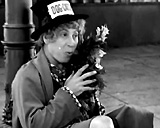
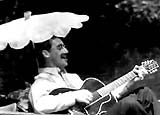
This was the fourth comedy masterpiece from the Marx Brothers. Groucho Marx portrayed Professor Quincy Adams Wagstaff who was assuming the presidency of Huxley College. During the musical number (Whatever It Is), I'm Against It (pictured), Professor Wagstaff described how he would nihilistically respond to trustee suggestions, ridiculing them:
The second verse was for a different song: I Always Get My Man (pictured). The bearded faculty professors joined the contemptable Wagstaff, slavishly bowing and pointing to him, and circling around him in a soft-shoe routine. When the dance was finished, he told them:
In addition, throughout the film, the Marx Brothers sang (or played, or whistled) the song Everyone Says I Love You (all pictured):
|
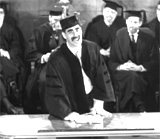 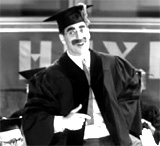 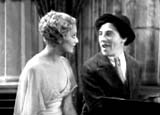 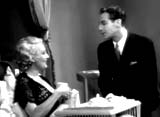  
|
|||

|
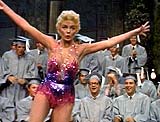
How to Be Very, Very Popular (1955) This Cinemascope film by writer/director Nunnally Johnson was a modified remake of She Loves Me Not (1934). Sheree North, an attempted carbon-copy blonde replacement for Marilyn Monroe, starred in this musical comedy opposite Betty Grable (her last film in the role of Stormy Tornado) after the unwilling blonde bombshell star walked off and refused to do this picture for Fox. In one of its more talked-about sequences, Sheree North (as Curly Flagg) was placed in a hypnotic trance, programmed to begin dancing if she heard the word "Salome". During the graduation ceremony at Bristol College, one of the speakers mentioned the Battle of Salamis, causing Curly to strut on stage, strip off her gray graduation gown and perform a rock and roll dance to Shake, Rattle & Roll (pictured) in a shimmering, purplish sequined outfit. |
|
|||
|
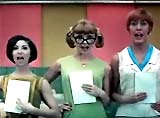
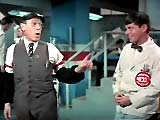
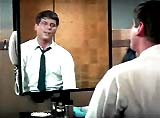
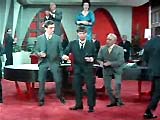
How to Succeed in Business Without Really Trying (1967) This musical comedy film version virtually duplicated Frank Loesser's Tony Award-winning Broadway musical from 1961 - it included two stars reprising their roles from the stage, both employed in the World Wide Wicket Company:
A few of the film's catchy tunes included:
|
|
|||
(alphabetical by film title) Introduction | A-1 | A-2 | B-1 | B-2 | B-3 | C-1 | C-2 | D-1 | D-2 | E | F-1 | F-2 | G-1 | G-2 H-1 | H-2 | I-J | K | L-1 | L-2 | M-1 | M-2 | N-O | P-1 | P-2 | R-1 | R-2 | S-1 | S-2 | S-3 | T | U-V | W | X-Z |




 #
25 "High Noon (Do Not Forsake Me, Oh My Darlin')"
#
25 "High Noon (Do Not Forsake Me, Oh My Darlin')" Best
Original Song: High Noon (Do Not Forsake Me, Oh My Darlin')
Best
Original Song: High Noon (Do Not Forsake Me, Oh My Darlin')