|
The Greatest Tearjerkers of All-Time
|
|
Title Screen
|
Movie Title/Year and Brief Tearjerker Scene Description
|
Screenshots
|
|
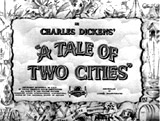
A Tale of Two Cities (1935)
- MGM's interpretation of the classic 1859 Charles
Dickens story of the French Revolution and the Reign of Terror
- the introduction of vicious French aristocrat Marquis
de St. Evremonde (Basil Rathbone) - portrayed as heartless and
cruel when his speeding carriage ran over and killed a poor French
peasant boy in the streets of Paris outside the shop of Ernest Defarge
(Mitchell Lewis) and his wife Madame Defarge (Blanche Yurka) (who
were instigating a plot to overthrow the government);
he emerged from his carriage and callously and remorselessly told
the onlookers:
"It's extraordinary to me that you people cannot take care
of yourselves and your children. One or the other of you is forever
in the way. How do you know what injury you might do to my horses?"
- the dissipated
and frequently drunk English lawyer Sydney Carton (Ronald Colman) expressed
his unrequited love for pretty French girl Lucie Manette (Elizabeth
Allan), although she was the fiancee of Charles Darnay (Donald Woods)
- the Marquis' nephew; he expressed his devotion
and love for Lucie: ("I wonder if you know how much your happiness
means to me"), and was surprised and taken aback when
she announced that she was marrying Charles Darnay
- in a quiet moment between Carton and Lucie, Carton
admitted how she had inspired in him steadfast devotion and unrequited
love for her: "I would embrace any sacrifice for you and for
those dear to you. Will you hold me in your mind as being ardent
and sincere in this one thing? Think now and then that there is a
man who would give his life to keep a life you love beside you?";
he was heartbroken about a romance that could have been between them
- as the film was concluding, Lucie's husband Darnay
was unjustly condemned and found guilty by the revolutionary French
Republic for essentially being the last surviving Evremonde ("I
demand the life of the last of the Evremondes! I demand it!")
- he was sentenced, as an "enemy of the Republic," to be
executed by guillotine "within 48 hours"
- to prove his love
for Lucie, Carton decided to visit the imprisoned Darnay in the Bastille
to allegedly interview him; there, Carton forced Darnay to write
a letter to Lucie: ("I said that if ever I could do
anything for you") before chloroforming him; he added in his
own handwriting: ("In the long night that is approaching,
I shall be guided by the memory of your kindness. God bless you
for your sweet compassion. Sydney Carton"); and then because
of their physical resemblance, he switched clothes and places with
him, in order to save him from the guillotine - for Lucie's sake
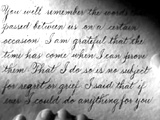
Carton's Dictated Letter to Lucie (in Darnay's Handwriting)
|
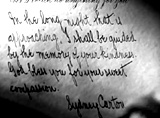
Carton's Addition to the Letter (in His Handwriting)
|
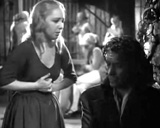
- in one of the final scenes while in a holding cell,
Sydney Carton expressed how he was courageous
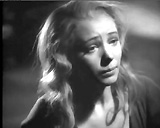
and unafraid to another innocent victim, a seamstress (Isabel Jewell);
she wondered about his motive to save his "friend" and
thus gained strength from him: "You're going to die in his place.
Why?...You're so brave. When we go to the guillotine, will you let
me hold your hand? That might give me courage, too"; he responded: "Yes,
I'll hold it to the last"
|
|
|
Awaiting Execution, Distressed Seamstress
Spoke to Carton About His Bravery
|
- as the Seamstress and Carton stood at the foot of
the guillotine, he stressed to her: "Keep your eyes on me. Mind
nothing else"; she responded: "I can bear it as long as
I'm with you. But when I go, will they be quick?"; he told her: "It
will be"; then she noticed how calm he was: "You're not
afraid. The others are only pretending, but you - It's almost as
if you welcomed it"; he affirmed his brave self-sacrifice (and
redemption by love): "Perhaps I do. Perhaps in death, I receive
something I never had in life. I hold a sanctuary in the hearts of
those I care for"; he kissed her as her number (# 22) was called
and she was led away - he was unable to hold her hand
- when he ascended the scaffold during a drum-roll as
his number (#23) was called, Carton nobly delivered his last words after the
camera rose up and panoramically viewed the sky and heavens above:
("It's a far, far better thing I do than I have ever done. It's
a far, far better rest I go to than I have ever known...");
the final superimposed title card was a Biblical quote: "I am
the Resurrection and the Life: he that believeth in me, though he
were dead, yet shall he live"
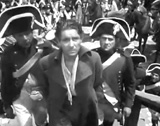
Carton Led Up the Steps to His Fate
|
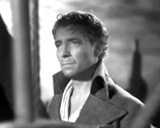
(off-screen): "It's a far, far better thing..."
|
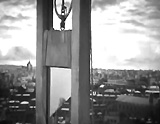
Camera Rising Up Above Guillotine to View the Heavens
|
|
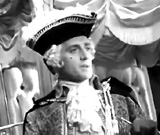
Marquis de St. Evremonde (Basil Rathbone)
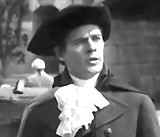
Charles Darnay (Donald Woods) - the Marquis' Nephew
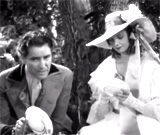
Sydney Carton's (Ronald Colman) Love For Lucie - Although
She Announced that She Was Marrying Darnay
Carton's Expression of His Steadfast Devotion For Lucie
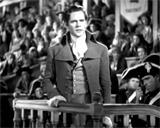
Darnay's Trial - Charged With Being an "Enemy of the Republic"
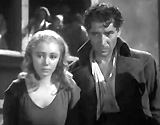
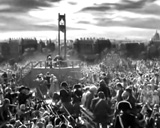
Riding In an Open Cart - to the Guillotine
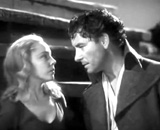
"Keep your eyes on me. Mind nothing else"
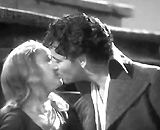
Sydney Carton with Seamstress at the Foot of the Guillotine -
Goodbye Kiss
|
|
Terms of Endearment
(1983)
 #1 #1
 #16
#16
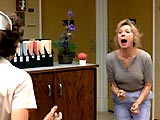
- Texas widow Aurora Greenway's (Shirley
MacLaine) hospital scene when she panicked, went beserk and shrieked
over her 30 year-old daughter Emma Greenway Horton's (Debra Winger)
terminal cancer and demanded that the nurses give her dying daughter
(at past 10 o'clock) her overdue shot of morphine: ("I don't
see why she has to have this pain....It's time for her shot, do you
understand? Do something...My daughter is in pain! Give her the shot,
do you understand me? GIVE MY DAUGHTER THE SHOT!!")
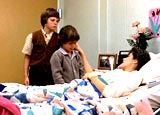
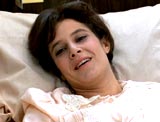
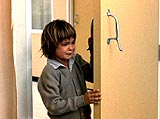
- the most tearjerking scene
of all - Emma's hospital goodbye scene with her children when youngest
son Teddy (Huckleberry Fox) told off his bratty older brother Tommy
(Troy Bishop): ("Why don't you shut up?! Shut up!")
as she explained to them that she wouldn't be around for her family
in the future, that reluctant Tommy should "be sweet" and
how he would eventually admit that he loved her after she was gone:
("And stop trying to pretend that
you hate me. I mean, it's silly...I know you like me. I know it. For
the last year or two, you've been pretending like you hate me. I
love you very much. I love you as much as I love anybody, as much
as I love myself. And in a few years when I haven't been around to
be on your tail about something or irritating you, you're gonna remember...
that time that I bought you the baseball glove when you thought we
were too broke. You know? Or when I read you those stories? Or when
I let you goof off instead of mowing the lawn? Lots of things like
that. And you're gonna realize that you love me. And maybe you're
gonna feel badly, because you never told me. But don't - I know that
you love me. So don't ever do that to yourself, all right?")
|
|
|
|
Emma's Goodbye Scene With Her Two Sons
|
- the nurse's words to Emma's
awakened husband Flap (Jeff Daniels): ("She's gone"); and
Aurora's piteous sobbing to Flap: ("I'm so stupid, so stupid. Somehow,
I thought, somehow I thought when she finally went that - that it
would be a relief. Oh, my sweet little darling. Oh dear, there's
nothing harder! THERE'S NOTHING HARDER!")
- the final end credits scene set at Aurora's house
after the funeral where raunchy ex-astronaut neighbor Garrett Breedlove
(Jack Nicholson) provided needed support to the older boy Tommy following
Emma's death ("Good-lookin' suit there") and won over the reluctant
boy, while Aurora was with young Melanie (Megan Morris)
|
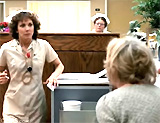
GIVE MY DAUGHTER THE SHOT!!"
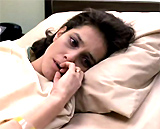
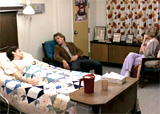
Emma Looking Over at Husband Flap and Her Mother Just Before
Dying - Almost Asking Permission to Die
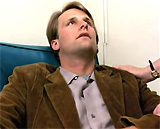
Nurse to Flap: "She's gone"
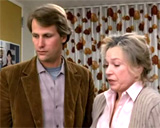
Aurora's Grief: "There's nothing harder!"
|
|
They Died With Their Boots On
(1941)
- the film's tear-inducing,
poignant ending when infamous cavalry officer General George Armstrong
Custer (Errol Flynn) gave a heart-rending farewell goodbye to his
wife Elizabeth "Libby"
Bacon (Olivia de Havilland) before leaving for his disastrous meeting
with fate at the Battle of the Little Big Horn - she sensed disaster
and had written about her fears in her diary (he reacted with astonishment
to her written words) - the couple shared a few extended looks and
kisses
[Note: it
was the stars' final screen
pairing also!]
- in their extended goodbye scene, she
looked into his eyes as he told her before their final kiss: ("Walking through life with you, ma'am, has been
a very gracious thing")
- after he left, she stood against a wall and watched
him go - and then collapsed in a faint to the floor, as the camera
dramatically pulled back
- the film ended with the climactic action scene of
his final conflict against Chief Sitting Bull at the Battle of the
Little Big Horn massacre
|
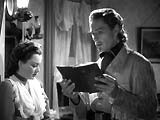
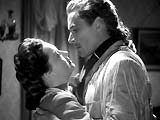
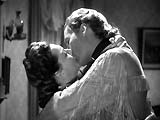
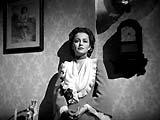
Gen. Custer's Heart-Rending Goodbye to His Wife Libby
- She Fainted Against the Wall
|
|
They Live By Night (1948)
- director Nicholas Ray's debut film was this film
noir classic - it was an adaptation of Edward Anderson's 1937 Bonnie
and Clyde-inspiring novel Thieves Like Us (later remade
by Robert Altman as a film with the original title in 1974); although
a crime thriller, it was more an emotionally-told, melodramatic love
story of a naive couple on the road and on the run; the
story was about the newly-married couple's ill-fated and doomed relationship
from the start
- in
the film's opening before the title screen, two lovers kissed, as the
screen's words stated: ("This
boy and this girl were never properly introduced to the world we live
in.... To tell their story...")
- desperate 23 year-old fugitive
criminal - an escaped convict named Arthur "Bowie" Bowers
(Farley Granger), impulsively married young and naive Catherine "Keechie" Mobley
(Cathy O'Donnell), the niece of one of his hardened criminal associates
named Chickamaw 'One-Eye' Mobley (Howard Da Silva). He was forced to
engage in more robberies, while struggling to attain their quixotic
dream of living a normal life. They drove at night and stayed at various
remote cabins to evade the convicts, when Keechie became pregnant
- in
the film's downbeat and tragic finale, Bowie was about to leave Keechie
to pursue a new life for them (possibly in Mexico or elsewhere) before
returning for her. He wrote a goodbye note, and then was persuaded
by the one who had betrayed him to police, Chickamaw's sister-in-law
Mattie (Helen Craig), to walk to the cabin where Keechie was sleeping
and give it to her personally; in a trap, Bowie was
gunned down outside the room
- Keechie took the crumpled note
from Bowie's dead hand and read it outloud as the film came to a
melancholic close: ("Little
old girl. I'm gonna miss you but I gotta do it this way. I'll send
for both of you when I can. No matter how long it takes. I've gotta
see that kid. He's lucky. He'll have you to keep him squared around")
- she then turned and tenderly mouthed the words as
the screen slowly darkened: ("I
Love You. Bowie. Bowie")
|
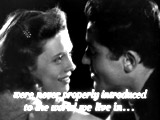
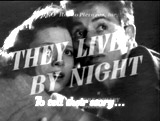
Film's Opening

Keechie: "I love you. Bowie, Bowie"
|

|
This Is the Army (1943)
- Kate Smith's (as Herself) moving,
patriotic rendition of "God Bless America" during the World
War II-era, morale-boosting film
|
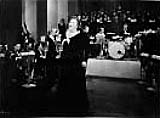
"God Bless America" by Kate Smith
|

|
Titanic (1997)
#15
#3
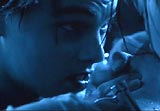
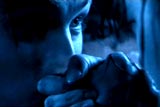
- the heartbreaking moments after
Jack Dawson (Leonardo Di Caprio) and the love of his life Rose DeWitt
Butaker (Kate Winslet) had survived the Titanic's sinking,
and he helped her onto a large floating piece of debris. She complained
of the intense cold and her frozen body, but he encouraged her to
not give up: ("Don't you do that, don't say your good-byes.
Not yet, do you understand me?....Listen, Rose. You're gonna get
out of here. You're gonna go on and you're gonna make lots of babies,
and you're gonna watch 'em grow. You're gonna die an old... an old
lady warm in her bed. Not here. Not this night. Not like this. Do
you understand me?...Winning that ticket, Rose, was the best thing
that ever happened to me. It brought me to you and I'm thankful for
that, Rose. I'm thankful. You must, you must, you must do me this
honor. You must promise me that you'll survive, that you won't give
up, no matter what happens, no matter how hopeless. Promise me now,
Rose, and never let go of that promise"). She promised, and he
replied: "Never let go." She
responded as she shivered: "I will never let go, Jack. I'll never
let go." He
kissed her hand before his corpse froze in the cold Atlantic Ocean,
although they maintained their hand-grip
- later during her rescue
by a boat after summoning it with a whistle, she let go of Jack's
hand, although repeated the phrase: ("I'll never let go. I promise")
as he sank underwater
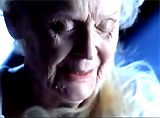
- the scene of elderly Old Rose
(Gloria Stuart) (either asleep or dead in her bed - was it a dream?)
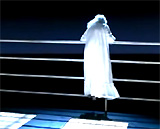
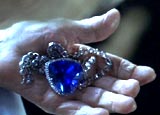
- when she decided to part with her priceless "Heart
of the Ocean" blue
diamond necklace in her possession; alone and barefoot, she climbed
up on a deck railing of the stern of the research vessel the Keldysh,
and looked down at the necklace in her opening hand; she thought
back to decades earlier when she found the necklace in her coat pocket;
she threw it overboard to share it with her now-lost love Jack; she
slightly smiled and breathed in deeply as it sank deep into the water
- located over the wreck site
|
|
|
|
Old Rose Throwing the Blue Diamond Necklace Into the
Ocean
|
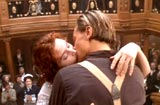
- in the final dream sequence, the young Rose
imagined herself meeting - and kissing Jack at the top of the elegant
Grand Staircase surrounded by an applauding audience of all those
who died on the ship -- together forever
|
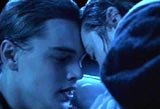
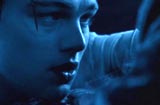
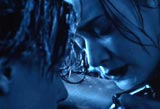
Encouraging Rose to Not Give Up Hope: "Never let go"
Final Dream Sequence
|
|
To Each His Own (1946)
- director Mitchell Leisen's sentimental and romantic
drama was a quintessential unrequited maternal love melodrama/weepie
film of the mid-1940s, structured as a flashback, about the reunion
of an unwed mother with her adopted-out son years later
- in the buildup to the story's most emotional scene,
an older Josephine 'Jody' Norris (Olivia
de Havilland, who won the first of two Oscars for her role) recalled
when she was younger during the summer of 1918 when she turned
down a marital proposal from Lieut. Alex Piersen (Phillip Terry)
- as a result, he then proposed to and married Corinne Sturges
(Mary Anderson)
- at the same time, she fell in love with another
young flier named Captain Bart Cosgrove (John Lund) - but he died
soon after in combat. Becoming pregnant after their one night together,
the illegitimate baby was delivered healthy in 1919 (although she
had contemplated a therapeutic abortion for her own safety);
her plan to leave the baby at the doorstep of her neighbor Belle
Ingham (Alma Macrorie) (and quickly adopt it) backfired when Belle
sympathetically gave the baby to Corinne (whose first newborn child
had just died)
- the foundling
Gregory (nick-named 'Griggsy') was legally adopted by Jody's ex-beau
Alex Piersen and wife Corrine (Sturges) Piersen
- when Jody confessed to Corinne that Griggsy was
her son - and proved it with his birth certificate, Corinne refused
to give the boy up, because Alex was still in love with Jody; henceforth,
Jody was to be regarded only as a family friend
- in the stirring, heart-rending
conclusion (a surprise wedding scene), grown-up son Lieut. Gregory
Piersen (John Lund also), an air force pilot (now serving in WWII)
like his father, was on leave; hurried plans were made (behind
his back) to arrange a marriage to his fiancee - WRNS Liz
Lorimer (Virginia Welles)
- after the wedding, Lt. Piersen's newly-wed wife
hinted to him about Jody's closeness to him: ("Was she terribly
fond of you when you were a little boy? I saw the way she looked
at you when you signed the register. Anyone would have thought
you were her only son")
- it finally dawned on Gregory, and he finally came
to remember and openly acknowledge, that Jody was his real mother
(he spoke haltingly to Liz: "I
was her...Excuse me, darling")
- in the closing line of the
film, Gregory approached his mother: ("I think this is our
dance, Mother") - the film faded to black
|
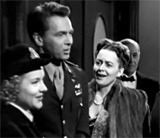
Jody at the Surprise Wedding Between Lt. Gregory Piersen
and Liz Lorimer
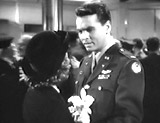
Liz Hinting to Her Newly-Wed Husband: "Anyone would have
thought you were her only son"
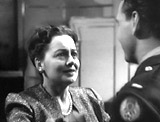
Gregory's Invitation to His Mother
Jody: "I think this is our dance, Mother"
|
|
To Kill a Mockingbird (1962)
#27
#23
- the scene in which small-town 1930s Alabama lawyer
Atticus Finch (Gregory Peck) listened to his children: Jem (Phillip
Alford) and 6 year-old daughter Jean Louise "Scout" (Mary
Badham) discussing their dead mother: (Scout: How old was I when
Mama died? Jem: Two. Scout: How old were you? Jem: Six. Scout: Old
as I am now. Jem: Uh huh. Scout: Was Mama pretty? Jem: Uh, huh. Scout:
Was Mama nice? Jem: Uh, huh. Scout: Did you love her? Jem: Yes. Scout:
Did I love her? Jem: Yes. Scout: Do you miss her? Jem: Uh, huh)
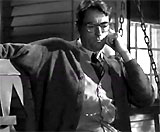
Atticus in Porch Scene Overhearing His Children
|
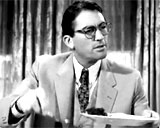
Atticus Talking About Gun Responsibility
|
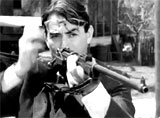
Atticus Killing a Rabid Dog on the Street
|
- during mealtime, Atticus' touching speech about
the responsibility his father taught him in using
his first gun when he was thirteen or fourteen - and how it was 'a
sin to kill a mockingbird' - a songbird that harmlessly existed only
to give pleasure: ("I remember when my daddy gave me that gun.
He told me that I should never point it at anything in the house.
And that he'd rather I'd shoot at tin cans in the backyard, but he
said that sooner or later he supposed the temptation to go after
birds would be too much, and that I could shoot all the blue jays
I wanted, if I could hit 'em, but to remember it was a sin to kill
a mockingbird...Well, I reckon because mockingbirds don't do anything
but make music for us to enjoy. They don't eat people's gardens,
don't nest in the corncribs, they don't do one thing but just sing
their hearts out for us")
- Atticus' killing of a rabid dog on the street
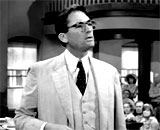
- Atticus' heroic defense in
a hot courtroom trial of a black man (Brock Peters) wrongly accused
of the rape of a white woman; Atticus gave a moving closing court
argument, urging the jury to look beyond race and prejudice: ("In
the name of God, do your duty. In the name of God, believe Tom Robinson")
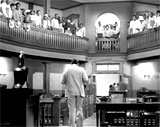
- the
scene of the blacks in the balcony of the courtroom standing to respectfully
honor the defeated lawyer with Rev. Sykes' (William Walker) words
to "Scout": ("Miss
Jean Louise, stand up, your father's passin")
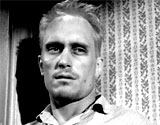
- and Scout's discovery of demonized neighbor Mr. Arthur "Boo" Radley
(Robert Duvall in his film debut) behind their bedroom door ("Hey,
Boo") and the taking of her guardian angel's hand
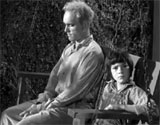
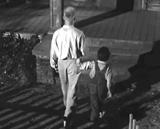
- the moving coda
in which "Scout" sat on the porch swing with the timid Boo
Radley (who had saved Jem from a bigoted attack and was found behind
the bedroom door), and then she walked - with his hand in hers - to
the Radley gate and up their front walk, accompanied by Elmer Bernstein's
melancholy music score and Jean Louise's narration as the adult Scout
(voice of Kim Stanley):
("Neighbors
bring food with death, and flowers with sickness, and little things
in between. Boo was our neighbor. He gave us two soap dolls, a broken
watch and chain, a knife, and our lives...One time Atticus said you
never really knew a man until you stood in his shoes and walked around
in them. Just standin' on the Radley porch was enough. The summer
that had begun so long ago had ended, and another summer had taken
its place, and a fall, and Boo Radley had come out. I was to think
of these days many times. Of Jem and Dill and Boo Radley, and Tom
Robinson - and Atticus. He would be in Jem's room all night, and he
would be there when Jem waked up in the morning")
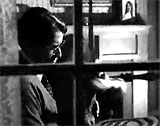
- the camera
pulled out of the window in Jem's room, where "Scout" was cradled in
her father's arms, to a long shot of the Finch house
|
Atticus' Court Defense of Black Man
"Your father's passin'"
Boo Discovered Behind Doorway
Scout on Porch with Boo
Scout Walking Boo Home
View From Outside of Jem's Room as Atticus Cradled Scout
in His Arms
|