|
The Greatest Tearjerkers of All-Time
|
|
Title Screen
|
Movie Title/Year and Brief Tearjerker Scene Description
|
Screenshots
|

|
Umberto D. (1952, It.)
 #39 #39
- the melodramatic plight of government pensioner
Umberto Domenico Ferrari (Carlo Battisti), whose slashed monthly
pension eventually caused his heartless city of Rome landlady Antonia
Belloni (Lina Gennari) to evict him and rent out his cheap furnished
room to prostitutes and their johns
- the close-knit, dependent relationship
between Umberto and his faithful spotted terrier Flike
- Umberto's touching lone friendship and relationship
with caring young pregnant house-maid Maria (Maria-Pia Casilio)
of the boarding house - with the transcendent scene of her morning
routine in the kitchen making coffee
- the
tearjerking, ambiguous ending in which Umberto D., unable to give
away his dog (or raise money by selling his books and watch), contemplated
suicide by stepping in front of a speeding train near a park while
holding Flike in his arms -- the dog yelped, and squirmed away
before Umberto could step in front of the train, and for the first
time ran away in abject fear from his beloved master
- Umberto coaxed the forgiving Flike back to him by
having the dog perform tricks with a pine cone ("Flike, look at the pinecone. Come on, here,
boy. Come on, stand up")
- he played with the dog (trained to
stand on its hind legs) in a long shot as the film ended, despite
having no place to stay and no income
|
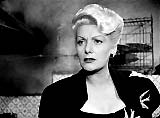
Evicted by Heartless Landlady
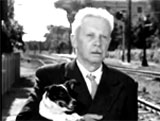
Umberto with Dog Flike
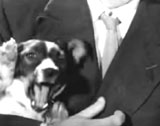
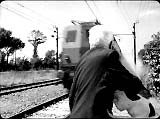
Suicide Attempt With Flike In His Arms
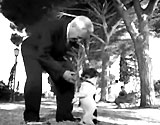
Flike Coaxed Back With Tricks
|

|
An Unmarried Woman (1978)
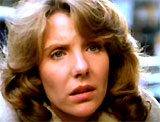
- the film opened with a title sequence that was backgrounded
by a couple during an early morning jog through parts of the Upper
East Side of NYC near where they lived; the two were mid-30s wife/mother
Erica Benton (Oscar-nominated Jill Clayburgh), a part-time Soho
art-gallery worker, with her stockbroker husband Martin Benton
(Michael Murphy); Martin was quickly disgruntled after stepping
in dog poop on the sidewalk with his expensive $35 dollar "sneakers"
("F--king city's turned into one big pile of dog s--t! Come
on out and take a crap on me! Everybody else is!"); when she
complained that he was about to smoke a cigarette, he criticized
her - an ominous foreshadowing: "The longer I'm married to you,
the more you sound like my mother"
- after making love ("a
little quickie") in the bedroom before Martin left for work,
she performed a giddy dance in only her T-shirt and panties, pretending
that she was performing a pas de deux for "Swan Lake"; that
evening, she was casually nude as she changed her clothes and they
chatted together in their bedroom
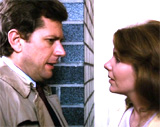
- she was therefore entirely unprepared
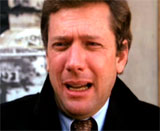
the next day when he suddenly stopped and began sobbing on the
street after lunch together. She first asked: "Marty,
Marty, come on, what is it, honey? What's the matter? What is this?
What, tell me?" - he delivered a tearful admission about his
year-long affair with another woman whom he met at Bloomingdale's:
("I'm
in love with somebody else. I'm seeing another woman, for over
a year. At first, you know, I thought it was just a-a fling. But
it isn't. I love her. I want to live with her. Oh God, I don't
want to hurt you. I don't
want to hurt Patti. But I-I can't...She's not a whore or anything.
Her name's
Marcia Brenner. She's, she's
a teacher. She's twenty-six. I met her at Bloomingdale's,
for Christ's
sake. I was standin' there buying a shirt, you know, and she-she
was standing next to me. She asked me if I liked this shirt that,
uh, that she was buying for her father. Oh, God! I'm so sorry")
- Erica's first stunned words were to have him confess
to their precocious 15 year-old daughter Patti (Lisa Lucas) attending
private school: "You
tell Patti, you tell Patti that you're sorry." Martin repeated:
"I'm in love with her." Erica asked a stony question: "She
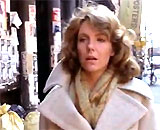
a good lay?" and then fled down the street and soon vomited;
she was accompanied by her obvious confusion, humiliation, and anger
towards all men
- the scene in which Erica began to 'erase' Martin's
memory (over 16 years of marriage) by removing his belongings and
piling them into the living room, and also removing her gold-band
wedding ring from her finger
- after the breakup, she continued to meet regularly
with her gossipy girlfriends at an upscale bar, including bitter,
man-hating divorcee Elaine (Kelly Bishop), Sue (Patricia Quinn)
who was barely tolerating her asexual marriage, and another middle-aged
divorcee Jeanette (Linda Miller) engaged in an affair with a "very
mature" 19-year-old still living at home with his parents, and
admitted that she had an eye massage with him: "There ain't nothin'
wrong with a good, old-fashioned eyeball orgasm"
- while seeking a divorce, she
had a number of uncomfortable experiences including a "definite
f--kin' pass" made at her by family physician Dr. Jacobs (Daniel
Seltzer), who claimed he only invited her out for a drink. She
sarcastically told others how it happened: "My husband left
me for a younger woman. Ha, ha, ha....He was buying a shirt in
Bloomingdale's and he fell in love." She felt depression,
confusion, fear and loneliness, and was overwhelmed by having to
see other men or to pursue dating, although she was open to it: "I'd
risk it with some new men." A blind date with an infatuated
and clueless Bob (Andrew Duncan) at a luncheon went poorly.
- in
ongoing therapy with lesbian psychiatrist Tanya Berkel (Penelope
Russianoff), she was advised to continue on with her life, and
that it was OK to feel angry, jealous, and depressed, but not guilty
("I would like to see you... take a vacation from guilt")
- in a difficult and argumentative
meeting with Martin, he noticed her bitterness and asked: "How
can you hate somebody that you were in love with for 16 years?" Feeling
demeaned by the break-up, she snapped back that they had made love
almost 2,000 times during their marriage: "Did you fall out
of love with my, my flesh, my body, or me - with Erica? Did you
fall out of love with Erica?...I was your hooker, Martin. I was
a bright, high-priced, classy hooker. Upper East Side by way of
Vassar hooker, but I was your hooker."
|
|
|
|
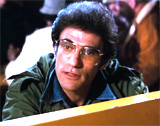
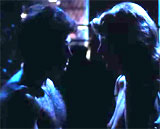
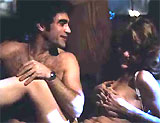
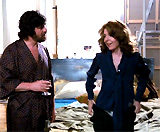
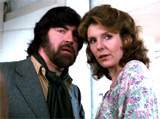
Erica's One-Night Stand With Charlie (Cliff Gorman)
|
- she agreed to a one-night
stand ("Take me to your loft, Charlie") with
smooth, gold necklace-wearing co-worker and womanizing swinger Charlie
(Cliff Gorman). At first, she nervously blurted out: "Charlie,
let's just do it, okay? Now, before I change my mind." He
set the terms for their relationship: "Let's just get something
straight right off the top, babe, huh? I don't get involved with
my women. I'm a short-term guy. I don't fall in love. I don't wanna
get married.... The only thing you can count on me for is sex.
I am what I am. I make no bones about it." And then she confided
in him: "Charlie, I've only slept with one man in 17 years." He
told her (as he touched her breasts) that she had a "beautiful
body."
|
|
|
A Relationship with
Artist Saul (Alan Bates)
|
- later, she found a more reciprocal
loving relationship with handsome and respectful, divorced strong-willed
English abstract artist Saul Kaplan (Alan Bates) and slept with
him almost immediately, but noted that although the sex was "very
good", it was "sort of empty": ("I just slept
with a man that I barely know. I mean, casual sex is not my...I'm
experimenting. I'm, well, I know it sounds a little cold, but that's
the way it is these days. I just want to see how it feels to make
love to someone that I'm not in love with") - she also added how
she really felt: "As soon as the sex was over, I wanted to leave"
- toward the conclusion of the film, Martin confessed
to Erica that he had broken up with his mistress: "I broke up with
Marcia...Well, the truth of it is she left me. I don't know. I
mean, the minute I moved in there, we stopped having fun" - he
asked to come back, but Erica refused: "It doesn't work that way,
you know?"
- in the end (although she was "going steady" with
Saul), she decided to part ways with him during the coming summer,
when he proposed that she join him in Vermont. She finally realized
that they were two very independent individuals, and she had to
be in control of her life as an unmarried, self-fulfilling and
independent woman.
|

Title Sequence
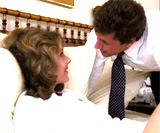
Erica Benton (Jill Clayburgh) With Husband Early in Morning After Sex

Ballet Dancing After Martin Left
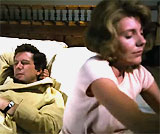
Erica Later in Evening Casually in Bedroom With Husband
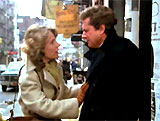
Erica to Unhappy Husband Martin: "What is this? What,
tell me?"
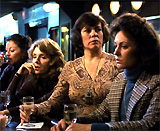
Conferring with Gossipy Girlfriends After Breakup
(l to r): Elaine, Erica, Sue, Jeanette
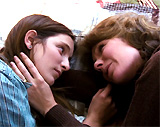
Consoling Her 15 Year Old Daughter Patti
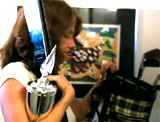
Erica's Removal of Martin's Belongings
Martin's Confession That His Affair Had Ended
|

|
Up (2009)
- the emotionally deep, powerful
and effective wordless 4-minute montage of 'married life' -- a
man's entire relationship with his wife up until her death - in
the person of two young kids who met and later married: balloon
salesman Carl Fredricksen (voice of Ed Asner) who worked in a zoo
and adventurous, tomboyish Ellie (voice of Elie Docter)
- their lives were a journey
of growing old, including buying and fixing up a dilapidated two-story
home (soon threatened by encroaching city developers), painting
their names (and leaving handprints) on their mailbox, taking frequent
picnics to a hillside where they laid on their backs and observed
cloud animal shapes, dreaming of having a family and setting up
a nursery room but experiencing childlessness (miscarriage), his
presentation of "My
Adventure Book" to her with their mutual dream of going to Venezuela's
Paradise Falls by saving spare coins for the journey (but they were
never able to go, due to other obligations and debts), her tying
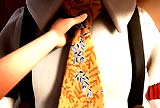
of his necktie (numerous times to indicate the passage of time) as
their hair greyed, his purchasing of tickets to Venezuela but the
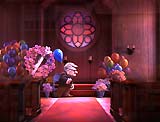
abrupt interruption of her failing health and death, and his expression
of bereavement at her funeral before returning home alone - as the
montage ended

Frequent Picnics - Looking Up at the Cloud Shapes
|
Ellie Tying Carl's Necktie
|

Growing Old Together
|
Carl at Ellie's Funeral
|
|

Two Kids: Carl and Ellie

Marriage

Painting Mailbox With Their Names
|

|
Walkabout (1971, UK/Australia)
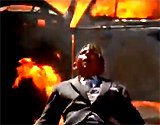
- in the shocking opening scene, suicidal
Australian businessman (John Meillon) tried to murder his teen-aged,
14 year-old schoolgirl daughter (17 year-old Jenny Agutter in her
film debut) and six-year-old son (Lucien John) in the bush during
a picnic and then committed suicide in front of them
- the two were forced to struggle and adapt to the
blazing hot and hostile climate of the Australian outback and its
terrain. They
were fortunately saved when aided by a teenaged adolescent Aboriginal
Black Boy (David Gumpilil), who was involved in his ritualistic
'walkabout' (to prove his manhood and mark his entrance into adulthood)
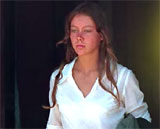
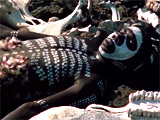
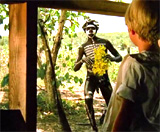
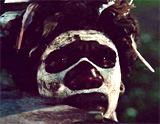
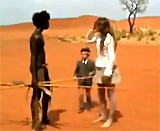
- during the native aborigine's 'walkabout'
at a deserted farmhouse - with a painted skeleton on his body -
he performed a stunning, silent, ritualistic mating dance for the
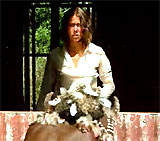
civilized, repressed teenaged girl stranded in
the outback, where he glimpsed her half-undressed
|
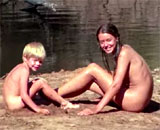
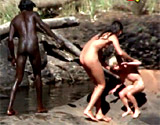
The Boy's Rejected Mating Dance
|
|
|

|
|
|
|
|
The Aborigine Boy's Pursuit of Girl
|
- she ignored
and resisted his (and her own) sexual rite of passage, by continuing
to treat him as a detached servant -- with disastrous results.
After the aboriginal danced all night and became saddened and weary
(with tears in his eyes), she found him the next morning hanging
dead in a mango tree, and she barely reacted to his death
- the film ended years later with the young girl now
married and returned to civilization, living in a high-rise apartment
complex. She was wistfully daydreaming back to her idyllic days
in the outback when she happily swam naked with the aborigine and
her young brother. They were long-gone days of paradise lost, reflected
in a voice-over quote from Part 40 of A.E. Housman's 'A Shropshire
Lad':
Into my heart an air that kills From yon far
country blows: What are those blue-remembered hills, What spires,
what farms are those? That is the land of lost content, I see
it shining plain, The happy highways where I went And cannot
come again.
|
Girl's Recollections of the Outback
in the Film's Conclusion
|
|
|

|
|
Suicide of Businessman Father
Aborigine Boy on 'Walkabout'
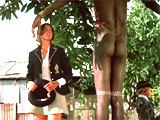
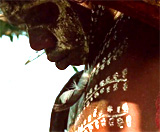
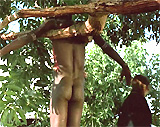
Mating Dance - With Disastrous Consequences
|

|
WALL-E (2008)
- the final scene of Pixar's and Disney's animated
science-fiction film - an odd-couple love story
- a crushed and 'dead'
WALL-E (short for Waste Allocation Load Lifter Earth-class) (voice
of Ben Burtt), the last lone garbage-compacting robot on Earth,
was rebuilt by EVE (short for Extra-terrestrial Vegetation Evaluator)
(voice of Elissa Knight), a sleek, white-shelled probe droid-robot,
who used WALL-E's own spare parts collection to reconstruct him,
but he appeared to have lost his acquired sentience, personality
and memories
- she attempted to stir his memory by placing a lightbulb
and Rubik's Cube in his grasp and by playing his favorite Hello,
Dolly! tape recording - with no luck. He turned and began
his robotic task of trash-compacting. She tried to shake some sense
into him, but it still didn't jog his memory - he stared back blankly.
- but then he remembered who she was after
they touched 'hands' together and she caused a small spark to occur
when she touched or 'kissed' his forehead; EVE realized that WALL-E
wasn't letting go when he continued to tightly hold onto her hand
- a sign that he had come to life; he focused his eyes
on her, and they enjoyed a second 'kiss' together

Small Spark 'Kiss' When Touching Foreheads
|
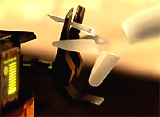
Hands Tightly Clasped Together
|

A Second Spark 'Kiss'
|
|

WALL-E Unaware of Who EVE Was

EVE Giving WALL-E a Lightbulb and Rubik's Cube

EVE Playing 'Hello Dolly' for WALL-E

EVE Vainly Trying to Get WALL-E's Attention
|

|
Waterloo Bridge (1940)
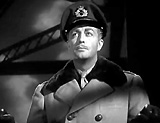
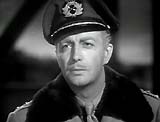
- the opening sequence - setting up a flashback -
at the start of WWII, General Roy Cronin (Robert Taylor) stood
mid-span on the Waterloo Bridge in London after emerging from a
limousine; he was again readied to be deployed to the war front
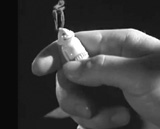
in France; as he stood on the
bridge and pulled out of his coat a keepsake and symbol of a long-lost
love of his life, he reminisced about the same setting years earlier
in 1914 during WWI when he was a young man; the object was a small
ceramic, good-luck charm-doll (or billiken); he remembered during
an air raid how he had retrieved the dropped purse and lucky charm of
19 year-old Myra Lester (Vivien Leigh), a virginal ballet dancer,
and helped her to an underground station shelter; as they parted
after an all-clear was announced, she gave him her good-luck charm
|
|
|
|
Opening Sequence: Before General Roy
Cronin's Flashback
|
- in the film's most romantic sequence, after attending
Myra's evening ballet performance
(and missing an invitation to a Colonel's dinner), WWI Army Capt.
Roy Cronin met with Myra for dinner and waltzed with her in candlelight
in the Candlelight Club to the tune of "Auld Lang Syne" as
groups of musicians extinguished their lights - and they experienced
their first kiss, when they parted at about 4 am, he requested: "Please
leave me first..." as he went off to war
- however, his departure was delayed by two days
and he and Myra met again the next late morning, when he impetuously insisted
on marrying Myra: ("Now, listen, darling. None of your quibbling.
None of your questioning. None of your doubts. This is positive,
you see. This is affirmative, you see. This is final, you see.
You're going to marry me, you see!"); he went to receive proper
permissions from his military superiors, including
Roy's wealthy uncle the Duke (C. Aubrey Smith) who reluctantly agreed
to Roy's proposed marriage to Myra, although she was of a lower class
- after they bought a ring and flowers,
they went to St. Matthew's Church, where he affirmed: "I was never
so sure of anything in my life. The moment you left me after the
air raid, I knew that I must find you again, quickly. I found you
and I'll never let you go"; however, they had to postpone the marriage
until 11 am the next day - but then again shortly later that evening, Capt.
Roy's orders were changed and he phoned Myra, informing
her he was leaving from Waterloo Station in 25 minutes; Myra arrived
at the station and was only able to wave goodbye to Roy as his
train departed
- Myra missed her evening performance in order to
be with him and as a result was dismissed from her job by Madame
Olga Kirowa (Maria Ouspenskaya), the tyrannical mistress of the
troupe in an international ballet school; when her best friend/roommate
Kitty (Virginia Field) stood up for Myra: ("I'm sick of you and
your tyranny. You treat us like a lot of slaves and call it discipline"),
she also lost her position; Myra and Kitty both found themselves
unemployed and quickly growing penniless: ("We can't get jobs in
a show, we can't get them anywhere else")
- during Roy's deployment, Myra was scheduled one
afternoon to be introduced to Roy's rich, socially-conscious,
aristocratic mother Lady Margaret Cronin (Lucile Watson) in a tea
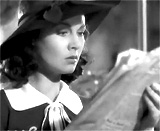
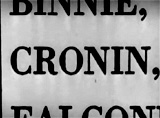
room; while waiting, Myra noticed Roy's name on a casualty list of
"FALLEN OFFICERS" in a newspaper - and she fainted; sickened by
the thought and drinking brandy, she avoided telling Lady Margaret,
who arrived a half hour late, the distressing news and thereby
offended his mother with her strange, stand-offish and incoherent
behavior; she left abruptly with a cold goodbye: ("Forgive me,
my dear, but are you quite well?...Myra, I want you to remember
that I tried to be your friend. I've come because Roy wanted me
to come and because I wished to. Perhaps we'll try again someday")
|
|
|
Myra's Fateful Discovery of Roy on a Newspaper Casualty
List of 'Fallen Officers'
|
- afterwards, Myra was grief-stricken and fell ill
believing that Roy had been killed in battle;
Kitty had secretly turned to prostitution to pay for their food
expenses and medical care for Myra, while excusing her loose behavior:
("What difference does it make as long as
we live?") with men "who wanna kill a few hours because they know
it may be their last"; soon after, the heartbroken Myra joined
Kitty and also became a street-walker and was soon picking up male
clients on the Waterloo Bridge
- a year later at the London train station, Myra was
shocked by the appearance of the returning Captain (who was not
dead after all); he had only been injured with a head wound and
became a German prison-camp POW; during the unexpected reunion,
the guilt-ridden Myra pretended that she was there to greet a friend
and was overwhelmed by his warm welcome: ("It's over, darling.
It's all over. And we're together for always"); he vowed: "I'm
not going to let you out of my sight, not till we're married.
You understand that?...I'm going to make it up to you. I'm going
to make things easy for you. I never want to see you cry again
- except with happiness"
- Roy proposed taking her to
his family's estate in Scotland to again meet with Lady Margaret;
she became very embarrassed and avoided telling Roy
about her profession as a prostitute; when he became suspicious,
she confessed that there was no one else: "Oh, Roy, of
course there isn't anyone else. There couldn't be. I loved you. I've
never loved anyone else. I never shall. That's the truth, Roy"
- however, Myra soon realized that her deceptive ploy
would not work, and would only bring shame to Roy's family; by
calling Roy's consoling mother Lady Margaret "naive" about her
life, she was able to confess her unworthy profession: ("I can't
marry Roy...I must go away. I should never have come here. I knew
it was impossible but I kept deceiving myself. I've got to go away.
I must never see him again...That thought which is now in your
mind which you are telling yourself can't be true is true"); she
had Lady Margaret promise not to tell Roy, and then in the hallway,
Roy returned her good-luck charm to her: ("I think you'd better
have it from now on because now that we're both, as they say,
one")
- by the next morning, Myra had
left a farewell note for Roy: ("You have been more to me than I
will ever say in words. But there is no future for us. I am grateful
to you for what you are and for what you have meant to me. I cannot
write - Goodbye my dearest darling") and then returned to London
- to prove that Myra had told the truth, her roommate/best
friend Kitty first asked Roy if he could handle the truth ("Roy,
can you take it no matter what you find out about her?");
she revealed the reality of Myra's nightlife to a disbelieving
Roy by taking him through one seedy bar after another, but they
were unable to find her; Kitty admitted: "She couldn't go through
with it. She was too honest"
|
|
|
Myra's Suicidal Decision to Jump In
Front of a Truck
|
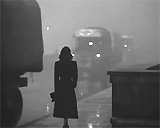
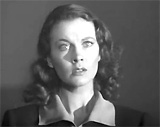
- in the film's most tragic scene on a foggy night,
the impoverished and depressed Myra eluded Roy and deliberately
walked into oncoming traffic on Waterloo Bridge, where she was
struck and killed by a truck; the good-luck charm fell from her hand
onto the pavement
- the film returned to the beginning, as General
Roy Cronin was on the bridge and clutching her good-luck charm before
leaving for the front; in his memory years later, he tearfully recalled
her earlier words in the film's final melodramatic moments:
(Myra's voice-over) ("I
loved you. I've never loved anyone else. I never shall. That's the
truth, Roy. I never shall"); the playing of "Auld Lang
Syne" rose
on the soundtrack
|
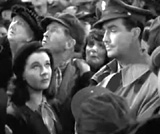
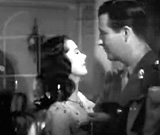
In an Underground Shelter Together: Myra and Capt. Roy
Cronin
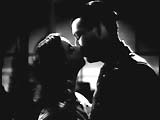
Waltzing in Candlelight and a First Kiss
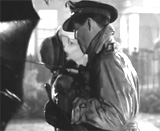
Marriage Proposal the Next Day
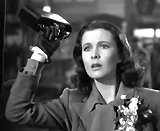
Waving Goodbye to Roy as His Train Departed
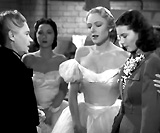
Myra Dismissed by Madame Kirowa And Supported by Her Friend Kitty (Virginia
Field)
Myra at the London Train Station - Shocked to See Roy
Returning and Alive
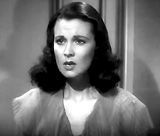
Myra to Roy: "I've never loved
anyone else. I never shall"
Myra to Lady Margaret: "I can't marry Roy!"
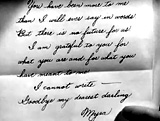
Myra's Farewell Note to Roy
|
|
Watership Down (1978)
 #15 #15
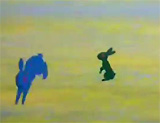
- the "Bright Eyes" sequence in which Fiver
(voice of Richard Briers) found out that his older brother Hazel
(voice of John Hurt) had been badly wounded by a shotgun during
the farm raid; Fiver chased with the ghostly Black Rabbit (voice
of Joss Ackland) to reach Hazel before the angel of death could
claim him, as Art Garfunkel's melancholy song about death was played:
("Bright
eyes, burning like fire. Bright eyes, how can you close and fail?
How can the light that burned so brightly suddenly burn so pale?
Bright eyes")
|
|
|
"Bright Eyes" Sequence
|
- in a mystical, tearjerking, and touching old age
death sequence, the heroic, tired and elderly bunny Hazel
was visited by Black Rabbit - the shadowy angel of death, requesting:
("I've
come to ask if you would like to join my Owsla [police force].
We shall be glad to have you, and I know you'd like it. You've
been feeling tired, haven't you? If you're ready, we might go along
now")
- before falling asleep on the grass and passing away, the
Black Rabbit had reassured Hazel
that the young rabbits cavorting
in the warren at Watership Down would
be safe and all their offspring: ("You
needn't worry about them. They'll be alright, and thousands like
them. If you come along, I'll show you what I mean"); this
was followed by Hazel's quiet death (after two deep breaths) when
his spirit freely rose from his dead body to join the Black
Rabbit
- the Narrator concluded, repeating the creator god
Frith's parting advice to the rabbits' folk hero El-ahrairah: ("Prince
with a Thousand Enemies") about how rabbits had been given the
gifts of speed and cunning to avoid their predators: "All the world
will be your enemy, Prince with a Thousand Enemies. And whenever
they catch you, they will kill you. But first, they must catch
you. digger, listener, runner, Prince with the swift warning. Be
cunning, and your people will never be destroyed"
|
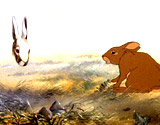
In Old Age, Hazel Was Visited by Angel of Death - the
Black Rabbit

Hazel Assured That The Young Rabbits Were Safe

Hazel's Spirit Rising

Swift and Cunning Rabbits in the Warren
|

|
Way Down
East (1920)
- the setting of this classic silent melodrama - a
remote village in New England, where young Anna Moore (Lillian
Gish) lived with her poor mother (Mrs. David Landau); the innocent
young country girl departed to live with her rich (and condescending)
relatives in Boston, the Tremonts; there, Anna met the "dashing" Lennox
Sanderson (Lowell Sherman), who reportedly had three specialties: "ladies
- Ladies - and LADIES"
|
Three Major Characters
|

Anna Moore (Lillian Gish)
|
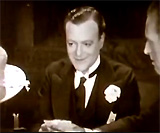
Lennox Sanderson (Lowell Sherman)
|
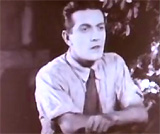
David Bartlett (Richard Barthelmess)
|
- near the country estate of the Sanderson family
was Bartlett Village, where 21 year-old daydreaming son David Bartlett
(Richard Barthelmess) lived with his Puritanical parents
- during the Tremont's grand social ball, Anna's appearance
and "delicate beauty [is] a whip to Sanderson's jaded appetite" -
the callous city playboy quickly flattered her beauty, and became "obsessed
by a new desire" for Anna
- Sanderson lured Anna to his apartment under false
pretenses, and made a physical advance, followed by a marriage
proposal ("I want you to - to marry me"); Anna reacted
ecstatically to the proposal, soon followed by the revelation that
her marriage to him as "husband" was only a faked and
mock ceremony
- after their sham "marriage," their
horse-drawn carriage took them for their honeymoon to their "bridal
suite at Rose Tree Inn" where he seduced and despoiled her
(off-screen) in the bedroom
- shortly later, Anna returned home (keeping her marriage
a "great secret") with promises from Sanderson to visit;
she was finally able to reveal to him that she was pregnant - and
that their secret marriage had to be revealed; he demanded: "You
musn't tell anyone!" and then admitted to her the
truth about their sham marriage: "Well
- if you must know the truth - because we aren't married
at all!"; at first, she thought that he must be joking; she
held out her ring (in a necklace around her neck) and blurted out
- "WE MUST be married - see-see- our ring!", he pushed
her away and then when she became hysterical, he coldly told her: "For
Heaven's sake, don't make a scene! I'll let you have lots of money
and you can go away"; the duplicitious scoundrel Sanderson
abandoned her - walking out on her, and forcing Anna to reveal
her situation to her mother

Anna's Revelation to Sanderson That She Was Pregnant With His
Child
|
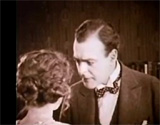
Sanderson: "Well -
if you must know the truth - because we aren't married
at all!"
|
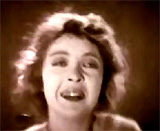
Anna Became Hysterical
|
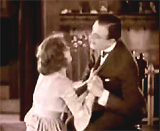
Sanderson: "Don't make a scene!"
|
- soon after, Anna's mother died, and she had to hide
herself "away with her shame" in the village of Belden;
she gave birth to a nameless, illegitimate baby that was very sick;
her stern-faced Belden landlady Maria Poole (Emily Fitzroy) reminded
Anna that if the baby died without being baptized, it would never
see God
- in one of the film's most emotionally and poignantly-acted
scenes, fearing for her baby's soul, Anna held her dying baby close
to her breast as she performed the sacred ritual and baptized it
- just before it died in her arms ("the little hands grow
cold upon her breast")
- now ostracized and without work, Anna arrived at
the Bartlett home to find work; the religious and kind Mrs. Bartlett
(Kate Bruce) took pity on her and gave her refuge as a serving
girl; then in an awkward situation, she found herself face-to-face
with her former "husband" Sanderson; threatened by the
awkward coincidence, he immediately asked her to leave because
his estate was nearby; although Anna wanted to leave immediately,
son David persuaded her to stay and she soon became a beloved member
of the Bartlett family; David slowly began to fall in love with
Anna ("David [was] thrilled with the thought that she is the
virginal white flower of his dreams")
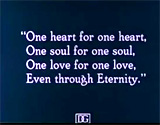
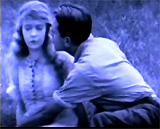
- they experienced an innocent love scene by the river
together, accompanied by the title card: "One heart for one
heart, One soul for one soul, One love for one love, Even through
Eternity"
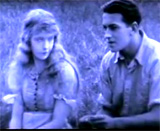
- Anna was reluctant to fall in love with David when reminded of
the "stark ghosts of her past" - she sadly could not allow
him to say such things (he told her he loved her), feeling unworthy
of him due to her checkered past: "So she tells him he must
never speak like this again"
|
|
|
|
Anna Reluctant to Fall In Love With David, Who
Loved Her
|
- in town, Anna's former landlady Maria Poole from
Belden recognized the wayward girl, and then whispered the evil
story of Anna's past life to Martha Perkins, the town's gossip;
meanwhile, the dastardly Sanderson again became worried about Anna's
presence, and demanded that she leave: ("Suppose they find
out about your past life? You'd have to get out then!");
Anna reminded him of the double-standard: "Suppose they find
out about YOUR past life!"; Sanderson was uncaring: "Oh,
it's different with a MAN! He's supposed to sow his wild oats"
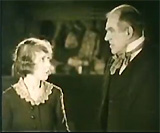
- the news of Anna's past reached the Bartlett family;
at the same time, David confessed his love to her: ("I love
you! I want you to be my wife"); shamed by her past, Anna
told David: "I can never be ANY MAN'S WIFE!"; when the
scandalous tale of Anna's unwed pregnancy and baby was confirmed,
she was condemned as a fallen woman by David's prudish, self-righteous
father, Squire Bartlett (Burr McIntosh)
|
|
|
|
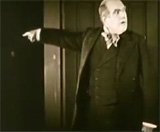
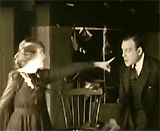
Anna's Casting Out Into the Blizzard by Squire
Bartlett, But Not Before She Denounced Sanderson as a Scoundrel
|
- during a classic casting-out scene, Anna was thrown
out of the house by Squire Bartlett: ("She ain't fit to be
here! She's the mother of a baby - but she ain't got - NO HUSBAND!");
David was incensed and crazed by the incomprehensible accusation,
but Anna confirmed that it was true, but then denounced Sanderson
before leaving: ("You found out so much! Why didn't you find
out the whole truth? That I was an ignorant girl betrayed through
a mock marriage. (Pointing at Sanderson) This man - an honored
guest at your table - why don't you find out what HIS life has
been? For HE is the man who betrayed me!")
- in the final sequence, Anna departed and entered
into a fierce, freezing snowstorm-blizzard; the finale was Anna's
daring, last-minute rescue by David from floating ice floes that
were perilously close to a precipitous waterfall; he nimbly jumped
from ice block to ice block to try to reach her before the ice
jam gave way - rushing to the falls. As Anna regained
consciousness after falling exhausted, she started to sink into the
frigid water at the edge of the falls;
David scooped her up and saved her, running perilously upstream
on unstable blocks of ice to reach the shore
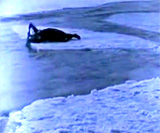
Anna Lying On a Floating Block of Ice
|
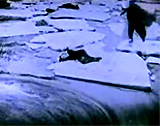
Anna Saved by David By Scooping Her Up
|
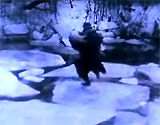
Anna Carried to the Shore
|
- David warmed Anna in a nearby sugar shack, and soon
after when the family gathered together, the Squire asked forgiveness
and Anna obliged; Anna rejected Sanderson's conciliatory offer
of marriage, while David claimed Anna as his bride and they were
married with others in a triple wedding ceremony as the film concluded
|
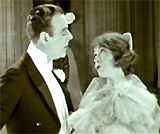
'Playboy' Sanderson Flattering Innocent Young Anna's Beauty
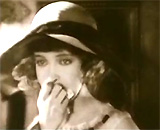
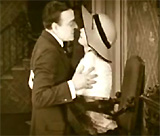
Anna's Flustered Reaction to Sanderson's Marriage Proposal
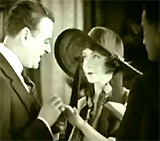
Sham Marriage Ceremony
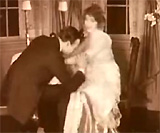
Honeymoon at Rose Tree Inn - and Anna's Despoilment
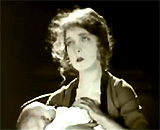
Anna With Her Illegitimate, Newborn (and Sick) Baby
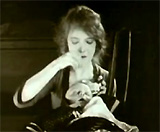
Performing the Sacred Rite of Baptism With Her Baby
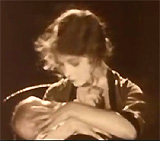
The Baby's Death in Her Arms
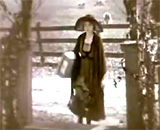
Looking for Work at the Bartlett Farm
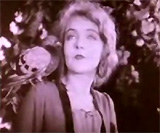
Anna At the Farm
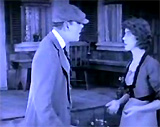
Anna Shocked to See Sanderson
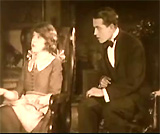
David's Confession of Love to Anna
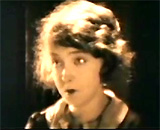
Anna's Response to David: "I can never be ANY MAN'S WIFE!"
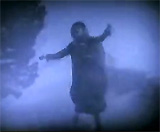
Anna Cast Out into a Blizzard
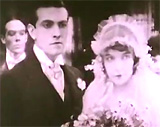
Anna's and David's Marriage in the Film's Ending
|
|
The Way We Were (1973)
#28
#64
- the film's highlight was the on-and-off, star-crossed
romance-marriage-divorce between two radical opposites over a lengthy
period of time: a liberated, Jewish political activist and pacifist
Kate Morosky (Barbra Streisand) and handsome WASP writer Hubbell
Gardner (Robert Redford); they were associated with each other
from their college days in the 30s, through the war years of WWII,
to the post-war period and McCarthy-era 1950s, during which time
they were married and divorced
- in the tearjerking final scene, they met
accidentally in New York as she was handing out "Ban the
Bomb" leaflets,
to the strains of Streisand's performance of the title song: (Oscar-winning
music from Marvin Hamlisch - "Mem’ries, Like the Corners
of my Mind / Misty Water-Colored Memories of The Way We Were"),
when she characteristically brushed the hair back on his brow
|
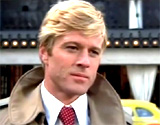
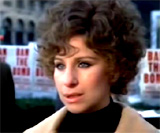
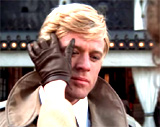
Kate Brushing Back Hubbell's Hair
|

|
West Side Story (1961)
#31
- the opening prologue featured breathtaking aerial
shots of Manhattan from a bird's eye view that captured the city
with its bridge traffic and highway ramps, its waterfront docks,
parks and skyscrapers; the camera passed over recognizable landmarks
as it moved steadily to the Upper West Side of Manhattan, and then
speedily zoomed down and plunged into a concrete playground
- the remarkably energetic Jerome Robbins' choreography
(filmed in New York's Hell's Kitchen district) was especially evident
in the opening balletic sequence; the 'cool' white, second-generation
American teenaged Jets led by finger-clicking, brown-haired Riff
(Russ Tamblyn), were poised in a rivalry with the new immigrant Puerto
Rican Sharks led by black-haired, darker-skinned Bernardo (George
Chakiris); the Caucasian gang performed the highly-stylized dance-song "The
Jet Song" ("When you're a Jet, you're a Jet all the way...")
with daring, high-stepping moves to demonstrate that they owned the
turf and the streets; shortly later, there was a challenge by the
Jets against the Sharks to a decisive "winner take all" rumble
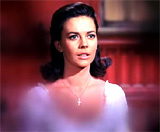
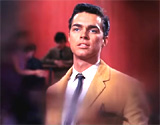
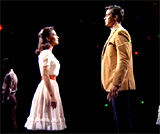
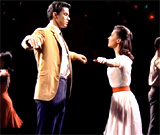
- a dance at the gymnasium marked the first meeting
of star-crossed lovers Maria (Natalie Wood) and Tony (Richard Beymer);
it was obvious that they were entranced with each other and it was
'love at first sight,' although they were from the opposing, warring
factions
|
Maria and Tony Meeting at Gymnasium - Love at First
Sight
|
|
|
|
|
- in the conclusion of the gymnasium sequence, Tony
subsequently sang the lyrical love song "Maria" - about
his newfound love, as he walked from the dance in a love-sick daze
and the settings changed behind and around him
- with the entire Puerto Rican
cast on the rooftop, hot-blooded Anita (Oscar-winning Rita Moreno)
sang and danced (with passionate skirt-tossing and with biting wit
and humor), about her love for her new homeland in the rousing, lively
and aggressive "America" - she viewed the 'land of the
free' both a land of opportunity and enmity for new immigrants:the
scene of Anita's passionate skirt-tossing dance with other Puerto
Ricans on the rooftop in the singing of "America"
- that same evening, Tony visited
with Maria on the tenement fire escape outside her bedroom - the Romeo
and Juliet balcony scene; they embraced, sang to each other,
and joined in unison to express their love to each other with the
love duet "Tonight"; after the song, they decided to see
each other the next day after Maria's work in Madame Lucia's Bridal
Shop across the street from her home
- the next bowdlerized song featured the biting satire
of "Gee Officer Krupke" that mocked the police and blamed
multiple sources for the causes of juvenile delinquency among youth
- in the bridal shop the following
day, Maria modeled fancy hats, coyly agreeing that she was "crazy" in
love, "looks somehow different," and "is up to something." She
told her gossipy Puerto Rican girlfriends "what is going on" by
singing
"I Feel Pretty": "I feel pretty,
oh so pretty, I feel pretty and witty and gay, And I pity, any girl
who isn't me today I feel charming, oh so charming, it's alarming how
charming I feel And so pretty, that I hardly can believe I'm real See
the pretty girl in that mirror there? Who can that attractive girl
be? Such a pretty face, such a pretty dress, such a pretty smile, such
a pretty me!..."
- Tony arrived in the bridal shop to see Maria after
hours, knowing that they were defying loyalties and breaking the
rules of their respective societies; the couple sensitively exchanged love
vows during a make-believe wedding between them in
"One Hand, One Heart"; they playfully pantomimed their
engagement and wedding with mannequins that represented the in-laws
and other members of their families; with a bridal veil on her head,
and a black top hat on his head, they walked down an imaginary aisle
in the store and enacted their wedding. As a couple, they kneeled
and exchanged marital vows
- in an action-oriented rumble/dance sequence, the Sharks
and Jets moved toward their eventual confrontation at the rumble,
sung by all gang members; they met face-to-face under a highway,
where the conflict escalated to deadly proportions when switchblades
were pulled out; Sharks leader Bernardo accidentally killed Riff
with a single plunge of the knife to his mid-section. As he fell,
Riff passed his switchblade to Tony. In retaliation to counter Riff's
death, Tony vengefully and passionately stabbed and killed Bernardo
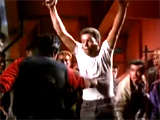
Riff Stabbed in Mid-Section by Bernardo
|
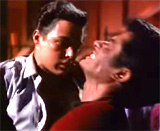
Bernardo Stabbed by Tony
|
- Maria was dismayed when she heard news of a fight
and was stunned to learn of her brother's death,
and numbed by the tragic turn of events; she couldn't believe that
her boyfriend had killed her own brother. She prayed in her bedroom
before the Virgin Mary: "Make it not be true!...I will do anything.
Make me die"
- Tony arrived and Maria forgave him and vowed to steadfastly
stand by him: "Stay with me. Don't leave me...Hold me...Tighter." Tony
remained blinded and rebelliously-indifferent to their plight, believing
and hoping that there was still "Somewhere" they could
run away to and find peace together for their forbidden love; the
two sang "Somewhere" together
- in the film's untimely twist of fate, Anita's message
of reconciliation between the two lovers failed to get through, and
then spitefully, she lied and claimed that Maria's ex-boyfriend Chino
(Jose de Vega) had killed Maria in anger; when Tony heard the rumor,
not wanting to live without Maria, Tony came out of hiding to challenge
Chino
- in the shocking ending, Tony raced through the streets
crying out for Chino to kill him: "Come on Chino, get me too...There's
nobody here but me...I'm waitin' for ya." Tony learned the truth
that Maria was alive too late - dressed in red, she was on the other
side of the chain-fenced playground. She rushed joyfully toward him
to embrace him, but he had already been spotted by Chino. Just before
they reached each other's arms in a tiny spot of light (and in the
only area of dry pavement) on the playground, he was shot by Chino
as revenge for Bernardo's death (and as retribution for being thwarted
in his love for Maria)
- in the melodramatic finale, the anguished and grieving
Maria held the dying Tony in her arms and knelt
by his side (and sang a reprise of Somewhere:
"Hold my hand and I'll take you there"); then, she ranted
at gang members - accusing all of them for being responsible for
Tony's senseless death, and lecturing them at how hate breeds more
hate, as she wielded Chino's murder weapon: ("...You all killed
him!...Not with bullets and guns! With HATE! Well, I can kill too,
because now I have hate!")
- she fell to her knees, weeping,
and then tenderly kissed the lips of Tony one last time and expressed
her love for him in Spanish: "Te adoro, Anton."
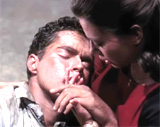
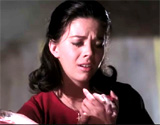
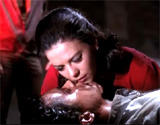
|
|
|
|
Tony Dying in Maria's Arms: "Te adoro, Anton"
|
- the two gangs, confused, stunned, ashamed and sobered
by the unnecessary triple killings, finally put aside their enmity.
As some of the Jets struggled to bear Tony's body away, a few of
the Sharks assisted them. Together, they solemnly carried Tony's
body down the street, with Maria following. For once, the opposing
groups were united and reconciled - by the heart-breaking tragedy
|
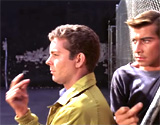
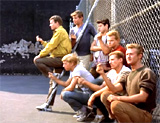
Riff with Jets
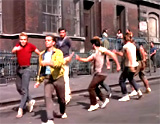
Energetic Choreography of the Jets
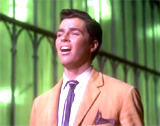
Tony Singing "Maria" on His Way Home From Dance
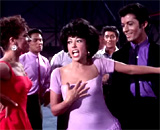
Anita (Rita Moreno) Singing "America" on the
Rooftop with the Sharks
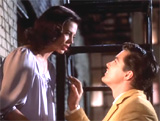
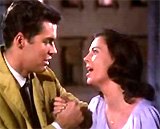
Tenement Fire Escape Scene of "Tonight"
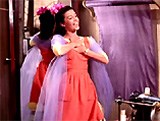
Maria Singing "I Feel Pretty" in Bridal Shop
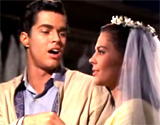
Make Believe Wedding: "One Hand, One Heart"
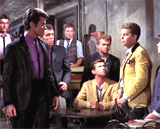
Earlier, Two Gangs Agreed on a Rumble Between Riff and Bernardo
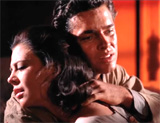
Tony and Maria Singing "Somewhere"
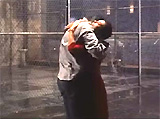
Tony Shot by Chino As He Embraced Maria on Playground
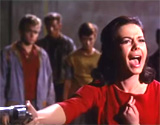
Maria With Gun: "Now I have hate!"
|

|
Whale Rider (2002, NZ)
#66
- in the opening scene of this film, a crisis of leadership
in a small Maori village was described (in a voice-over) by
a young 12 year-old Maori girl Paikea or "Pai" (Keisha Castle-Hughes);
she told about how the leadership of the Ngati Konohi was called into
question when at birth, she had survived while her twin
brother died - and her grandfather Koro (Rawiri Paratene) refused to
acknowledge her destiny as a female leader - as a descendant of Paikea,
a whale rider: "In the old days, the land felt a great emptiness.
It was waiting. Waiting to be filled up. Waiting for someone to love
it. Waiting for a leader. (childbirth sequence) And he came on the
back of a whale. A man to lead a new people. Our ancestor, Paikea.
But now we were waiting for the firstborn of the new generation, for
the descendant of the whale rider. For the boy who would be chief.
There was no gladness when I was born. My twin brother died, and took
our mother with him"
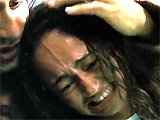
|
|
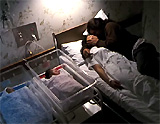
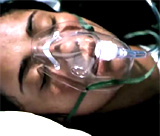
|
|
Opening Sequence: Paikea's Mother Giving Birth (Losing
Male Child and Her Own Life)
|
- the foreshadowing scene in which a confident Paikea
dove into the deep ocean water and retrieved the rei puta (whale
tooth) that Koro had deposited into the sea; according to traditional
legend, the one who was successful in that task was rightfully worthy
of becoming the leader
|
|
|
Paikea's School
Speech Scene
|
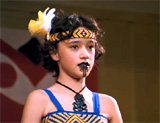
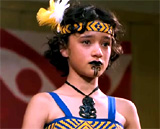
- the scene in which
Paikea
gave a speech during a school's evening program of Maori chants; she
spoke about her ancestors, holding back tears and profoundly disappointed
as she delivered it because her grandfather - Maori chief Koro, who
she had invited as the guest of honor, was shunning her and was not
in attendance: "This speech is a token of my deep love and respect
- for Koro Apirana, my grandfather. My name is Paikea Apirana. (pause)
And I come from a long line of chiefs, stretching all the way back
to Hawaiiki where our ancient ones are, the ones that first heard
the land crying and sent a man. His name was also Paikea and I am
his mo-most recent descendant. But I was not the leader my grandfather
was expecting, and by being born, I broke the line back to the ancient
ones. It wasn't anybody's fault. It just happened. (Cutaway to Koro
discovering beached whales, and asking himself: "Who is to blame?")
But we can learn. And if the knowledge is given to everyone, we can
have lots of leaders. And soon, everyone will be strong - not just
the ones that've been chosen. Because sometimes, even if you're the
leader and you need to be strong, you can get tired. Like our ancestor,
Paikea, when he was lost at sea, and he couldn't find the land, and
he probably wanted to die. But he knew the ancient ones were there
for him, so he called out to them to lift him up and give him strength.
This is his chant. I dedicate it to my grandfather"
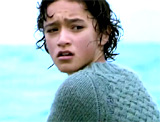
- the mass beaching
of whales and the desperate and valiant attempts by the Maori tribe
members to keep them alive
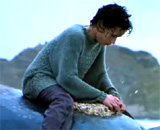
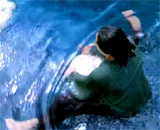
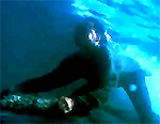
- and the mystical scene in which Paikea climbed up
on and literally rode the back of the largest beached whale out
to sea, having coaxed it and restored its will to live so it could
unbeach itself: (she courageously said: "I
wasn't afraid to die"); she saved the whales when the massive
whale led the entire pod back to the sea - but also dragged Paikea
underwater - and she was feared drowned by her family
|
|
|
|
|
Paikea Sitting Astride The Largest Beached Whale and
Riding It Out to Sea
|
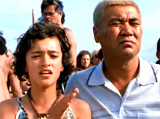
- the scene of Koro's acceptance of Paikea as
a new Maori chief or leader as she lay unconscious in a hospital bed
- he asked for her forgiveness: "Wise leader, forgive
me. I am just a fledgling new to flight"; she briefly opened her
eyes to acknowledge him
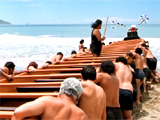
- the
final shot of grandfather, uncle, father and granddaughter together
at sea on the maiden voyage of their Maori long canoe (waka), as
Paikea led the chant while wearing Koro's whale tooth necklace
|
Film's Conclusion: Maiden Voyage of Long Canoe
|
|
|

|

|
|
Paikea Leading the Chant - With Her Grandfather
by Her Side
|
- the last lines of dialogue (in voice-over): "My name
is Paikea Apirana, and I come from a long line of chiefs stretching
all the way back to the whale rider. I'm not a prophet, but I know
that our people will keep going forward, all together, with all of
our strength" - similar to the words that Paikea had spoken in her
school speech
|
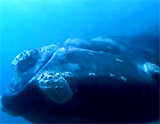
Maori's Whale Ancestor
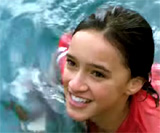

Paikea Emerging From Water With the Whale Tooth (and a Lobster)
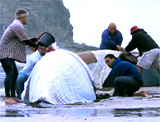
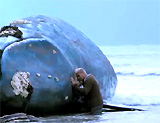
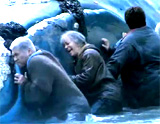

Valiant Maori Tribal Efforts to Save Beached Whales
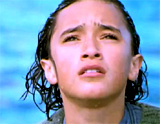
Paikea: "I wasn't afraid to die"
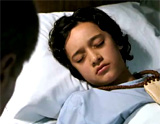
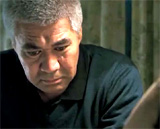
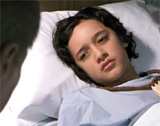
Paikea's Grandfather at Her Bedside
|
|
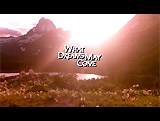
What Dreams May Come (1998)
- the opening scene of vacationing pediatrician Dr.
Chris Nielsen (Robin Williams) meeting and falling in love at first
sight with future wife Annie Collins (Annabella Sciorra) in Italy
where they shared a picnic together: ("When
I was young, I met this beautiful girl by a lake")
- the tragic early scene in which
Chris and artist wife Annie lost their two
children Marie (Jessica Brooks Grant) and Ian (Josh Paddock) in an
off-screen car crash, with his melancholy voice-over narration: ("It
was the last time Annie and I saw them alive")
- later, Chris experienced a flashback to
his son Ian's funeral and his own moving and emotional eulogy delivered
for him: "There's a man Ian never got to know - the man he was
growing up to be. He's a good-looking, clear-eyed young fella, about
25. I can see him. He's the type of guy that men want to be around,
because he has integrity, you know? He has character. You can't fake
that. He's a guy women want to be around, too, because there's tenderness
in him, respect, loyalty, and courage. And women respond to that.
Makes him a terrific husband, this guy. I see him as a father.
That's where he really shines. See, when he looks in his kid's
eyes and that kid knows that his dad really sees him, he sees who
he is. Then that child knows that he is an amazing person. He's
quite a guy that I'll never get to meet. I wish I had." -
there was shot of his son Ian inside his coffin
- and then four years
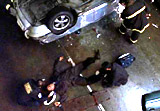
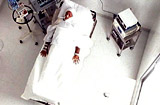
later, the scene in which Chris died in a multi-car crash in a tunnel;
he had safely stopped his own vehicle, and rushed
ahead on foot to find cars ahead of him turned upside down. When he
was asking questions of a survivor needing help, he was smashed into
by a white automobile catapulting toward him, before the screen turned
black; now, he was also deceased and in the afterlife but lingering
on Earth
|
The Instant After Chris' Death in a Tunnel
|

|
|
|
|
-
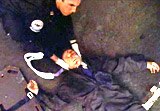
the next shot was "the mythical
light" at
the end of the tunnel, and then a top-shot as Chris' body was
placed on a stretcher by ambulance paramedics. A voice asked: "Chris,
do you know what's happened?" He replied, jokingly: "Yeah,
I had a bad piece of fish before bed"; the
screen turned to a blinding white light - as he lingered on Earth
in a hospital bed. Although Chris didn't want to accept it and thought
he was dreaming, he had died and couldn't be seen by his family members,
relatives, and friends at his home, who were mourning his passing.
His blurry mentor-spiritual guide Albert Lewis (Cuba Gooding, Jr.)
told him: "You've
died, Chris."
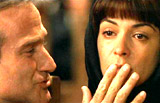
- Chris attended his own funeral
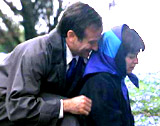
and comforted his still-living wife Annie; he attempted to force
despondent Annie to acknowledge his continued existence (after whispering
in her ear: "This
is Chris. I still exist," he made her scrawl the words: "ISTILEXST"
in her diary, and
then later tried to contact her at his gravesite: "Don't worry,
baby, I'm not leaving you alone. I'm not goin' anywhere") --
and her violent sobbing reactions, forcing Chris to reluctantly leave
her and Earth and journey to the afterworld to prevent any more
harm: (Albert: "The reality is it's over when you stop wanting
to hurt her")
Chris Attending His Own Funeral
|

Scrawled Words In Her Diary: "ISTILEXST"
|
Attempting to Comfort Annie
|
- the scenes of an Expressionist painting world in
Chris' imagined heaven (using surreal Oscar-winning CGI effects)
were modeled after Annie's paintings; Chris' concept of the great
afterworld was manifested in his wife's art; there were very imaginative
vistas and scenarios of Heaven: (Chris noted: "Nice place you
got here") and an imprisoning dark Hell; Albert told him: "You're
making all of this. See, we're all pretty insecure at first, so we
see ourselves somewhere safe, comforting. We all paint our own surroundings,
Chris, but you're the first guy I know to use real paint"
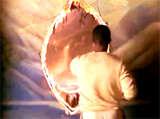
- his mentor-guide Albert also told Chris: "We're
seeing what we choose to see" and helped him create a "real" afterlife
by carving a hole in his dreamhouse's wall to see out ("This
is your world now. Thought is real. Physical is the illusion. Ironic,
huh?")
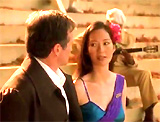
- a second guide then accompanied Chris named Leona
(Rosalind Chao), a stewardess whom Chris once admired in the presence
of his daughter Marie - and Leona came to represent her
- despairing Annie (his "soul-mate"
- "sort of like twin souls tuned into each other") committed
suicide due to overwhelming grief and devastation, foreshadowed by
the death of her purple-flowered tree in the 'heavenly' painting, and
because she had killed herself, she journeyed to her afterlife in Hell:
("You never see her. She's a suicide. Suicides go somewhere else...The
real Hell is your life gone wrong")
- Chris risked taking a journey from Heaven to Hell
in the afterlife to rescue his beautiful wife Annie's soul; he
made a desperate quest to bring her back - to rescue her tortured and
lost soul from the torment with the help of the dark-cloaked Tracker
(Max von Sydow), and the view of a vast and dark Hell (Tracker: "In
Hell, there's real danger from losing your mind"); he encountered the
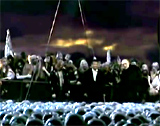
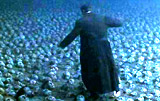
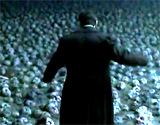
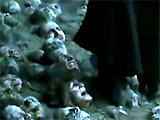
Sea of Faces where dozens of pale and tortured souls were buried up
to their necks in sand
|
The Vision of Hell - The Sea of Faces
|
|
|
|
|
- when Chris discovered the location
of Annie in Hell, he delivered a sentimental apology to her for all
the things he couldn't give her: ("I'm sorry, babe, but
there's some things I have to say. I've only got a few moments left.
I'm sorry for all the things I'll never give you. I'll never buy
you another meatball sub with extra sauce -- that was a big one!
I'll never make you smile. I just wanted us to be old together, just
two old farts laughin' at each other as our bodies fell apart, together
at the end by that lake in your painting. That was our Heaven, see?
There's lots of things to miss: books, naps, kisses, and fights!
God, we had some great ones. Thank you for those. Thank you for every
kindness. Thank you for our children. For the first time I saw them.
Thank you for being someone I was always proud to be with. For your
guts. For your sweetness. For how you always looked, for how I always
wanted to touch you. You were my life. I apologize for every time
I failed you. Especially this one.")
|
Annie's Suicidal Death and Hell
|

Annie's Suicide
|
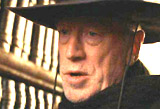
The Dark-Cloaked Tracker (Max von Sydow)
|
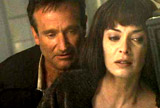
Chris' Apology to Annie in Hell
|
- he decided to share his wife's
insanity rather than abandon her in Hell (she had earlier told him: "Sometimes,
when you lose, you win")
- due to Chris' self-sacrifice, he was reunited
with wife
Annie and their dead children in his heavenly afterlife during the
tear-jerking 'feel-good' Hollywood finale: ("Travel
here is like everything else, it's in your mind. All you have to
do is close your eyes if you know where you're going. Looks like
we did")
- she
vowed to Chris: ("I want us to grow old together. Can we do that
here? I want it all. As long as it's with you"), and they experienced
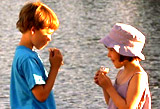
a spiritual reawakening or reincarnation in the bodies of two young
children by a lake: ("When
I was young, I met this beautiful girl by a lake") - similar to
their first meeting in Italy
|

Dr. Chris Nielsen's Future Wife Annie (Annabella Sciorra)

Waving Goodbye Before Car Crash
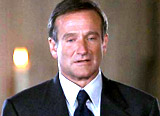
Chris' Eulogy For His Dead Son Ian
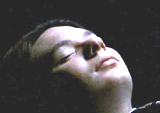
Son Ian Inside Coffin
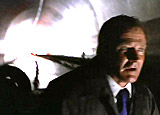
Chris' Own Death 4 Years Later in Tunnel




In Chris' Imagined Heaven
Chris' Spiritual Guide Albert Lewis (Cuba Gooding,
Jr.)

Hole in His Dreamhouse's Wall
Chris' Second Guide Leona (Rosalind Chao)

"When I was young, I met this young girl by a
lake"
Spiritual Awakening or Reincarnation as Two Small
Children
|
|
When Harry Met Sally... (1989)
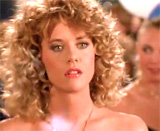
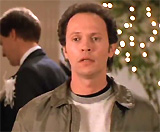
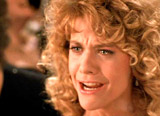
- in the crowd-pleasing, tearjerking finale between
Harry Burns (Billy Crystal) and Sally Albright (Meg Ryan), Harry
delivered an at-long-last "Why I Love You" speech to Sally at
a New Year's Eve party in the film's conclusion, just after the stroke
of midnight: "How about this way? I love that you get cold when it's
seventy-one degrees out. I love that it takes you an hour and a half
to order a sandwich. I love that you get a little crinkle above your
nose when you're lookin' at me like I'm nuts. I love that after I
spend the day with you, I can still smell your perfume on my clothes.
And I love that you are the last person I want to talk to before
I go to sleep at night. And it's not because I'm lonely. And it's
not because it's New Year's Eve. I came here tonight because when
you realize you want to spend the rest of your life with somebody,
you want the rest of your life to start as soon as possible"
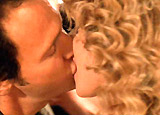
- Sally reacted with a moving mixture
of frustration, longing, loving, wariness and desperation, feeling
manipulated, but she also was gradually melting to him; she responded,
after which they passionately kissed: ("You
see. That is just like you, Harry. You say things like that, and
you make it impossible for me to hate you, and I hate you, Harry.
I really hate you. I hate you"); they had finally conquered their doubts over the budding romance born of an
initially platonic friendship years earlier
|
|
|
Harry Confronting Sally at a New Year's Eve Party
|
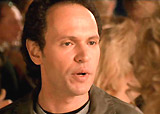
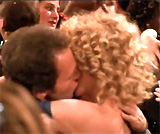
- after discussing the meaning of the song Auld Lang
Syne, they kissed again as the camera pulled up and away from
them, showing them engulfed by others on the dance floor as the
film concluded
|

|

|
White Christmas (1954)
- the concluding scene of a holiday show-benefit prepared
on Christmas Eve at the Columbia Inn in Pine Tree, Vermont, to respected,
popular and now-retired Major General Thomas F. Waverly (Dean Jagger)
- the financially-struggling innkeeper and landlord
- the retired General was tricked into reluctantly wearing
his old uniform to the opening of the show held in the lodge's ballroom;
he was completely surprised when he entered and was greeted
by a standing round-of-applause from veteran soldiers from his former
division (his entire 151st division), and a 10th Anniversary Cake
- he stood amazed as the on-stage show began - he listened
as they sang a chorus of the Irving Berlin tribute song, "The Old
Man"; tears formed in his eyes
- after the song was performed, ending with two rows
of soldiers forming a path to the stage, Waverly walked between the
two rows in a mock inspection, when he firmly stated: "I am not satisfied
with the conduct of this division. Some of you men are under the
impression having been at Anzio entitles you not to wear neckties.
Well, you're wrong. Neckties will be worn in this area! And look
at the rest of your appearance. You're a disgrace to the outfit.
You're soft! You're sloppy! You're unruly! You're undisciplined!"
- and then he disclosed his real feelings: "And I never saw anything
look so wonderful in my whole life! Thank you all"
|
Stage Show Performance of "The
Old Man" for General Waverly
|
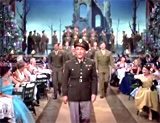
|
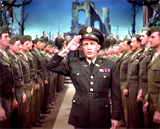
|
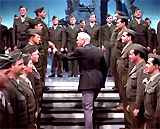
"You're a Disgrace to the Outfit!"
|
|
Capt. Bob Wallace (Bing Crosby) Leading Song
|
- he also listened as they performed the number: "Gee!
I Wish I Was Back in the Army," performed by Private Phil Davis (Danny
Kaye) and Capt. Bob Wallace (Bing Crosby): ("A soldier out of luck
/ Was really never stuck / There's always someone higher up where
you can pass the buck / Oh, gee, I wish I was back in the army");
they were joined by the sister singing act, Betty Haynes (Rosemary
Clooney) and Judy Haynes (Vera-Ellen), who sang: ("The Army was the
place to find romance / Soldiers and WACs / The WACs who dressed
in slacks / Dancing cheek-to-cheek and pants-to-pants")
- to top off the evening, the General was notified that
snow had begun to fall - it would be a perfect Christmas
- the film's finale was a declaration of love between
Bob and Betty, and Phil and Judy, wearing Santa Claus costumes for
the singing of "White Christmas"
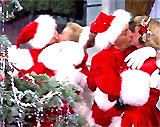
Bob With Betty, Phil with Judy
|
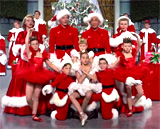
"White Christmas" (reprised)
|
|
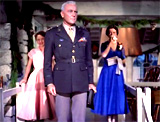
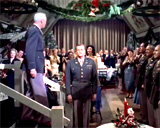
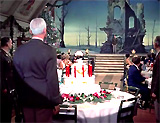
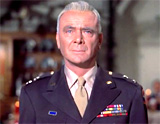
Surprise Stage Show-Benefit For Gen. Waverly in His Lodge
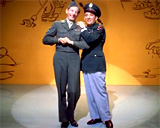
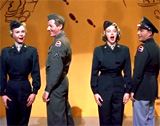
"Gee! I Wish I Was Back In the Army"
|
|
Who's Afraid of Virginia Woolf? (1966)
- Martha (Elizabeth Taylor) gave an anguished
reaction to the "death" of her fictional son ("NOOOOOOoooooooo!")
and her plaintive, accusatory words to husband George (Richard Burton):
("There
was no need. There was no need for this!...You didn't have to kill him!")
- the long, monosyllabic exchange between the two
after their late-night guests Nick (George Segal) and Honey (Sandy
Dennis) had left their company: (..."It was time." "Was
it?" "Yes."
"I'm cold." "It's late."...)
- in the closing of the film, Martha's admission
when George sang "Who's afraid of Virginia Woolf?" -- "I
am, George...I am"
|
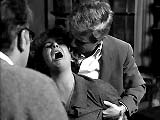
Martha's Reaction to News of the "Death" Of
Their Fictional Son
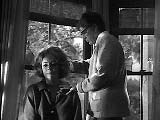
Martha: "I am, George...I am"
|

|
The Wizard of Oz (1939)
#35
- the quintessential scene of lonely Kansas teenaged
farm girl Dorothy Gale's (Judy Garland) singing of the melancholy
"Somewhere Over the Rainbow" (the Best Original Song Oscar
winner)
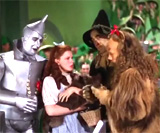
- when Dorothy, the Tin Woodsman (Jack Haley), the Scarecrow
(Ray Bolger), and the Cowardly Lion (Bert Lahr) were at the evil
Witch's (Margaret Hamilton) mercy - her plan was to do away with
each of them: "WELL -
the last to go will see the first three go before her - and her mangy
little dog too." First, the Witch set
the Scarecrow's straw arm on fire by jabbing it with the lighted
end of her broomstick: "How
about a little fire, Scarecrow?" Dorothy tossed a nearby bucket
of water on his arm to extinguish the flame, also accidentally
splashing and drenching the Witch's face
- the Witch
shrieked piteously in horror, her cries trailing off as she slowly
dissolved, twisted, and melted in a memorable death scene. Her "wickedness" was
reduced to a puddle of vaporous clothing in front of everyone by
the application of a simple substance - water: "Oh!
You cursed brat. Look what you've done. I'm melting! Melting! Oh, what
a world! What a world! Who would have thought a good little girl like
you could destroy my beautiful wickedness. Oh, I'm gone, I'm gone,
I'm going. Oh. Oh."
|
|
|
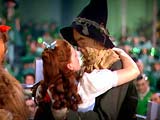
Dorothy's Goodbye to Her Friends in
the Land of Oz
|
- Dorothy bid farewell to all of her newfound friends
in the Land of Oz: especially a sad goodbye with the Tin Woodsman:
("Now I
know I've got a heart, because it's breaking") and with the
Scarecrow - highlighted by her final hugs and kisses
reserved for him and her whispered sentiment:
("I think I'll miss you most of all")
- the closing scene when Dorothy awakened from her
fantastic dream in her own bedroom (where she was surrounded by family
and friends) - she denied that she was only dreaming her adventures
in the Land of Oz, and repeatedly exclaimed: "There's no place
like home"
|
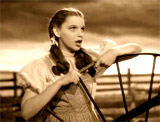
Dorothy: "Somewhere Over the Rainbow"
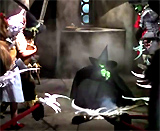
Witch's Demise: "I'm melting, melting!"
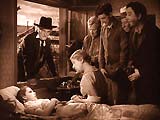
Back at Home: "There's no place like home"
|
|
Wuthering Heights (1939)
- the opening scene in director William Wyler's melodramatic
romance - a brooding screen adaptation of Emily Bronte's 1847
romantic Victorian novel about a haunted love story and doomed lovers
with inseparable spirits, set on the windy Yorkshire moors of pre-Victorian
England
- a solitary traveler, known as Mr. Lockwood (Miles
Mander), staggered through a raging blizzard, a bitterly-cold snowy
night on the Yorkshire moors, to find refuge at the estate of Wuthering
Heights; he was given lodging by the landlord Heathcliff (Laurence
Olivier) (the master of the house) and his wife Isabella (Geraldine
Fitzgerald)
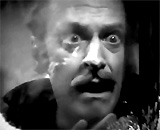
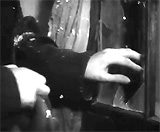
- in an upstairs "bridal chamber" guest room,
Lockwood called out to Heathcliff that he had heard a "phantom"
woman calling out named Cathy, and felt someone clutch his hand in
an icy cold grasp at the window
|
|
Heathcliff Calling Out For Cathy
|
|
Mr. Lockwood At the Window - Hearing Cathy Calling
and Feeling Her Cold Hand
|
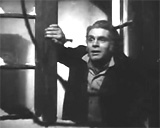
- after throwing Lockwood out of the room, Heathcliff
flung open the window, and cried out for his long-lost love: "Cathy,
Cathy, come in, Cathy come back to me...Oh my heart's darling. Cathy.
My own, my, Cathy"; half-mad, Heathcliff ran downstairs and
rushed out into the raging snowstorm [Note: The film concluded when
he was reunited to the ghost of his Cathy, who had come back to Wuthering
Heights and was calling his name from the snowy moors.]
- the remainder of the film was a flashback - Heathcliff's
housekeeper Ellen Dean (Flora Robson) told about the tragic love
between Heathcliff and Cathy Earnshaw (Merle Oberon) ("a girl
who died") forty years earlier, and that they were being brought
together: "Maybe you'd know, as I do, that there is a force
that brings them back, if their hearts were wild enough in life"
- orphaned, dirty-faced gypsy Heathcliff (Rex Downing
as child) was adopted by widower Mr. Earnshaw (Cecil Kellaway) on
the streets of London and brought home to Wuthering Heights to live
with his two high-class, manor-born children: young daughter Catherine
or "Cathy" (Sarita Wooten as child) and his son Hindley
(Douglas Scott as child); although Heathcliff was the stable boy
and treated harshly by the tormenting and hateful Hindley (Hugh Williams
as adult), he fell in love with Cathy
- the romantic scenes of young Cathy and Heathcliff
in their make-believe castle on windy Peniston Crag on the atmospheric
moors where they imagined that he was a prince of noble birth, and
she was his queen; they professed their eternal love to each other;
when Mr. Earnshaw died, fortuned changed for Heathcliff; after many years,
Hindley had turned into a dissolute alcoholic, and continued to bully,
demean and order Heathcliff around, and to call him a "gypsy
beggar"
- on Peniston Crag, Cathy suggested to Heathcliff -
a foreshadowing: "Why aren't you a man? Heathcliff, why don't
you run away?...You could come back to me rich and take me away.
Why aren't you my prince like we said long ago? Why can't you rescue
me, Heathcliff?"
- one night with Heathcliff while eavesdropping on a
luxurious party held by their wealthy and glamorous neighbors the
Lintons, Cathy was injured by guard dogs, and was taken under their
care; as Heathcliff left her, he cursed the Lintons for their snobbery,
promising to repay them some day for taking Cathy away from him: "I'll
be back in this house one day, Judge Linton, and I'll pay you out.
I'll bring this house down in ruins about your heads. That's my curse
on you"
- meanwhile, Cathy fell under the seductive spell of
wealthy and glamour in their household and their refined neighbor
Edgar Linton (David Niven); but she was torn and did return to express
her love for Heathcliff when they retreated to their favorite Peniston
Crag make-believe locale; Heathcliff vowed: "Cathy. You're still
my queen"; in the flashback, Ellen described the situation,
in voice-over: "And as time went by, Cathy again was torn between
her wild, uncontrollable passion for Heathcliff and the new life
she had found at the Grange that she could not forget"
- Cathy's love for Heathcliff was eventually thwarted
when he denounced Linton: ("Who turns you into a vain, cheap,
worldly fool? Linton does"); and then Cathy denounced Heathcliff
for his lowly status: ("The people's servant were all you were
born to be, a beggar in the center of the road, begging for favors");
they violently quarreled and Heathcliff struck her twice across the
face: ("That's all I've become to you. A pair of dirty hands.
Well, have them then!")
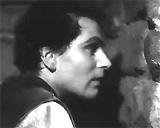
- in a key scene, Heathcliff overheard Cathy in the
kitchen, without her knowledge, telling Ellen that she was considering
Edgar's proposal of marriage and her insulting statement about Heathcliff
- that she wouldn't marry him because of his unsuitable low birth: "He
gets worse everyday. It would degrade me to marry him"
- in a rage, Heathcliff left before hearing Cathy's
confession that she wasn't made for Edgar's Heaven, and was more
suited for Heathcliff; she dramatically stated to Ellen her feelings
about him: "He seems to take pleasure in being mean and brutal.
And yet, he's more myself than I am. Whatever our souls are made
of, his and mine are the same. And Linton's is as different as frost
from fire...Ellen, I AM Heathcliff"
- when Cathy realized Heathcliff had been listening
to her initial words and then had fled, she raced in a driving rainstorm
to Peniston Crag to find him - and to tell him of her long-repressed
feelings and love, but Heathcliff had already disappeared; she collapsed
there and suffered from a bout of pneumonia
|
The Scene of Heathcliff's Departure After Eavesdropping
|
Heathcliff Listening
|
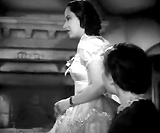
"Oh Heathcliff. He gets worse everyday"
|
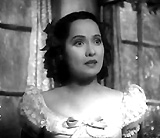
"Ellen, I am Heathcliff!"
|
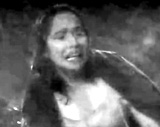
Cathy at Peniston Crag in Driving Rain Looking to Find Heathcliff
|
- as a result of Heathcliff's abandonment, Cathy soon
after married Edgar; Heathcliff had left for America, and then two
years later, he suddenly reappeared to see Cathy - he was transformed
into a worldly, refined, wealthy gentleman but also dark and troubled;
he spitefully claimed to Linton and Cathy: "The truth is, I
remembered that my father was an emperor of China and my mother was
an Indian queen, and I went out and claimed my inheritance. It all
turned out just as you once suspected, Cathy: that I had been kidnapped
by wicked sailors and brought to England - that I was of noble birth"
- he had secretly bought Wuthering Heights from Hindley,
to become the Lintons' neighbor; with the tables turned, Heathcliff
announced to Hindley: "I'm master here now"; to find his
revenge (or to incite Cathy's jealousy), he romanced Edgar's naive
sister Isabella Linton, while still expressing his love for Cathy,
but she refused to listen to him: ("I'm not the Cathy that was.
Can you understand that? I'm somebody else. I'm another man's wife
and he loves me. And I love him"); Cathy realized that Heathcliff's
plan was to vindictively and lovelessly marry Isabella and then neglect
and abandon her: "Don't you see what he's been doing? He's been
using you to be near me"
- it was soon proven that Cathy's prediction was correct,
and Isabella was treated coldly and indifferently by Heathcliff after
marriage; when Cathy became ill, Isabella speculated that Cathy's
death might help her own marriage and turn Heathcliff's love toward
her at last
- the long-hindered, passionate love affair of Cathy
and Heathcliff emerged in death; in a memorable, tragically-romantic
deathbed scene in Cathy's bedroom, Heathcliff was reunited with the
heartbroken and seriously-ill Cathy - she was possibly dying of a
broken heart and suffering from an incurable disease
- the two pledged their enduring,
undying love and became reconciled after so many years of mutual
unhappiness and bitterness. They passionately hugged and kissed each
other, finally revealing their truest emotions to each other. Heathcliff
argued as he stood up: "Oh Cathy, I never broke your heart.
You broke it! Cathy! Cathy! You loved me! What right to throw love
away for the poor fancy thing you felt for him, for a handful of
worthiness. Misery and death and all the evils that God and man could
have ever done would never have parted us. You'd be better alone.
You wandered off like a wanton, greedy child to break your heart
and mine." Cathy replied: "Heathcliff, forgive me. We've
so little time." He vowed to stay with his dying love as her
strength ebbed: "I'll never leave you again"
- he heard her claim that he was always the only man
she ever loved: "When you went away that night in the rain,
I told you I belonged to him, that he was my life, my being...It's
true. It's true. I'm yours, Heathcliff. I've never been anyone else's"
- she requested to be picked up: "Take me to the
window. Let me look at the moors with you once more, my darling.
Once more." He carried her in his arms to her bedroom window
for one last look out on the moors and Peniston Crag where they had
played together as children.
|
The Classic Deathbed Sequence
|
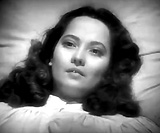
|
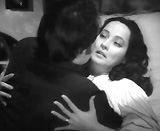
"Don't let me go"
|
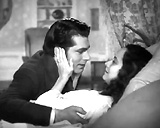
"Will you forget me when I'm in the earth?"
|
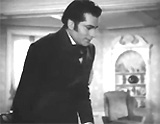
"Cathy! You loved me! What right to throw love away..."
|
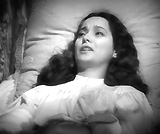
"Heathcliff, forgive me. We've so little time"
|
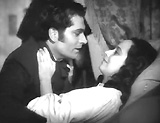
"I'll never leave you again"
|
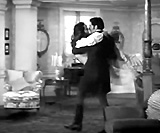
"Take me to the window."
|
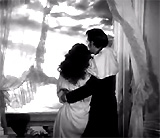
Looking Out the Window Together
|
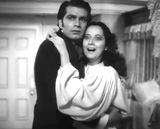
"How Beautiful It is"
|
- before slumping at his side
after breathing her last breath and dying in his arms, they made
a pact to be together for eternity. She promised to wait for him
there in death until they were reunited again one day: "Heathcliff,
can you see the Crag over there where our castle is? I'll wait for
you 'til you come."
- distraught by Cathy's death,
Heathcliff gave an impassioned plea to his deceased beloved to haunt
him for the rest of his days. He wished that he wouldn't have to
suffer a long separation: "What do they know of Heaven or Hell,
Cathy, who know nothing of life? Oh, they're praying for you, Cathy.
I'll pray one prayer with them - I repeat 'til my tongue stiffens
- Catherine Earnshaw, may you not rest so long as I live on! I killed
you. Haunt me, then! Haunt your murderer! I know that ghosts have
wandered on the Earth. Be with me always. Take any form, drive me
mad, only do not leave me in this dark alone where I cannot find
you. I cannot live without my life! I cannot die without my soul!" -
the flashback ended
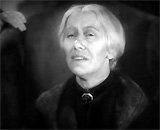
End of Flashback: Ellen's Final Words About Heathcliff and Cathy
|
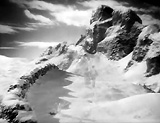
Last Image: Together Reunited on Peniston Crag
|
- it was claimed by the family physician, Dr. Kenneth
(Donald Crisp), who entered the room to find Ellen and Lockwood,
that after desperately searching for Cathy's ghost in the snowy cold
storm, he thought he saw Heathcliff walking with his arm around a
woman, but then he was found frozen to death. Ellen informed the
doctor that Heathcliff was not dead, but that his soul had joined
his love in death at their favorite place forevermore: (Ellen: "No,
not dead, Dr. Kenneth. And not alone. He's with her. They've only
just begun to live")
- in the final memorable image, the young, ghostly spirits
of Cathy and Heathcliff were re-united for eternity (super-imposed
as they walked over the snow) in death on the Peniston Crag moorlands,
where they had spent many happy hours together in their childhood
walking joyously across the heath.
|

Young Cathy (Sarita Wooten as child)
Young Heathcliff Tormented by Hindley
Cathy on the Moors With Young Heathcliff
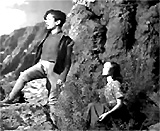
At Peniston Crag Together as Children
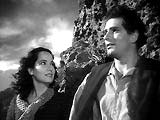
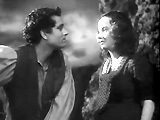
Years Later on Peniston Crag as Adults
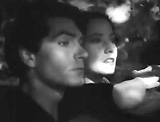
Eavesdropping on the Lintons
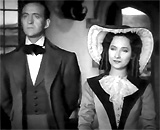
Cathy with Wealthy Fiancee Edgar Linton (David Niven)
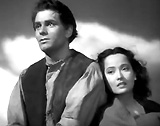
Love With Heathcliff Rekindled on Peniston Crag

Cathy Struck Twice Across the Face By Heathcliff
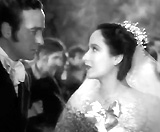
Cathy's Marriage to Edgar Linton
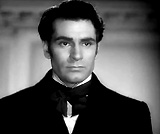
Heathcliff's Return to Wuthering Heights After Two Years
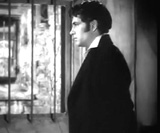
At Wuthering Heights to Hindley: "I'm master here now"
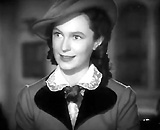
Cathy's Sister-in Law Isabella Hinton - Heathcliff's Future Wife
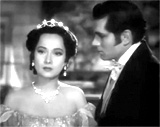
Now Married, Cathy Refused to Listen to Heathcliff's Confession of Love
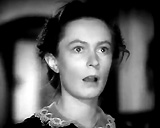
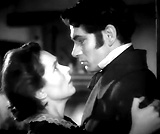
Heathcliff's Neglected and Abandoned Wife Isabella - Begged Heathcliff That
She Could Make Him Happy
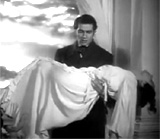
Cathy Dead in Heathcliff's Arms
Heathcliff's Final Vow and Prayer: "Haunt me, then!"
|