|
History of Sex in Cinema: 1930-1931 |

|
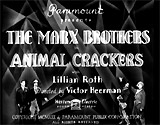
Animal Crackers (1930) In the second Marx Brothers effort Animal Crackers (1930), one of the original lines of the classic "Hooray for Captain Spaulding" song was censored and abruptly cut because of its sexual suggestiveness for the film's 1936 re-release, and is now only rarely heard:
During the house party for the guest of honor, the returning African explorer, the excised line came after Mrs. Rittenhouse's (Margaret Dumont) sung line:
In existing prints, the film jumped at that point where the censoring occurred. Capt. Geoffrey Spaulding also uttered the following veiled comment about the nudity of native girls in the Dark Continent of Africa:
|
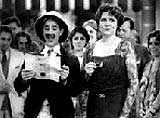 Geoffrey Spaulding (Groucho Marx) with Mrs. Rittenhouse (Margaret Dumont) |
|||||||||||||
|
Anna Christie (1930) Anna Christie (1930) was the MGM film in which cinema's greatest silent star - an asexual, supercool, 24 year-old Nordic beauty named Greta Garbo - first talked, as the film's title character. She coarsely delivered her line - to a bartender:
In Garbo's transitional role to the talkies, she played the role of a former prostitute (with a veiled reference to being "in the house") whose sordid past could possibly ruin her chances for happiness. |
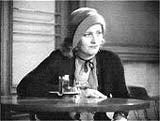 Anna (Greta Garbo): "Give me a whiskey..." |
|||||||||||||

|
The Blue Angel (1930, Ger.) (aka Der Blaue Engel) This unstrained first film by director Josef von Sternberg featured the legendary Marlene Dietrich in a star-making role - with a plot that would often be repeated in their collaborations. The film told about a meek and repressed teacher Professor Immanuel Rath (Emil Jannings) who was tempted, seduced and destroyed by a sensual, carefree, and carnal top-hatted entertainer named Lola Lola (Marlene Dietrich) at the Blue Angel nightclub as he watched her. There, she sang a throaty rendition of "Falling in Love Again" astride a barrel on stage. She tilted her head to the side, leaned backwards, and grasped one gartered-stockinged leg on bare thighs with her arms. In her dressing room, the Professor knelt before her and was commanded to slip black stockings over her legs. |
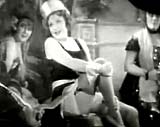 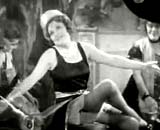 Lola Lola (Marlene Dietrich) 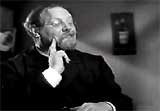 Prof. Rath (Emil Jannings) |
|||||||||||||
|
The Divorcee (1930) This pivotal Pre-Code film about divorce and infidelity, by director Robert Z. Leonard, was banned by the Production Code Administration as being too brash, racy and forward because it didn't condemn its sinful heroine. This film's original title was Ex-Wife (the title of the original and controversial 1929 novel by Ursula Parrott). The film was controversial at the time for its reversal of the hypocritical 'double standard,' although it was considerably cleaned up. The husband's affair became a romance, and the wife's own romances were considered dates. Norma Shearer won the Best Actress Oscar for her role as a Manhattan ad writer with a man's name (Jerry) and a "man's point of view" who soon became a wayward, 'loose woman.' At the start of the film, she agreed to get married only if she and her husband were equals, joking: "That's why we're gonna make a go of it - everything equal...75/25." Although happily married, she caught her unfaithful husband-newspaperman Ted Martin (Chester Morris) engaged in philandering and infidelity with an ex-girlfriend (the recently-divorced brunette Janice (Mary Doran)). Janice embraced Ted in their kitchen on their own third wedding anniversary. Jerry was devastated and disillusioned when Ted downplayed the incident:
On that same evening after he left for a week-long work engagement in Chicago, she matched Ted's unfaithfulness with her own sexually-adventurous, one-night stand tryst with their consoling, wealthy best friend Don (Robert Montgomery) after an evening of partying (the sex scene was off-screen, signaled by the closing of curtains to darken the bedroom). When her husband returned and repented, she wasn't ready to let the incident be covered up and forgotten so quickly:
When she admitted her own affair (with an unknown male) to her astonished husband to match the score: "I balanced our accounts, that's all...I didn't really intend to, but that's how it is," he wasn't as quick to understand ("It can't be true. Why, I always thought you were the most decent thing in the world. It can't be true"). She begged with him to forgive and try again ("I'll forgive you anything, dear. Can't you please forgive me?"), but Ted stubbornly packed up and explained how his vanity and honor were ruined. Then she fatefully vowed to him as she lost her temper that she would become a sexually wanton 'bad girl':
After their divorce, she experienced a series of sexual escapades (shown in a montage of close-ups of men's hands, rings, and off-screen dialogue), and two weeks on a yacht in the summer with married former beau Paul (Conrad Nagel). He was estranged from his wife Dorothy (Helen Johnson) (who had a disfigured face from a car accident). Jerry decided not to join Paul as his new wife to live in Japan - when Dorothy made a plea to have her husband back. In a conventional happy ending after Jerry was job-transferred to London, she selflessly returned and was reconciled to her husband where he was working in Paris. They decided to take a second chance on marriage at midnight, during a New Year's Eve celebration at a nightclub:
They clinched as the film ended. |
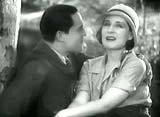 Jerry (Norma Shearer) with Ted (Chester Morris) 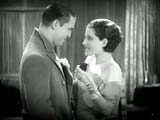 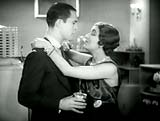 Ted's Indiscretion 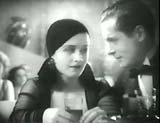 Jerry's Retribution 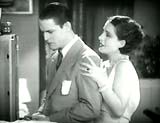 Rejection 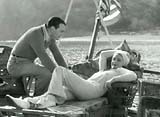 Jerry With Paul (Conrad Nagel) 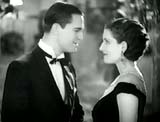 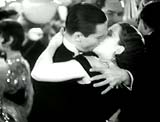 Jerry Reunited with Ted |
|||||||||||||
|
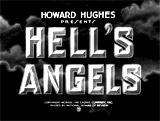
Hell's Angels (1930) In Howard Hughes' WWI film Hell's Angels (1930) - (reportedly the most expensive film ever made at the time of its release), 18-year old platinum blonde Jean Harlow shocked audiences. Harlow became screendom's first official 'bombshell' -- meaning hot and explosive. She starred as sexy floozy Helen - with generous glimpses of flesh available through her slinky dresses. She encouragingly and enticingly asked her fiancee Roy's (James Hall) brother Monte Rutledge (Ben Lyon) to take her home during a dance, while Roy was occupied with committee matters: "Tired. Take me home, Monte...It's not far. I've taken a flat in town near canteen headquarters"; once they arrived by car out in front of her apartment, she asked: "Are we here?..Wanna come up for a cigarette and a drink?...Come see my room. I've only had a place of my own for a week. It's a new toy." She delivered a famous line of dialogue to the awaiting uniformed soldier in her apartment after serving him a drink, and chugging down her own drink:
She seductively entered her bedroom letting her wrap fall to reveal her backless dress, and a side view of her remarkable figure before disappearing. A few moments later, she returned wearing a white-trimmed dark robe - provocatively open to her waist and bare underneath. After some small talk, she explained her philosophy of life and her desire not to be tied down with marriage and family:
She enticingly reclined back, almost inviting him to kiss her. When he balked and began to excuse himself to leave, she stretched out her arms and he pulled her up into his arms. They were frozen, inches away from each other's lips - and then they kissed. She surrendered herself to him and they lowered themselves back to the couch and embraced further - as the scene faded to black.
Afterwards, in the apres-sex sequence, Monte felt "gloomy," worried, and awful about cheating on his brother: "God, I'm rotten..." and he called her "rotten" too for two-timing his brother - she threw him out: "Get out of here!...Get out! And stay out!" |
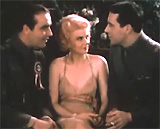 The Love Triangle - (l to r): Roy, Helen, Monte 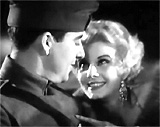 Helen to Monte: "Wanna come up for a cigarette and a drink?" 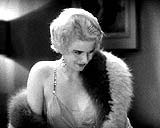 "Would you be shocked if I put on something more comfortable?" 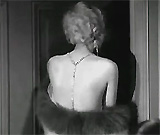 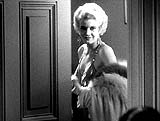 Helen's Bare-Backed Seduction |
|||||||||||||

|
Ingagi (1930)
Earlier ethnographic films, such as Robert J. Flaherty’s Moana (1926) and Merian C. Cooper and Ernest B. Schoedsack’s Chang: A Drama of the Wilderness (1927) were more legitimate precursors of this form of documentary. Another of the film's sensational jungle-thematic precursors was the mystery-melodrama Seven Footprints to Satan (1929), in which Thelma Todd (as Eve) was attacked by a lusty gorilla. The public's fascination with gorillas presumably led to RKO's release of King Kong (1933). After its release, an outrageous hoax was uncovered when it was revealed that most of the suspicious-looking film was made in Los Angeles, using local actors as natives, and filming had occurred in Selig's specially-constructed LA zoo. It was incongruous that some of the natives were very dark-skinned, while the better-looking 'native Africans' (US actresses in black-face) were less dark and more buxom. Actor Charles Gemora, who was well known for portraying gorillas in films, signed an affidavit swearing that he played the lead gorilla in the picture. In addition, the film was accused of inserting footage from an older film (the long-lost documentary Heart of Africa (1915) (aka Lady Mackenzie’s Big Game Pictures)). It was also revealed that Sir Hubert Winstead or Capt. Daniel Swayne were only fictitious characters, not real-life explorers. The Motion Pictures Producers and Distributors Association (MPPDA) led by Will Hays sued the distributor, and ordered the film to no longer be distributed and exhibited. The FTC also called the film "false, fraudulent, deceptive, and misleading." There were many imitators to come: Savage Girl (1932), Beast of Borneo (1935), Forbidden Adventure in Angkor (1935), and Love Life of a Gorilla (1937) |
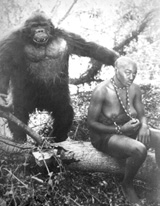 "Ape" (Man in Costume) Approaching Congolese Native Female |
|||||||||||||
|
Madam Satan (1930) Director Cecil B. De Mille's bizarre battle-of-the-sexes film, a major box-office flop, challenged the production code of the day. It was the famed director's second talkie (as well as his second film for MGM after Dynamite (1929)), and also his first-and last musical. The story told about 'caged bird' wife Angela Brooks (Kay Johnson) who learned about the infidelity of her cheating husband Bob (Reginald Denny) with a leggy seductress named Trixie (Lillian Roth), a singing/dancing member of a traveling show business trio. Angela decided to teach him a lesson. She flirted with him at the masked ball - a racy, gaudy, and over-the-top masquerade costume party sequence aboard a giant zeppelin. She wore a peek-a-boo, nude-looking gown and half-mask) as a femme fatale to lure him away from pheasant-costumed Trixie. Their encounter occurred just before lightning struck the mooring mast of the dirigible (a foreshadowing of the real Hindenburg crash years later), when partygoers were forced to either parachute or jump. |
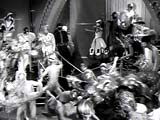 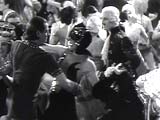 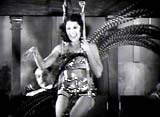 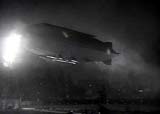 The Masked Ball in the Zeppelin |
|||||||||||||
|
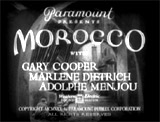
Morocco (1930) In her Hollywood debut film (with Paramount and director Josef von Sternberg), Marlene Dietrich targeted her sexuality toward both men and women. As Amy Jolly, she scandalously wore a sexually-ambiguous men's tuxedo and top hat as a performer in a North African cabaret club. Early on, she sang "Quand L'amour Est Mort" with smoky eroticism, took a flower from the hair of a young lady in the audience (asking: "May I have this?"), inhaled it suggestively, and then kissed the embarrassed woman full on the mouth. It was one of the earliest (if not the first) female-to-female kisses by a leading actress, in order to get the woman's attention and another man's attention. After tipping her hat and listening to wild applause, the bisexual (or androgynous) chanteuse tossed the flower to admiring foreign legionnaire Tom Brown (a young Gary Cooper) in the audience. In a slightly later scene, the seductive Dietrich, in a skimpy black dress and with a feathery boa draped over her shoulders, also performed: "What Am I Bid for My Apple?" After doing brisk business throughout the entire crowd, she sold one to Tom, who bit into it lustily (filmed in close-up during his third bite), and then asked her to sit in his lap. Then, she discreetly gave him her room key for a late-night "hot" rendezvous - where she demurely told him: "You'd better go now, I'm beginning to like you" - to which he responded: "I wish I'd met you ten years ago." |
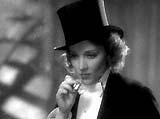 Amy Jolly (Marlene Dietrich) 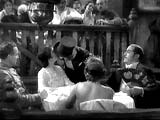 Lesbian Kiss 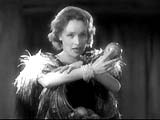 "What Am I Bid For My Apple?" 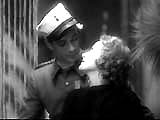
Amy with Tom (Gary Cooper) |
|||||||||||||
|
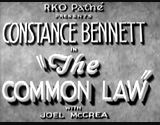
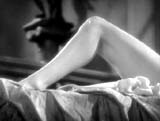
The Common Law (1931) The themes of this romantic drama included nude modeling and art, free love, and issues of pre-marital sex and the sexual double standard for women. The film specifically challenged one of the Production Code's tenets about the portrayal of nudity, and the requisite punishment that a woman should receive for her 'sinful' sleeping around. It told about a wealthy young painter with blue-blood roots named John Neville, Jr. (Joel McCrea) who created nude portraits in Paris. His blonde subject-turned-lover was Valerie West (Constance Bennett). As a career model, she scandalously posed nude for him (portrayed discreetly and only seen in long-shot). He bluntly told her during one undraped session:
In the story, after John and his muse Valerie fell in love, a series of issues and problems arose and threatened their relationship. After John discovered that Valerie was not a virgin and was previously the 'kept woman' mistress of rich, sugar-daddy American Dick Cardemon (Lew Cody), he dumped her. Later, however, the two reconsidered and they scandously began living together - without marrying at first because of her reticence. And then John’s sister, snooty high-society girl Mrs. Claire Collis (Hollywood gossip columnist Hedda Hopper), objected to the two of them flaunting societal conventions by living together without being married. Claire attempted to cause a rift between them and split them up, but ultimately didn't succeed. |
 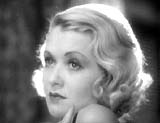 Valerie (Constance Bennett) |
|||||||||||||
|
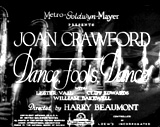
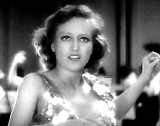
Dance, fools, Dance (1931) The Production Code had difficulties with director Harry Beaumont's racketeer-gangster film. It was the first of a total of eight films pairing Crawford with Clark Gable - the actress began a real-life affair with her co-star during the making of this film. Future films with the pair included: Possessed (1931), Laughing Sinners (1931), Dancing Lady (1933), Chained (1934), Forsaking All Others (1934), Love on the Run (1936), and Strange Cargo (1940). New rising talkies star Joan Crawford first appeared as liberated, spoiled and wealthy socialite Bonnie Jordan (with curly brunette hair and long lashes). In the film's opening party scene, she danced the tango and then dove off a yacht in the moonlight, wearing only silky underwear. In another risque scene representative of many pre-Code films, she proposed a probational trial period of love and extra-marital sexuality (including test kisses, while "trying love out...on approval") with her wealthy boyfriend Bob Townsend (Lester Vail). But after the Stock Market Crash (and her wealthy father's fatal heart attack), her way of life abruptly changed. She was very determined to survive being a 'pauper' by becoming a working girl - she told her brother Rodney (William Bakewell):
She took a job as a newspaper cub reporter. Her brother didn't want a traditional job, and began working for gangster/bootlegger and nightclub manager Jake Luva (sixth-billed Clark Gable). As an undercover ploy (proposed by her newspaper boss: "Use any weapon you've got"), she posed as dancer Mary Smith in Jake Luva's nightclub. Her goal was to discover the identity of a killer (revealed ultimately to be her own bootlegging brother Rodney) who had murdered her fellow reporter friend Bert Scranton (Cliff Edwards) in a contract hit. She turned down Bob's proposal of marriage to rescue her from her tawdry nightclub job: ("I'm a cheap little dancer in a night club, and you thought you could have me on your own terms. Well, you're mistaken! I can still pick my own men, Mr. Townsend, and right now it's Jake Luva"). At the time, she was fending off the sexual advances of Jake, who propositioned her:
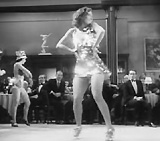
Ultimately, Bonnie was devastated to learn the facts behind Bert's murder by the mob. In the film's action-packed conclusion, there was a shoot-out between Rodney and Jake, with both ending up dead (Rodney died in sister Bonnie's arms). One of the film's highlights was 'Mary's' high-kick-and-tap dance performed in a shiny sequined short dress in Luva's nightclub - shocking to one of her female acquaintances (sitting next to ex-boyfriend Bob) who remarked while watching: "Oh, so that's what's become of Bonnie." [Note: Crawford's intention was to link her previous hedonistic dancing film roles with this one, although this was a gangster film, not a dance film.]
|
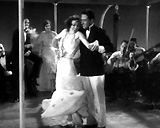 Dancing the Tango on Party Yacht 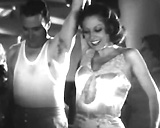 Diving Off a Party Yacht in Silky Underwear 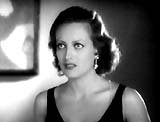 Bonnie Jordan (Joan Crawford) 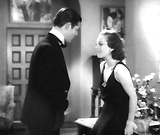 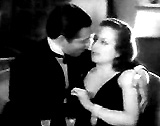 Starring Opposite Clark Gable 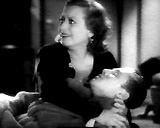 Death of Rodney in Bonnie's Arms |
|||||||||||||
|
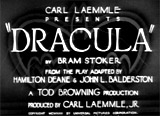
Dracula (1931) The classic Universal horror film Dracula (1931) from director Tod Browning featured the character of Count Dracula (Bela Lugosi). He would rise from his grave each night to seek victims to suck their blood and add to his bevy of undead brides. The Production Code had pushed earthy sexuality and eroticism deeper into new levels of suggestiveness, deviation, and displacement. Dracula's blood-sucking desire for new young female blood was portrayed as a substitute for sexual activity. |
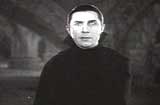
Count Dracula (Bela Lugosi) |
|||||||||||||
|
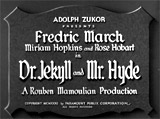
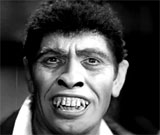
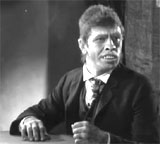
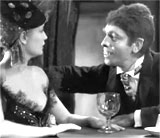
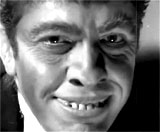
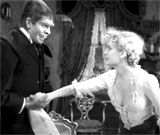
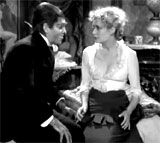
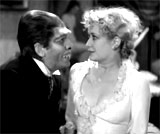
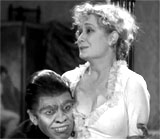
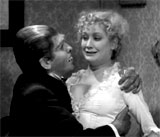
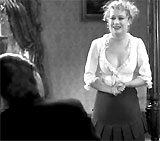
Dr. Jekyll and Mr. Hyde (1931) Rouben Mamoulian's spine-tingling Pre-Code horror film from Paramount Pictures was the first sound version of the story, adapted from Scottish author Robert Louis Stevenson's 1886 Gothic literary novella "Strange Case of Dr Jekyll and Mr Hyde." It was a story of transformative identity into bestiality and sexual deviancy. [Note: The film was also remade by MGM as Dr. Jekyll and Mr. Hyde (1941), starring Spencer Tracy opposite Ingrid Bergman and Lana Turner.] It told about a kind but fatally-curious medical doctor named Dr. Henry ("Harry") Jekyll (Oscar-winning Fredric March) (pronounced "Jee-kall") who adventured into the unknown by self-testing an experimental serum formula that released the uninhibited, subconscious evil in his soul, and caused him to develop a monstrous split personality or alter-ego, as Mr. Hyde. The heavily-censored film featured themes of sexual abuse, man's dual nature, and repression. Subsequent reissues of the film in 1938 were heavily edited and cut, and the most controversial scenes were shot with different versions (some longer and in different states of undress). It was mostly criticized for Dr. Jekyll's sexy scenes with Cockney slut "Champagne" Ivy Pearson (Miriam Hopkins), where he exhibited sordid, vicious, sexually-decadent and sadistic behavior. His counterpart, the simian-like Hyde, terrorized streetwalker lover Ivy, beat her with a whip on her back and often raped her, and eventually murdered her. Early in the film, one evening with his upright colleague Dr. John Lanyon (Holmes Herbert), Dr. Jekyll rescued a female from one of her brutal 'callers' and carried her up to her second floor room. The vulnerable female was a promiscuous, slutty Cockney named "Champagne" Ivy Pearson wearing a low-cut blouse. Dr. Jekyll placed her on her bed, and insisted on a medical inspection of her bruised knee; after she pulled up her dress to expose her legs he told her suggestively:
She smiled at him and complimented him: ("Anybody can see now that you're a real gent, you are. Now you're the kind a woman would do something for"). The tempting prostitute then insisted that he check out her injured ribs, and prepared to undress to rest in her bed. She flirtatiously asked him to "turn your eyes away now." Facing the camera, she hiked up her dress, removed her shoe, stocking and garter from each leg, flung both garters at his feet and giggled. She then reclined back on her bed totally nude, covering herself with her bedspread and bedsheets. When he came over to her and asked: "How is the pain now?", she quickly embraced and kissed him. The two were interrupted by the appearance of Jekyll's colleague Lanyon barging in at the door who was appalled at Jekyll's behavior. Jekyll told Ivy as he was leaving: "I'm a doctor, you know, and I'll call that kiss your fee." As he exited, Ivy seductively and rhythmically swung her leg back and forth next to the bed (with her garter and bare leg seen in closeup) -- to further entice Dr. Jekyll, she entreated and invited him with whispered words to return quickly:
As he left, a superimposed overlay or dissolve transition of her swinging leg was seen over his descent of the stairs, as her entreaties were again repeated (in a whisper). Dr. Jekyll was scolded by Lanyon to control his impulses: ("You ought to control those instincts"); he also reminded Jekyll of the fact that he was engaged to the virtuous Muriel Carew (Rose Hobart); the unapologetic Jekyll explained how he was only expressing his impulses within his "indecent self" - and how sex-starved he was:
Jekyll repeated his "mad" theory of separating the two selves or natures in the human soul, in order to be cleansed of his evil persona. Later in the story, Dr. Jekyll decided to revert back to Mr. Hyde during a second stunning and torturous transformational sequence that included painful grimaces and grunts. The amoral, brutish, cackling and mean Mr. Hyde headed out in the darkness to locate "Champagne Ivy" who worked as a barmaid at the Variety Music Hall, whom he had met earlier in his persona of Dr. Jekyll.
He taunted and brutally mishandled Ivy, and forced his affections on her, and compelled her to go with him back to her place with the promise of wealth: ("I hurt you because I love you. I want you, and what I want, I get! I grant you, I am no beauty, but under this exterior, you'll find a very flower of man"). With an extreme tracking close-up, the camera focused on Hyde's face as he came closer to Ivy's face, while enticingly ordering her to return with him: ("You'll come with me") - before the image went out of focus and turned black. Later in the story, Hyde appeared at Ivy's place (after numerous other off-screen visits of brutality, whipping and rape). Hyde called Ivy his "little bird," and then also called her a "trull" (prostitute) - to express his self hatred and jealousy: ("You hate me, don't you? I'm not good enough for you!") over her affectionate preference for gentlemen such as Dr. Jekyll. She refused to be ordered to tell Hyde that she hated him: ("Tell me that you hate me!"), and cowered as she was forced to scream out to Mr. Hyde that she loved him: ("How you must love me. I want to hear you say it. Say it. Come, my wench. Say it!").
He threatened her as she shrunk in fear from him, that he would be gone for a few days and might reappear at any time to check up on her: "You don't know when I'll be back.... Remember, you belong to me, do you hear? You belong to me! If you do one thing that I don't approve of while I'm gone, the least little thing, mind you, I'll show you what horror means." To her horror, he explained how he would still be spending the evening with her: ("The last evening is always the sweetest, you know. And what a farewell this one will be. What a farewell! I don't know whether I shall be able to tear myself away from you"). He also forced her to sing her "Champagne Ivy" song and to submit to a kiss before the scene faded to black.
Eventually, Hyde murdered his lover-turned-tragic victim Ivy. He jealously told her that he knew all about her relationship with Dr. Jekyll: ("I know everything you do and everything you think!") - and accused her of only desiring Jekyll's love: ("You wanted him to love you, didn't you? I'll give you a lover now. His name is death!"). He then revealed that he and Jekyll were one and the
same ("I AM JEKYLL") - before he strangled her in her bedroom.
As she dropped to the floor, behind her was a sculpture of Cupid and
Psyche. |
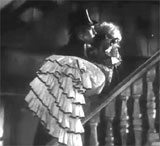 Dr. Jekyll's Rescue of Ivy 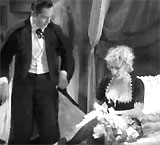 Dr. Jekyll Aiding Ivy in Her Bedroom 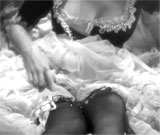 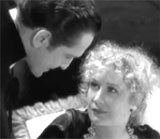 Dr. Jekyll Attending to Ivy's Bruised Knee 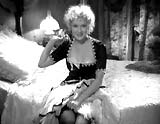 Sitting on the Edge of Her Bed, Hiking Up Her Dress, And Tossing Her Garters at Him 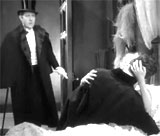 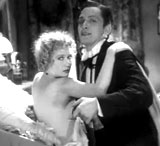 Caught Kissing Ivy by Dr. Lanyon 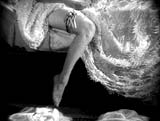 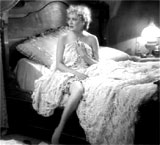 Dr. Jekyll Leaving Seductive Barmaid in Her Bedroom as She Entreated: "Come back soon, won't you?" 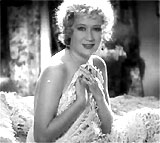 Ivy: "Oh yes you can. Soon...Come back!" 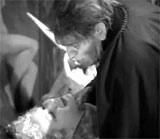 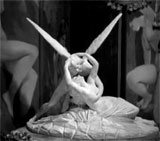 Hyde's Strangulation of Ivy: "I AM JEKYLL" |
|||||||||||||
|
The Easiest Way (1931) Director Jack Conway's romantic pre-Code melodrama (modified and heavily watered down before release due to its spicy nature) was based on Eugene Walter's scandalous play about being tempted to a life of luxury - and becoming a call-girl or 'kept woman.' Constance Bennett starred as Laura "Lolly" Murdock, a poor, working-class slum-tenement girl who turned to advertising agency modeling. She experienced the good life (she took "the easiest way") by becoming the high-priced mistress of wealthy ("sugar-daddy") advertising executive William "Will" Brockton (Adolphe Menjou). She was given a fancy apartment, jewels and furs, and she helped her family, although they disapproved of her lifestyle. She experienced complications after truly falling in love with newspaperman Jack "Johnny" Madison (Robert Montgomery). Could she give up her lavish lifestyle? In keeping with the Hays Code edicts, Laura suffered and was endlessly punished for being a "fallen woman." The consequences of her choices were understandable in the short term, but led to greater difficulties. |
 Lolly Murdock (Constance Bennett) 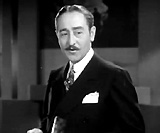 Will Brockton (Adolphe Menjou) 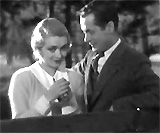 Lolly with Johnny (Robert Montgomery) |
|||||||||||||
|
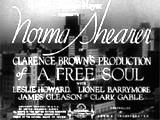
A Free Soul (1931) After The Divorcee (1930), this was Norma Shearer's next taboo-breaking, racy pre-Code film that challenged the morals and manners of the times.
The Oscar-nominated actress was cast as a free-spirited San Francisco socialite - a non-conformist, rebellious, liberated diva named Jan Ashe. She was the daughter of prominent lawyer Stephen Ashe (Best Actor-winning Lionel Barrymore), an alcoholic criminal defense attorney. The independent, headstrong woman liked to smoke, drink, experience pre-marital sex, and have fun. In the film's opening, she was engaged to a devoted and distinguished polo player Dwight Winthrop (Leslie Howard), but broke it off (by stating: "I don't want life to settle down around me like a pan of sourdough"). Her change of heart came after meeting underworld speakeasy/pool hall manager/gangster Ace Wilfong (a virile Clark Gable in his first breakthrough, star-making role with MGM), a hunky client acquitted of murder by her father. Jan drove off with Ace in his fast-driving open roadster after being snubbed at a stuffy family birthday party, and proclaimed to him: "You're the first really exciting man I've ever met," just before their windshield was sprayed with machine-gun fire by rivals. At his penthouse apartment, she wore a very thin, seductive, bra-less, white silky dress [Note: off-screen, Gable commented about Shearer's slinky, form-fitting apparel -- "the dame doesn't wear any underwear in her scenes"] - she told him she loved his lifestyle and wasn't frightened at all:
When Ace asked Jan's father for her hand in marriage, Stephen told off the low-life gangster: "The only time I hate democracy is when one of you mongrels forget where you belong. A few illegal dollars and a clean shirt, and you move across the railroad tracks." But Jan continued to secretly pursue sexual ravishment and rough love-play with 'bad-boy' Ace, staying over at his place for several months. She told him she was madly in love with him and wanted him to show his love rather than talk:
She refused to marry him, realizing the possible consequences for her life, but with the film's most famous line (that was threatened by censorship), she invited him to embrace her as she sensuously stretched back and aggressively entreated him:
He obliged. Her father continued to vehemently disapprove of her "backstairs affair with a rat," calling her "cheap, common, contemptible." He dragged her away. When she returned to Ace after a three-month camping trip with her father, the insensitive gambler attempted to boss her around, brutalize her and force her to marry him, while suggesting that she forget her father:
Fearing his beastly villainy (and sensing the "filthy mark" he left on her soul), Jan abruptly left him and housed herself temporarily at the St. Francis Hotel in the city, where Ace found her the next day. He threatened both Jan and Dwight's possible romantic reconciliation by disclosing her spoiled womanhood and threatening to ruin her high-society reputation:
To preserve Jan's honor, Dwight shot Ace dead in his gambling office and was placed on trial for murder. Dwight claimed non-payment of a gambling debt as the reason for the killing. He was defended by Jan's father on the grounds of temporary insanity (due to Ace's lethal threats), and acquitted of the murder. At the end of his eloquent appeal, Stephen collapsed of a heart-attack, and Jan and Dwight were destined to be together as the film concluded. |
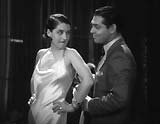 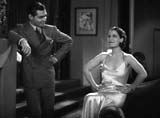 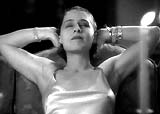 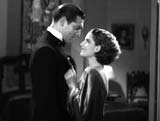 Jan Ashe (Norma Shearer) with Ace (Clark Gable) 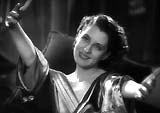 Jan Ashe: "Come on, Put 'Em Around Me" |
|||||||||||||
|
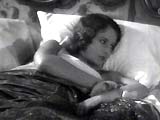
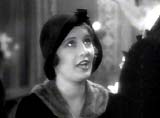
Illicit (1931) This Pre-Code weepy melodrama by director Archie Mayo was released by Warner Bros. in the wake of MGM's success with its daring films in 1931. The film was remade as Ex-Lady (1933) with Bette Davis and Gene Raymond. Its tagline was:
It was a shocking story (for its time) about extra-marital sex and an unconventional test marriage - it told about a couple who cohabitated ('living in sin') together - out of wedlock - on the weekends in Connecticut:
Her theories of happiness ran counter to the marriage laws:
In an early scene, she told him: "Go on, Don Juan, tell me about yourself," and after he replied: "Well, there have been women who wanted to park their heads on this manly bosom," she brazenly told him: "And how much an hour?" She also joked: "We're both a riot in our underwear." She feared that marriage would ruin their relationship, although her beau kept worrying about "all the lying and pussy-footing." She exclaimed back, in a risque way:
After being pressured into committing and tying the knot, her fears were realized and they separated for a time, only to reunite. |
   Anne Vincent (Barbara Stanwyck) 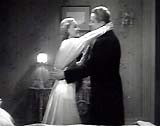 Bette Davis in Ex-Lady (1933) |
|||||||||||||
|
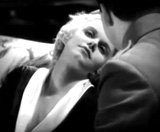
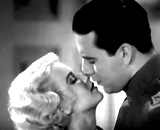
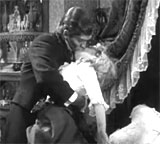
This landmark lesbian film from Germany (director Leontine Sagan) with an all-female cast was the first movie to portray forbidden lesbian love. It was based on the play by Christa Winsloe about an adolescent lesbian relationship in a Prussian girls boarding school.
US censors banned the film for its depiction of lesbian desire between:
During a bedtime ritual in the dormitory in which all the schoolgirls were kneeling at the end of their beds and anticipating a goodnight kiss, the teacher kissed all the girls on the forehead, except for Manuela who received an intimate lip-kiss. Late in the film, after Manuela boldly declared her love for her teacher, the love-struck student was rejected by the school's headmistress. Distraught, Manuela prepared to end her life by jumping from a stairwell. In most prints of the film, Manuela lept to her death.
|
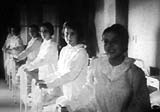 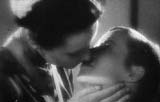 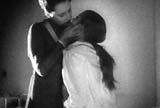 Lesbian Kiss Between Student and Teacher |
|||||||||||||
|
Mata Hari (1931) This early talkie film was a fictionalized historical melodrama. In the film's trailer, the infamous woman of the title was called "the Most Notorious Temptress of the Twentieth Century!" Greta Garbo was showcased as the dangerous and seductively-exotic and sexually-alluring courtesan and femme fatale spy Mata Hari. She was a German secret agent (aka Margarite Gertrude Zelle) working in Paris. In one of the film's earlier scenes, she performed a sensual dance for the god Shiva at a high society party. |
  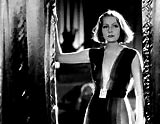 Mata Hari (Greta Garbo) |
|||||||||||||
|
Monkey Business (1931) As in earlier films, some of the sexual innuendos of the pun-filled dialogue of Groucho Marx (as Himself) in the Marx Brothers' films were either eliminated or edited from the script. After Lucille Briggs (foil Thelma Todd) asked: "I didn't know you were a lawyer, you're awfully shy for a lawyer," the line was followed by Groucho's reply:
The second part of Groucho's line (in italics) was cut from the script. Also, a section of this line (in italics below) delivered to Lucille in her stateroom was also truncated:
|
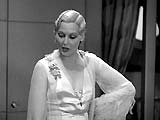 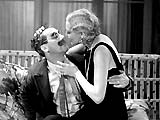 Lucille Briggs (Thelma Todd) |
|||||||||||||
|
Night Nurse (1931) This notorious Warner Bros. pre-Code film from director William Wellman emphasized themes of drug usage and alcoholism, neglectful mothering and child abuse, medical establishment malpractice and corruption, and violence against women. The melodrama was considered salacious and too sexually adventurous in the way that it used every imaginable excuse to have its two actress-stars frequently and liberally undressing down to their silky, lacy underwear. The two trainee nurses/roommates were: Lora Hart (Barbara Stanwyck) and wise-cracking brassy blonde B. Maloney (Joan Blondell):
The film's story was the discovery by courageous live-in private nurse Lora that there was a dastardly abusive plot (a slow-poison scheme) to kill two deliberately-malnourished, anemic children Desney and Nanny Ritchey (Betty Jane Graham and Marcia Mae Jones) by their unfit, widowed, alcoholic socialite 5th Avenue mother Mrs. Ritchey (Charlotte Merriam), in order to acquire their trust fund inheritance. The evil plan had been orchestrated by the mean and evil family chauffeur Nick (Clark Gable). In one scene, Lora was being sexually assaulted by a drunken guest named Mack (Walter McGrail) in the same room where she was tending to an inebriated and passed-out Mrs. Ritchey. She was rescued from molestation by Nick (wearing a gaudy silk robe with a dragon pattern on the back) who entered the room and punched out the man, but then when she insisted on calling for a doctor, Lora was also punched unconscious by the brutish Nick. Later, she was urged and bribed (with $100 by Mrs. Ritchey) to keep quiet, as well as by the family's conniving, drug-addicted physician Dr. Milton Ranger (Ralf Harolde) (with obvious tics) who was in cahoots with Nick. Lora delivered harsh words to the drunken, always-partying, irresponsible, self-proclaimed proud 'dipsomaniac' Mrs. Ritchey: "You're a cruel, inhuman mother...You're a rotten parasite, that's what you are. Don't blame it on the booze, it's you! Why do poor little children have to be born to women like you?!...You're going up in that nursery with me if I have to drag you by the hair of your head!" - and then swung at soused Mack and sent him to the floor when he tried to interfere.
Lora also stood up to and confronted the nasty Nick when she learned from the housekeeper Mrs Maxwell (Blanche Friderici) that he was working with Dr. Ranger to eliminate the two kids to acquire control of the trust fund:
By the conclusion, the plot was foiled and the children were saved when the hospital's kindly chief of staff Dr. Arthur Bell (Charles Winninger) attempted to intervene at the house, and provided Nanny with an emergency blood transfusion (assisted by Lora), even though Nick tried to prevent the procedure by knocking him to the floor. Lora's "My Pal" Mortie (Ben Lyon), a bootlegger that Lora had befriended earlier in the film, stopped Nick from any further involvement and led him away (with a concealed gun). In the film's unusual ending, Lora happily accompanied criminal "My Pal" in his convertible where he urged her to shift the gears - full of phallic sexual innuendo: "When I say shift, shift." He hinted that he had sent Nick to the morgue:
There was a book-ending view of an ambulance rushing to bring a corpse to the morgue, where one of the attendants mentioned that the victim was "taken for a ride" - and "he was wearing a chauffeur's uniform." |
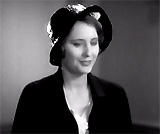 Lora Hart (Barbara Stanwyck) Applying For Nurse Job From Head Nurse 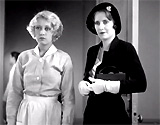 Lora Meeting Nurse Trainee Roommate B. Maloney 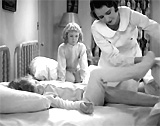 Lora with Two Young Ritchey Patients 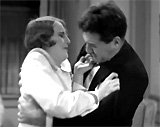 Lora Assaulted by Drunken Guest Mack 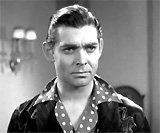 "I'm Nick, the chauffeur!"  Lora to Nick: "I'm talkin' about murder!" 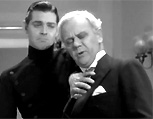 Nick Trying to Prevent Dr. Bell From Performing a Blood Transfusion on Nanny 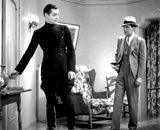 The Bootlegger Leading Nick Out (With Concealed Gun) 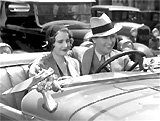 Riding Off with Bootlegger - Shifting His Gears! 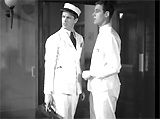 Ambulance Attendant: "He was wearing a chauffeur's uniform" |
|||||||||||||
|
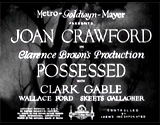
Possessed (1931) Director Clarence Brown's and MGM's film-noirish drama demonstrated the unfairness of the double standard for a single woman engaged in a years-long affair without marital vows. Joan Crawford starred as lowly paper-box factory worker Marian Martin in Erie, Pennsylvania. She was defiantly independent, telling her hometown suitor and fellow worker Al Manning (Wallace Ford): "You don't own me...Nobody does. My life belongs to me." She also told her mother (Clara Blandick):
She ascended out of poverty by associating with wealthy New York attorney Mark Whitney (Clark Gable), now separated from his wife. Marian became his self-sacrificing mistress outside of marriage, living in a Park Avenue apartment ("A woman can do anything and get anywhere as long as she doesn't fall in love"), but he refused to marry due to his scandalous first marriage. In the film's most notable scene, the two beautifully-attired stars kissed as Marian's white fur shoulder drape dropped to the ground - causing them to arrive late at a party. When he ran for governor, she had to change her name to Mrs. Moreland and pose as a rich divorcee for respectability's sake ("Well, it's a harmless way to make your position a little more pleasant"). Mark was advised to drop her. As an "honest woman" expressing her love and noble sentiment for Mark so that his political career wouldn't be jeopardized, she told him that she had used him, and was going to marry Al. She expressed how her low-status ("common, smelling of sweat and glue") was a hindrance, and that she would return to the "level that I came from." By film's end, Mark realized Marian's devotion to him (and vowed to be with her forever) after she publically confessed (at his election rally) in an impassioned speech that her love for him was real, but that she had walked out of his life so that he could effectively serve the people. |
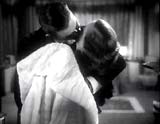 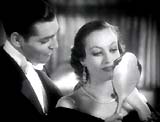 Marian Martin (Joan Crawford) with Mark Whitney (Clark Gable) |
|||||||||||||

|
The Public Enemy (1931) Released before the Code was strictly enforced, this seminal gangster film The Public Enemy (1931) portrayed the lead anti-hero character Tom Powers (James Cagney) as a sexually magnetic, cocky, completely amoral, emotionally brutal, ruthless, and terribly lethal individual - a two-fisted bootlegger. He was successful in materialistic ways, acquiring notoriety, power, wealth, and dames. However, the studio added this cautionary, yet ineffective, postscript to punish the anti-hero's transgressions by film's end:
One of his flashy and glamorous acquisitions was mysteriously cool blonde Gwen Allen (Jean Harlow). Wearing expensive clothes in her apartment at The Congress Hotel, she told him in a steamy and seductive love scene, to the tune of I Surrender Dear on the radio, why she was attracted to him, as she cradled his head to her breasts:
The film's most famous scene, however, was the startling misogynistic grapefruit-in-the-face scene earlier with Tom's girlfriend Kitty (Mae Clarke) - crudely transforming all previous norms. When he came to the breakfast table in a grouchy and irritable mood, he asked his moll: "Ain't you got a drink in the house?" and when rebuffed with her reply: "Well, not before breakfast, dear", he felt insulted: "I didn't ask you for any lip. I asked you if you had a drink." Then after she told him: "I know, Tom, but I-I wish that...," he became even more grouchy:
She provoked him with: "Maybe you've found someone you like better," causing him to impulsively pick up a grapefruit half from his plate and contemptuously push it into her face to end their relationship. |
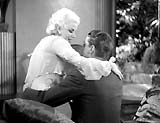 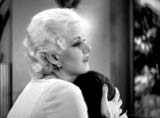 Gwen Allen (Jean Harlow) with Tom Powers (James Cagney) 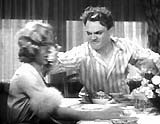 Tom Powers with Kitty (Mae Clarke) |
|||||||||||||
|
The Smiling Lieutenant (1931) This early, pre-Code Ernst Lubitsch musical set in Vienna told about a love triangle and changing sexual mores. The main three characters in the Best Picture-nominated light musical were:
In an apres-sex breakfast scene on an outdoor terrace between Niki and Franzi, they sang "Breakfast Table Love." The morning meal was preceded by a scene of their amorous intentions the night before. The couple had hungrily exchanged double entendres, ending when the scene faded to black (for an off-screen night of love-making). He had successfully convinced Franzi to stay for the night through to breakfast:
During a royal parade, Niki's flirtatious wink for Franzi was intercepted by the spinsterish Princess. By the film's final scene, the Lieutenant was forced to marry the sexually-repressed Princess Anna. However, Niki refused to romance the princess, while he continued to have a 'stepping out' affair with Franzi, until Anna discovered their indiscretions. The sexually-liberated Franzi was called to the palace where she gave the Princess a lesson on sexiness by wearing modern lingerie and fashions. She also advised her on her unconsummated marriage:
The worldly-wise Franzi then played on the piano instructions to the musical number: "Jazz up your lingerie!" before they burned her old-fashioned underwear and clothing. As a result of Franzi's self-sacrifice, the randy Lieutenant sang suggestively toward the film audience before he closed his bedroom door. He signified his saved marriage and renewed love-making interest for the Princess (singing "I must report for duty right away") after he tossed their checkboard onto the bed. He signaled that he would rather be in bed with her than just playing a board game (a substitute for marital sex). |
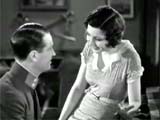 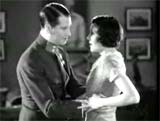 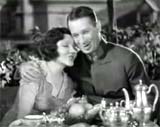 Lieut. Niki (Maurice Chevalier) with Franzi (Claudette Colbert) 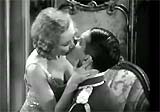 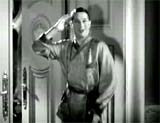 Lieut. Niki with Princess Anna (Miriam Hopkins) |
|||||||||||||
|
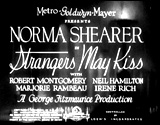
Strangers May Kiss (1931) In this pre-Code MGM melodrama, the film was changed from the plot of the original Ursula Parrot novel upon which it was adapted by John Meehan. The film ended happily (unbelievably), although in the book, the main female character committed suicide after years of waiting in vain. Free-spirited modern woman Lisbeth Corbin (Norma Shearer) was jilted by her lover, foreign correspondent Alan Harlow (Neil Hamilton) who had disclosed that he had a wife in Paris while in Mexico with her. When he left for China on a job assignment and they broke up, she engaged in short-term, promiscuous love affairs with men all over Europe. Lisbeth confessed to her good-natured, platonic friend Steve (Robert Montgomery):
In Spain, Steve had heard rumors of her loose and immoral ways in Paris, to which she replied:
She endangered her prospects of engagement/marriage to Alan, her true love, when he returned after divorcing his wife. But then he learned of her promiscuous indiscretions. It was rumored that "she changes her men with her lingerie, that girl." |
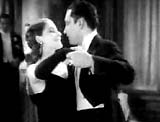
Lisbeth Corbin (Norma Shearer) |
|||||||||||||

|
Tabu: A Story of the South Seas (1931) F.W. Murnau's lush tale (documentary-style drama) told of native South Seas love and Tahitian island life. It was a tale of ill-fated romance (a star-crossed love a la Romeo and Juliet style) and the breaking of a sacred tabu. This film encouraged the trend of other popular, exploitational and lucrative 'bare native' films in its wake in the early to mid 1930s - after sights of polynesian girls swimming or dancing partly naked in the film. Its main attractions for many viewers were sequences of girls swimming partly naked, and of flower-garlanded, bare-breasted native dancers.
As the film opened, a love affair had developed between two Polynesian natives during a scene of 'Paradise"-like swimming:
But then, Reri was designated as the successor to the deceased former Chosen one by a grim-faced, harsh tribal elder known as the Old Warrior (Hitu). She was outcast and considered the island's "sacred virgin" that was now "taboo" to all islander men. After Reri's selection, there was celebratory native dancing, although during the ceremony, Reri sat with her head down. In the next chapter, titled "PARADISE LOST," the Boy kidnapped the Girl and they lived together on another island. They had to evade the never-ending, relentless pursuit by Hitu after the "guilty lovers." In a heartbreaking separation scene - the Girl was snatched by the Old Warrior. She wrote a goodbye letter to the Boy: ("I must go Hitu is here and waits for me You will die if I do not obey I will go so that you may live The Tabu is upon us. I have been so happy with you Far more than I deserved the love you have given me I will keep to the last beat of my heart"). In the tragic ending, as the Boy frantically swam after their sailboat, she was placed in a cabin and the hatchway was pulled over to enclose her, while the rope was cut that the Boy grabbed onto. He had to give up swimming - and presumably died of exhaustion in the open ocean. Many other films followed in the wake of Murnau's Tabu in this popular and lucrative 'bare native' film sub-genre. There were a number of exotic Bali pictures released as exploitation films in the early-to-mid-30s:
|
 Swimming  Bare Native Girls |
|||||||||||||




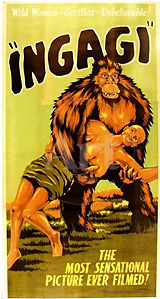 This independently-made, Pre-Code "jungle quest" documentary
from Congo Pictures, Ltd, a box-office hit at the time, allegedly told
about the factual, adventurous 1926 exploits of Sir Hubert Winstead
(of London) and Capt. Daniel Swayne, who went on a specimen-collecting
and photography trip to the Belgian Congo. During their trek, they
investigated a legend about a jungle tribe of gorilla-worshipping women.
Annually, a ritual was held in which one of the Congolese native females
(often obstructed from full view by strategic thickets) was offered
in sacrifice to the gorillas (known as Ingagi). Reportedly, the ritual
was perversely implied to be scandalous because the sex-crazed gorillas
(ape-gods) used the females as sex slaves for a union of 'man and
beast,' thus producing an unknown number of human-gorilla
hybrids.
This independently-made, Pre-Code "jungle quest" documentary
from Congo Pictures, Ltd, a box-office hit at the time, allegedly told
about the factual, adventurous 1926 exploits of Sir Hubert Winstead
(of London) and Capt. Daniel Swayne, who went on a specimen-collecting
and photography trip to the Belgian Congo. During their trek, they
investigated a legend about a jungle tribe of gorilla-worshipping women.
Annually, a ritual was held in which one of the Congolese native females
(often obstructed from full view by strategic thickets) was offered
in sacrifice to the gorillas (known as Ingagi). Reportedly, the ritual
was perversely implied to be scandalous because the sex-crazed gorillas
(ape-gods) used the females as sex slaves for a union of 'man and
beast,' thus producing an unknown number of human-gorilla
hybrids.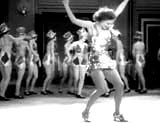
 Mädchen in Uniform (Germany,
1931), aka Girls in Uniform
Mädchen in Uniform (Germany,
1931), aka Girls in Uniform