|
History of Sex in Cinema: 1932 |


|
Baby Burlesks Shorts
(1932-1933) Tasteless films such as these led to an outcry for more wholesome films that didn't eroticize children.
The young Temple's first film appearance was in Runt Page (1932) as Lulu Parsnips (a take-off on Louella Parsons). In the second film War Babies (1932), Temple (as Charmaine) accepted a large lollypop from doughboy little boys. In Kid in Hollywood (1933), Temple was cast with the titillating name Morelegs Sweettrick (a play on the name Marlene Dietrich). In Polly Tix in Washington (1933), Temple took the part of Polly Tix, a high-priced call girl/prostitute (!) sent by corrupt officials to influence a backwoods politician. |
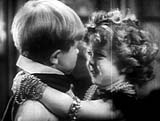 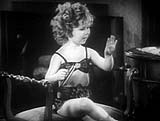 Baby Burlesks Star Shirley Temple |
||||||||||||
|
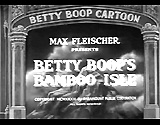
Betty Boop's Bamboo Isle (1932) The character of Betty Boop was one of the few animated characters that was portrayed sexually. The provocative, adult-oriented, cartoon vamp-character introduced 'sex' into animated films. Unfortunately, the cute, titillating 'boop-oop-a-doop' Betty was destined to be censored with the advent of the enforceable, conservative and puritanical Hays Production Code in 1934 that required her to be more fully dressed. She would soon disappear from the screen altogether. Normally, she wore a strapless, thigh-high gown (and visible garter) and was based on a combination of:
In the 1932 pre-Code animation, she displayed a bit of breast with her hula outfit (a simple grass skirt and floral lei) and performed a sexy hula. She also had her dress blow up in another animated short. |
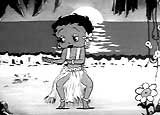 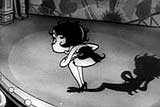 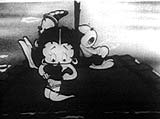
Betty Boop |
||||||||||||
|
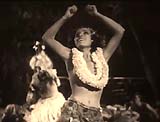
Bird of Paradise (1932) This sexy, violent, and exotic South Seas romance from RKO and director King Vidor (with dances directed by Busby Berkeley) was unseen for years due to its pre-Code nudity. It was producer David O. Selznick's biggest work to date and one of the most expensive pictures of its time. It was a reworking of F.W. Murnau and Robert Flaherty's adventure-documentary Tabu (1931) (see earlier). It was shot on location in Hawaii at a cost of over a million dollars. The film was profitable due to beautiful Mexican actress Dolores Del Rio starring as Luana - an alluring native princess, the chief's alluring daughter. She was fated to be cast in the flaming, destructive volcano to appease the gods, in the film's conclusion. The controversial scenes included:
|
    Luana (Dolores Del Rio) |
||||||||||||
|
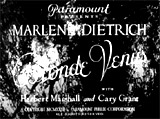
Blonde Venus (1932) This film was the most outlandish of the Dietrich/von Sternberg pictures, and a prime example of a film's script that was forced to be revised three times before production because of its alleged 'ridicule' of the sanctity of marriage. It was one of the weakest Dietrich/von Sternberg movies with its less than credible plot - bouncing its star back and forth from hedonistic stardom, to promiscuousness to domesticity. In the first scene (a flashback), German nightclub entertainer Helen Faraday (Marlene Dietrich) skinny-dipped in a lake with other playful women. Her nudity was teasingly obscured by tree branches when spied upon by a group of nearby tourist hikers. She swam up to them and asked:
One of the men, an American scientist chemist named Edward "Ned" Faraday (Herbert Marshall), bargained with the "water nymph" that he would leave if she would agree to see him later that evening for dinner after her theatrical show. Ned's glimpse of her immediately led to their marriage and a four year-old son named Johnny (Dickie Moore), who was seen in the next transitional scene bathing in a tub. They were living in a cheap New York apartment. To pay for expensive ($1,500) medical radium poisoning treatments for ailing Ned's cancer to be administered in Dresden, Germany by a reknowned physician, Helen (taking the named Helen Jones) began a glamorous career as a cabaret singer on the stage. She was billed as the "Blonde Venus." The film was highlighted by singer Helen's entrance scene in a jazzy German nightclub (to the beat of an African drum) when she opened the cabaret show by first appearing in a full-body gorilla suit as a chained ape - led into the audience by chorus girls (carrying shields and spears) adorned with war paint on their faces and wearing large black afro wigs. She revealed herself via a striptease. At first she removed one glove to show off her human hand with bracelets, and then the second glove, followed by the removal of the gorilla head-piece; she placed a blonde Afro wig on her head before singing "Hot Voodoo" in a throaty voice - as she stood with hands on her hips before the chorus line of archetypal 'native' dancers; the lyrics:
At the same time during her on-stage success, she became involved in an adulterous affair with suave, wealthy playboy millionaire and frequent club patron Nick Townsend (Cary Grant). He offered her $300 dollars as part payment for her husband's treatment. During Edward's absence in Germany for a cure, Nick wined and dined Helen, bought out her contract so she didn't have to work, set her up in a beautiful apartment, and financially supported her. As the Hays Code required, she would have to suffer the consequences as a 'fallen woman' who had prostituted herself and become unfaithful. Returning to the US unexpectedly early from Germany, Ned discovered her infidelity and learned how she had financed his treatments. Edward threatened to file for divorce and custody of their five year-old son Johnny. Helen fled with Johnny, first to Baltimore to avoid surrending her son to authorities, where she became employed as a cabaret singer, during a nationwide search being conducted for 'The Blonde Venus.' She was pursued by a private detective (Sidney Toler) for much of the picture. She soon realized that she would have to continue to evade her husband and the police, an unhealthy condition for Johnny, so she turned herself in to a detective in Texas, and gave up custody of Johnny to Edward. Helen ended up as an impoverished and destitute prostitute in a French quarter bordello. She pursued further singing opportunities in some of Paris' best nightclubs, where she again rekindled her romance with Nick - as his fiancee. She was encouraged by Nick to return to the US to see Johnny one last time before getting married to him. Back home, she consented to marry Nick if she could be allowed by her estranged husband to see her son for a few minutes at her old apartment. Nick offered to pay Edward for an opportunity to see Johnny - even up to $1,000 dollars a minute. And then in an abrupt about-face after her return, a sequence of great hope and optimism for their future, Edward realized that Johnny really loved and was attached to his mother, and that her sacrifice was for his cure - and they were reconciled as a family. |
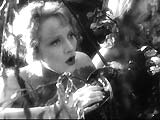 Skinny-Dipping 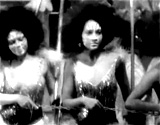 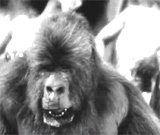 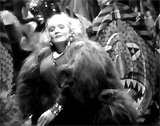   "Hot Voodoo"   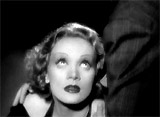 Helen Faraday (Marlene Dietrich) |
||||||||||||
|
Call Her Savage (1932) This was a pre-Code Clara Bow and 20th Century Fox melodramatic film by director John Francis Dillon. The story included extramarital promiscuous sex, attempted rape, out-of-wedlock pregnancy/birth, drug addiction, adultery, attempted child molestation, inter-racial liaisons, an S&M whipping, prostitution, and wrestling with a large Great Dane dog. It was the first Hollywood film to offer a view of a gay bar, with a scene in which two gay Greenwich Village waiters (dressed in maid's uniforms and carrying feather-dusters) table-hopped while singing about sailors in pajamas. The bar was earlier described as catering to unusual individuals: "Only wild poets and anarchists eat there." 27 year-old Clara Bow (the sexy "It Girl" in her second-to-last film) starred as bra-less, fiery-tempered, wild "half-breed" Texas heiress Nasa "Dynamite" Springer. She was a free-spirited girl, not knowing that she was the offspring of an American-Indian father and Anglo-Saxon white mother.
After whipping a threatening rattlesnake and also taking her whip to another "half-breed" ranch hand named Moonglow (Gilbert Roland), she impertinently quipped to her father: "I was practicing in case I ever get married." In the final scene, she spoke to Moonglow about finally learning about her own mixed heritage - her dark and shameful secret. [Her mother Ruth (Estelle Taylor) had become pregnant by Ronasa (Weldon Heyburn), an Indian, not by her husband Pete Springer (Willard Robinson), Nasa's presumed father.] She told Moonglow that she was glad to be a half-breed like him, in the last line of the film:
|
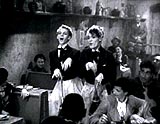 Gay Bar Scene 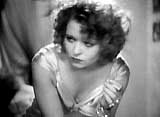 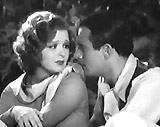
"Dynamite" Springer (Clara Bow) |
||||||||||||
|
The Dentist (1932) This W.C. Fields short was the first of four 20-minute shorts the famed comedian made in the early 1930s, with Mack Sennett as producer. A provocative burlesque sequence was almost completely excised, and also cut from TV showings in the 1950s and 60s. This censor-baiting segment was censored for its depiction of the tool-wielding dentist (Fields) violating and mounting his prone female patient (regular Fields foil Elise Cavanna) in his dentist's chair. As he assaulted her, she wrapped her long, stockinged legs around his back. |
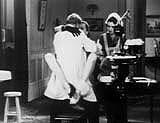 Dentist Chair Assault |
||||||||||||
|
Faithless (1932) This realistic, pre-Code "weepie" drama/soap opera was an adaptation of Mildred Cram's novel Tinfoil. It was a tangled tale about an outspoken, intelligent, and spoiled woman who was about to learn how to struggle to survive. It featured many elements: the harshness of the Depression, class conflicts, premarital sex, unemployment, adultery, gambling, labor disputes, and prostitution. Independent-minded, "superficial," calculating heiress/socialite Carol Morgan (Broadway star Tallulah Bankhead) was the daughter of a wealthy NY banker. She spurned handsome, optimistic advertising man Bill Wade (Robert Montgomery) when misunderstandings occurred during their engagement and their values clashed. He had wanted to support her while working at a job in Chicago earning 'only' $20,000, while she wanted a three month honeymoon in Monte Carlo, followed by a life of luxury in a Park Avenue mansion. She scoffed at him, and they broke their engagement. When the Depression era hit soon after, they both became impoverished - now equals. Faced with the prospect of sharing a life of poverty with Bill, she still refused to marry him. Instead, she traveled to Florida to maintain her lifestyle by living off some of her rich friends as a "social panhandler." She prostituted herself as the sexual mistress of rich, atrocious and repulsive businessman Peter M. Blainey (Hugh Herbert). Her disgust for the married man was apparent even though he provided her with a swanky apartment, jewels and gowns. She eventually left because of her disgust for the nasty, lecherous benefactor, to make her own way. She was unable to find employment, and ended up in a breadline. To buy a meal and pay rent, she sold off her shoes to her landlady (Louise Closser Hale). Her old flame, class-fallen Bill Wade, now a blue-collar worker, happened to meet her in a cheap diner, where she was eating a bowl of soup. They became reacquainted, and with her new perspective on life and his forgiveness, they were married. However, life was not easy in a drab apartment, and they were soon destitute. During a labor dispute, he was injured in a new job as a trucker, and she was forced to beg for employment to earn money for medicine for her ailing husband: "I’ll do anything. I must have money. I can’t let him die. I’ll scrub floors. Wash dishes. Anything!" With no other choice, she became a sacrificial, desperate streetwalker to provide money for him. As a prostitute on the streets, one of her prospective clients - Tony Wade (Maurice Murphy) - her husband's pious and judgmental younger brother! - recognized her. He yelled that she was a tramp, convinced of how awful she was ("I always said you’d end in the gutter"). They attracted the attention of nearby Officer Clancy (Ben Taggart). The kindly, soft-hearted law officer cautioned her to return to her husband, if she promised to give up hustling, and he helped her procure employment as a diner waitress. When Bill was recovering, he learned from Tony (who was unaware of their marriage) of Carol's indiscretion: "Say, who do you think I ran into the first night I got into town? That girl you almost married. I always said she’d end up in the streets, and she sure did." But Bill was more forgiving, knowing how she had sacrificed for him, and cooked, washed, and taken care of him to keep him alive: ("Yes, it is terrible. But it’s wonderful, Tony. I owe my life, I owe everything that life may mean to me, to Carol"). Carol returned home, found out what had happened, and was willing to leave, but Bill was insistent that she remain with him ("You can’t go. I couldn’t live without you"). In the unlikely, happy ending, she received a new advertising job for $60/week.
|
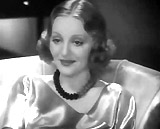 
Carol Morgan (Tallulah Bankhead) |
||||||||||||
|
MGM's horror film by Tod Browning about a perverted and exploitative romance between a sideshow midget and a beautiful female trapeze performer was severely edited after initial preview screenings. Even after editing, there were significant sexual innuendoes in the film:
MGM pulled the film from distribution a month after its release, and in 1947, exhibition rights were sold to exploitation filmmaker/distributor Dwain Esper for the next 25 years. Inevitably, it was toured for an adults-only roadshow with alternative titles:
It also sported exploitative taglines, such as: "Do Siamese Twins Make Love?", "Can a Full Grown Woman Truly Love a Midget?", and "What Sex is the Half Man Half Woman?" The alarming film's most "offensive" segments (approximately 26 minutes) were excised including the original closing scene of an emasculated (not murdered) Hercules singing in a tenor voice (after castration) in "Tetrallini's Freaks and Music Hall." In its place, a reconciling ending was tagged on - of the estranged midget lovers Hans and Frieda finally reconciled and reunited for domestic happiness. |
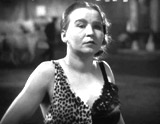 Josephine-Joseph 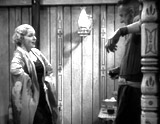 Cleopatra with Hercules 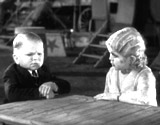 Hans and Frieda 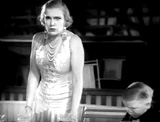 Angered Cleopatra with Hans at Wedding Banquet 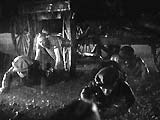 Deadly Freaks Slithering in Mud Under Wagons 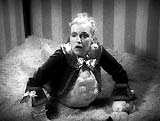 Revenge on Cleopatra |
||||||||||||
|
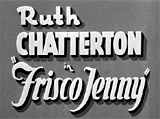
Frisco Jenny (1932) This gritty, tear-jerking pre-Code WB "women's picture," a crime-melodrama from director William A. Wellman, was another tale of maternal sacrifice, similar to the earlier film Madame X (1929). The title character was advertised in trailers as "a girl who was too beautiful to be good and too good to be forgotten." Following the 1906 quake (a spectacular sequence), Jenny Sandoval (Ruth Chatterton), the daughter of corrupt, bawdy saloon owner Jim Sandoval (Robert Emmett O'Connor), lost everything she owned - including her father and the father of her yet-to-be-born child, piano player Dan McAllister (James Murray). The cataclysmic event forced the desperate single unwed mom to become involved with vice activities to survive - shady pursuits that wouldn't be allowed due to Code restrictions soon after. She vowed: "It may be the wrong way, but it’s going to be my way." During one of the parties where she helped to procure females, crooked lawyer-friend Steve Dutton (Louis Calhern) who had given Jenny financial help, murdered cheating gambler Ed Harris (J. Carroll Naish). Involved in the case as the only eyewitness, Jenny was forced to give up her out-of-wedlock, four year-old child to a wealthy judge (Berton Churchill) and his wife. Eventually, she became the Number One "Madame" of San Francisco (in Chinatown), nicknamed "Frisco Jenny." In the meantime, in the film's major plot twist, her son had grown up within the high-society family and had became a crusading and prosecuting District Attorney, named Dan Reynolds (Donald Cook). He didn't know that when he ran for the office of DA, Jenny had aided him by framing his opponent. The moralistic lawyer was determined to shut down his own mother's business. After engaging in many illicit activities (including bootlegging) during the era of Prohibition, she became involved in an altercation with Steve, who was fearing arrest. When he threatened to expose that she was Dan's real mother, she shot and killed him at Dan's office. She was prosecuted during the trial as having no redeeming qualities - and she refused to defend herself to protect her son's reputation. She took the fall for the "deliberate, cold-blooded, pre-meditated murder," and faced the death penalty by hanging. She remained silent when her son came to speak to her on death-row and learn her motivations. |
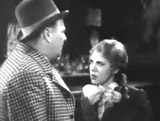 Young Jenny 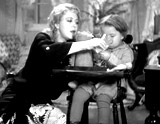 Jenny With Four Year Old Child 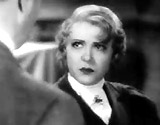 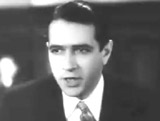 Jenny With Son, DA Dan Reynolds 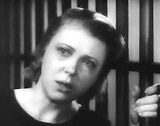
Jenny Jailed and Facing Death Penalty |
||||||||||||
|
Grand Hotel (1932) The classic, all-star MGM epic masterpiece Grand Hotel (1932) was filled with high-powered stars of the early 1930s. It showed the intertwined lives of five guests in Berlin's ritzy, opulent art-deco Grand Hotel over a two-day period, including two females:
|
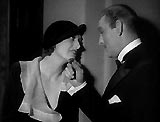 Flaemmchen (Joan Crawford) with Baron Felix (John Barrymore) 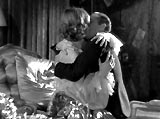 Grusinskaya (Greta Garbo) with the Baron |
||||||||||||
|
Night After Night (1932) The early 30s Paramount film Night After Night (1932) was known for the debut of the inimitable, wise-cracking sex symbol Mae West in her first talking film (in a supporting role). In her part as uncouth Maudie Triplett, West made a memorable first entrance on the screen, with what may be considered the single greatest opening bit in any film actress's career. She swaggered into a nightclub, well-dressed and covered with jewels, where the wide-eyed cloakroom hat-check girl (Patricia Farley), overwhelmed by her, admired her diamonds:
|
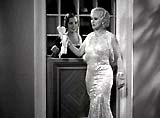 Maudie Triplett (Mae West) |
||||||||||||
|
Rain (1932) W. Somerset Maugham's steamy 'short-story' Miss Thompson had earlier been filmed in the silent era as Sadie Thompson (1928) starring Gloria Swanson. Since it was regarded as an 'unfilmable' play by Will Hays (responsible for the enforcement of the Hays Code, although stricter rules would come by 1934), the title was changed, while Crawford personally assured Hays that not one line of the original would turn up in the title cards. Director Lewis Milestone's newest South Seas melodrama, a flop at the time, was regarded as sensationalist in its story of religious hypocrisy. It featured two major opposing archetypes: a fallen woman and a missionary figure. Prostitute Sadie Thompson (Joan Crawford) found herself stranded on the South Pacific tropical island of Samoa in Pago Pago during a cholera epidemic quarantine, with self-righteous and zealous reformer Alfred Davidson (Walter Huston) and his wife (Beulah Bondi). Sadie was, as the tagline asserted: "A Woman Without Shame. A Woman Without Soul." She was about to be deported back to San Francisco to serve a three year sentence for past sins (she claimed that she was framed). After a religious redemption or conversion experience, she had agreed to return. However, in the predictable climactic finale of the tale, Davidson succumbed to his repressed lust for the wild Sadie and raped her (off-screen), and then committed suicide (his body was found in a fishing net next to the ocean), due to his resultant guilt and shame. Grieving Mrs. Davidson told Sadie: "I'm sorry for him, and I'm sorry for you," as Sadie returned to her former profligate ways, with the film's final line:
|
 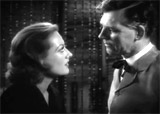 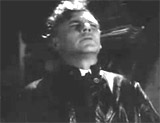 Sadie Thompson (Joan Crawford) with Alfred Davidson (Walter Huston) |
||||||||||||
|
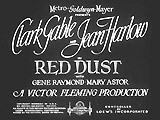
Red Dust (1932) MGM's adventure romance/melodrama Red Dust (1932) told of a heated love triangle in the hot atmosphere of a Malaysian rubber plantation during the rainy season. The film was remade as Mogambo (1953), starring Clark Gable (21 years older), Ava Gardner, and Grace Kelly. Jean Harlow starred as a flirtatious, glib, and earthy platinum blonde Saigon hooker on the run named Vantine, who was stranded on macho Dennis Carson's (Clark Gable) Indo-chinese rubber plantation. In the film's most notorious scene, she bathed naked in a rain barrel and requested two things:
She also expressed how she wasn't modest: "Afraid I'll shock the Duchess? Don't you suppose she's ever seen a French postcard?" Denny became involved in a love triangle with upper-class, refined adulteress Barbara "Babs" Willis (Mary Astor), newly-married to one of his engineers, Gary Willis (Gene Raymond). Denny rescued "Babs" in his arms from a rain-drenching jungle rainstorm and took a kiss from her after reaching shelter. The film ended with Denny wounded by a shot-gun blast from a jealous "Babs." Vantine was reading to Denny from a newspaper story about a rabbit that goes hippity-hop, hippity-hop, while he made little walking motions with his fingers up her thigh - with her vulgar wisecrack:
|
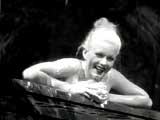 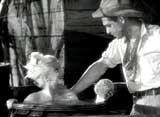 Vantine (Jean Harlow) with Dennis (Clark Gable) 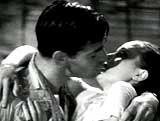 "Babs" (Mary Astor) with Dennis 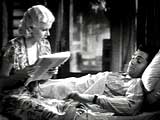
Film Ending |
||||||||||||
|
Red-Headed Woman (1932) This huge pre-Hays Code box-office hit was considered lurid and sensational for its content that included marital infidelity, lots of implicit sex and promiscuity, violence, and sadism. It starred sexy Jean Harlow as unrepentant, promiscuous, red-headed golddigger Lil "Red" Andrews. She challenged with the line:
She was a calculating, man-baiting, morally-questionable, flirtatious, shameless 'bad girl,' bed-hopper and "dirty little home-wrecker" who traded her physical charms to climb up the business and social ladders. In the opening scene, she asked about her dress: "Can you see through this?" - and after being told yes, she replied: "I'll wear it." Soon after, she bragged: "When I kiss 'em, they stay kissed for a long time." In another scene, after she had been face-smacked by married lover William 'Bill'/'Willie' Legendre Jr. (Chester Morris), she snapped back:
And then she forced a kiss on the outraged suitor. After gaining his sympathy by sobbing (with her breasts heaving) and being put on her bed in her locked apartment, she hid the key in her blouse - as he approached and the film faded to black. The film outraged moral purists and sped the enforcement of the Production Code only a few years later for at least two reasons:
|
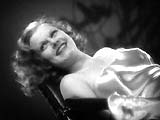 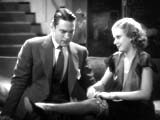 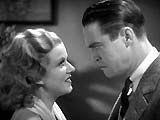 Lil with "Willie" (Chester Morris): "Do it again!" 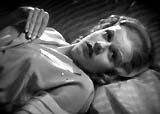 Lil "Red" Andrews (Jean Harlow) - Hiding Key in Her Blouse 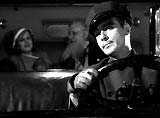
Albert (Charles Boyer) |
||||||||||||
|
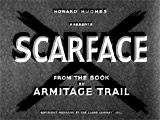
Scarface (1932) (aka Scarface, The Shame of the Nation) In the early 1930s, Scarface (1932) was one of the boldest, most potent, raw and violently-brutal gangster-crime films ever made. The film was heralded as an example of the kind of protection the Hollywood Production Code of Ethics could provide to the movie-going public when implemented in 1934. One of its subtexts, incestuous attachment, was portrayed by muted hints of an unnatural bond between the two main characters:
This film's sub-themes supposedly went uncontested - possibly, because some the most obvious references to incest were removed by Hawks himself. Its release was delayed for two years due to director Howard Hawks' and co-producer Howard Hughes' squabbles with industry censors over its sensationalism and glorification of the gangster menace. Throughout the film, Scarface expressed extreme jealousy over Cesca's dating of other fellas. In one sequence, he engaged in a raging argument with Cesca: "Yeah, runnin' around with the fellas, huh? Lettin' 'em hold ya like that. Lettin' 'em look at you. Dressin' up like that for the fellas to see, huh?" (He ripped her spaghetti shoulder strap, baring her bra and slip); Cesca screamed back: "What I do with fellas is MY business!" (He slapped her repeatedly). The misguided Tony was led to cold-bloodedly murder his right hand man Guino (George Raft) at his apartment building's doorway, and then Cesca revealed their recent secret marriage - she cursed her brother for being a "murderer" and a "butcher" in the fratricidal killing:
During the film's final shootout scene, however, Cesca expressed her oneness with her brother:
Cesca was the first to be mortally-wounded when hit by a stray bullet in the mid-section (Tony reacted: "I'll be here all alone. You can't leave me here all alone...Cesca! You're all I've got left...I'm no good without you, Cesca. I'm no good by myself. Cesca!"). Tony stumbled and staggered down the stairs to the front door where he made a cowardly plea for his life ("Gimme a break, will ya? Don't shoot. You got me covered. I can't do nothin'"), but many police guns opened fire and riddled his body with hundreds of bullets when he made a break for it, and he died in the street's filthy gutter The film's final ironic image: the camera moved up and away from Tony's sprawled body toward the flashing electric sign that promised Tony the world: "THE WORLD IS YOURS." |
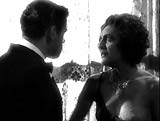 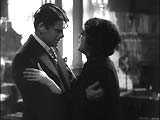
Scarface (Paul Muni) with Cesca (Ann Dvorak) - Incestuous Overtones and Extreme Jealousy 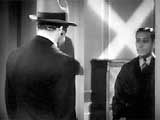 Tony's Misguided Murder of Guino (with X in background) 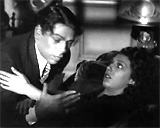 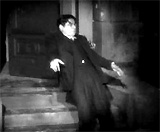  Tony's and Cesca's Death Scene |
||||||||||||

|
Shanghai Express (1932) The fourth of the seven Dietrich/von Sternberg films in which they collaborated together was Shanghai Express (1932). Its main character was:
The mysterious woman of easy virtue was on a train hurtling through war-torn China, caught in political espionage. In the film's opening, framed by two windows, and side-by-side on the train, the flirtatious and seemingly-dangerous 'Shanghai Lily' (aka Magdalen) was reunited with former lover and uniformed medical surgeon Captain Donald 'Doc' Harvey (Clive Brook) after five years and four weeks apart. He complimented her beauty:
She then went on to say that she had changed her name (from Magdalen): "Well, Doc, I've changed my name" - when he asked if she was married, she continued with her most memorable line:
He was astonished: "So you're Shanghai Lily!" - she added a sub-title: "the notorious white flower of China." It was rumored that she had "wrecked a dozen men up and down the China coast." During a rendezvous in a train compartment, 'Doc' and Lily talked about their past relationship when she had acted to make him jealous - and lost him. He was concerned about her loose reputation since they had broken up years earlier: "I was a fool to let you go out of my life. (He kissed her) I wish you could tell me there'd been no other men" - she responded: "I wish I could 'Doc', but five years in China is a long time." He wished they could have their five lost years back, and imagined what would have happened if they had not parted ways: "We'd have gone back to England, married and been very happy. There are a lot of things I wouldn't have done if I had those five years to live all over again." In the conclusion after arriving in Shanghai, 'Doc' Harvey and Lily were reconciled to each other in the train station after disembarking. They decided to rekindle their relationship from the past when he re-affirmed his faith in her: "All I want is another chance for a new start. I'll be different. You'll never have any cause for regret. Please forgive me for my lack of faith. Please do." She confirmed her love for him ("You know I love you. I always have and I always will") - and they embraced and kissed amidst the hustle and bustle of the Shanghai train station. |
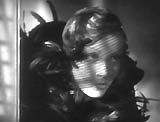 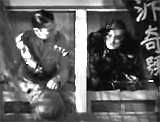 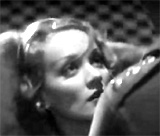 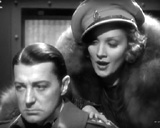 Shanghai Lily (Marlene Dietrich) with past flame Captain Donald 'Doc' Harvey (Clive Brook) 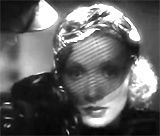 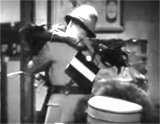
Final Embrace and Kiss |
||||||||||||
|
The Sign of the Cross (1932) Cecil B. DeMille's spectacular, pre-censorship epic was an excuse to display Rome's sins and depravities (homosexuality, orgies, nudity, and murder) in multiple ways and scenes. Using a religious plot line, DeMille was able to film erotic scenes without fear of censorship. The film's most decadent and debauched moments (The "Dance of the Naked Moon" and orgy scene) were cut by censoring boards, and deleted for the film's re-release in 1944, but then reinstated in the mid-90s video version. The wicked Empress Poppaea (Claudette Colbert), mistress of debauched Emperor Nero (Charles Laughton in his first American film), bathed unabashedly in asses' milk - with her breasts bobbing on the surface. There was an attempted corruptive seduction scene of virginal, blonde Christian Mercia (Elissa Landi) by temptress Ancaria (Joyzelle Joyner) during a lesbian-tinged "Dance of the Naked Moon" sequence that visibly aroused its audience. In other scenes, semi-naked women were condemned to slaughter in the Roman Arena:
|
 Empress Poppaea (Claudette Colbert) Bathing in Milk 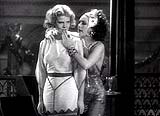 Seduction of Christian (Elissa Landi) by Ancaria (Joyzelle Joyner) 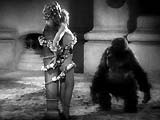
Martyr Victim |
||||||||||||
|
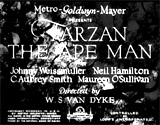
Tarzan, the Ape Man (1932) The first Tarzan talkie, Tarzan, the Ape Man (1932), based upon the Edgar Rice Burroughs stories, featured two very popular stars:
Jane arrived in Africa for a dangerous expedition with her father James Parker (C. Aubrey Smith) searching for the fabled elephant graveyard. In one of her earliest scenes before meeting Tarzan, she changed down to a revealing slip, and cleansed her face while looking in a mirror with cold cream to "preserve that schoolgirl complexion." After being abducted by Tarzan and sleeping overnight in a tree (and supposedly enjoying sex with him), she got to know him (with their famous "Tarzan...Jane" dialogue). She also joined Tarzan for a swim in very brief attire. She flirted with him as he swam with her, dunked her again and again, and tried to coax him to return her to the bank. She also engaged him in a suggestively intimate and flirtatious scene, in which she caught herself:
[Note: Almost 60 years later in 1981, it was remade as a controversial nude version with Bo Derek.] |
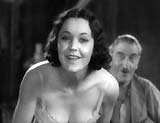 Jane Parker (Maureen O'Sullivan) 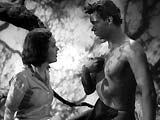 Tarzan...Jane 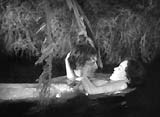 Jane Swimming in Brief Attire 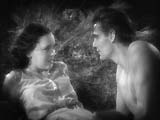 Jane: "I don't think you'd better look at me like that."  Bo Derek (as Jane) in Tarzan, the Ape Man (1981) |
||||||||||||
|
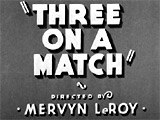
Three on a Match (1932) Director Mervyn LeRoy teamed with First National Pictures for this incisive melodrama, with themes of frigidity, adultery, alcoholism, child abuse, drug use, kidnapping, and violence. The film's title was based upon a superstition that it was unlucky to light cigarettes from a single match ("Three on a Match Means One Will Die Soon"), especially for one of the three main characters. It told about three women who met as public school students (middle school) and graduated in 1921. They reunited as adult friends about nine years later in 1930 ("to dish the dirt"):
Although Vivian seemed to be the most promising of the three reunited classmates, she was "the third on a match" (a shared match to light all three cigarettes) when the gals met in 1930 for lunch.
She was dissatisfied and unhappy with her rich married life to Robert (it was implied that she had turned frigid with her husband). Vivian complained to him:
She proposed going away for a much-needed break on an ocean cruise with their young 3 year old son Robert, Junior. At the ship's send-off party, she quickly became acquainted with one of Mary's friends, sweet-talking gambler Michael Loftus (Lyle Talbot) before the ship sailed. He flattered her with attention:
Before the ship sailed, she was convinced to run away with him before the ship left the port for Europe, and desert her husband. The headlines read what happened:
Vivian's husband believed that she went into hiding with their son. In reality, Vivian resorted to a life of boozing, partying and neglect of her child, while taking a phony name (Mrs. Killroy) and living in the high-priced, ritzy Warwick Hotel in New York City. After her husband was told the whereabouts of Vivian and Junior by a concerned Mary, he took the boy home, sought a divorce from Vivian, and then married Mary. (In effect, Mary and Vivian exchanged places.) Robert also hired Ruth as his son's governess. Vivian turned up destitute and desperate (and was presumably using cocaine - she wiped her nose tellingly in this Pre-Code film), having spent everything she had. An indebted Michael Loftus found himself owing $2,000 to unscrupulous gangsters, including loan shark Ace (Edward Arnold), with one of his heavies named Harvey (Humphrey Bogart in his first gangster role). So to acquire the money, Loftus attempted to blackmail Mr. Kirkwood over Mary's reform school past (a conviction of grand larceny), but then decided to kidnap the young five and a half year-old boy with a ransom demand of not only $2,000 but $25,000 dollars. Vivian and her kidnapped son were both being held prisoner by gangsters. The kidnapping criminals threatened to have Loftus kill the boy "in cold blood," but when he refused, they killed Loftus.
Drug-addicted Vivian ultimately redeemed herself through suicidal self-sacrifice, when she alerted the authorities to their whereabouts. She scrawled a message in lipstick on her nightgown ("KIRKWOOD BOY 4TH FLOOR") and jumped out of the locked fourth-floor apartment window to her death. As the superstitious legend had it, Vivian was the 'third on a match." |
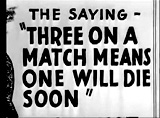 Superstitious Legend 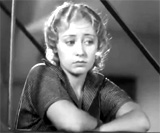 Mary (Joan Blondell) 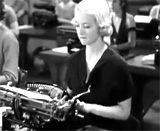 Ruth (Bette Davis)  Vivian (Ann Dvorak) 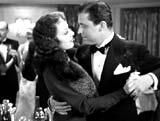 Vivian with Gambler Michael Loftus (Lyle Talbot) 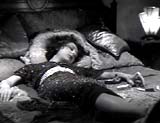 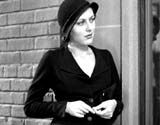 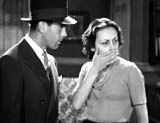 Vivian - Deserting Her Husband and Turning into a Desperate Drug Abuser |
||||||||||||
|
Trouble in Paradise (1932) The exquisitely produced/directed Ernst Lubitsch film Trouble in Paradise (1932) told about a pair of sophisticated Parisian thieves:
In the opening scene, the pair shared a romantic and erotic dinner, in which sex and success in robbery were equated. The pair's polite and quick-witted, but seductive game/duel of dinner-table pickpocketing and mutual theft stretched on further, as they declared their love for each other while returning precious purloined objects. Their obviously unmarried association was fueled by illicitly-acquired possessions that served as an aphrodisiac during foreplay. The erotic attraction between the two criminal soul-mates heated up considerably - and led them to recline on the couch where he professed his love:
The scene ended when the couple's images slowly dissolved, and magically vanished and disappeared, leaving an empty sofa in the twilight. The room's light was switched off, and a sign was hung on the door: "Do Not Disturb." This was something that wouldn't happen in films after 1934. |
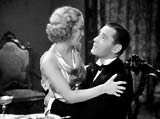 Lily (Miriam Hopkins) with Gaston (Herbert Marshall) 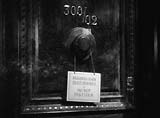 "Do Not Disturb" Sign On Their Door |
||||||||||||

|
The Virgins of Bali (1932) This 46-minute Deane H. Dickason production and release from Principal, an exploitational travelogue portraying local cultural customs and ceremonies, was advertised as "Made on the Island of Bali with an all native cast." In its story about two Balinese sisters preparing for a family wedding, it was considered a "bust picture" by Variety magazine, bringing in an all-male audience. The New York Times thought that the film's title suggested "a cheaply lurid theatrical quality," although the film was basically a well-filmed documentary about a Balinese family, its daily life, and instances of courtship and marriage. In the thin story line, however, it mostly concentrated on photography of "girls bare to the waists." The review in Variety noted: "the Balinese women have regular features, clear olive skins, and remarkable breasts." The chief performers were girls aged 12 to 16 years of age, mostly reviewing their daily lives, including courtship, preparations for a wedding ceremony and native dancing. It also said: "the semi-nudity is at no time raw." Most of the portrayals in the film were of normal everyday life, where the custom was for the females to wear nothing above the waist. |
 The Virgins of Bali (1932) |
||||||||||||